Glass bottle coating is the first layer. The brand is everything above it.
Every premium bottle begins with a coating — a primed surface, a base of colour or finish. The foundation everything else is built on.
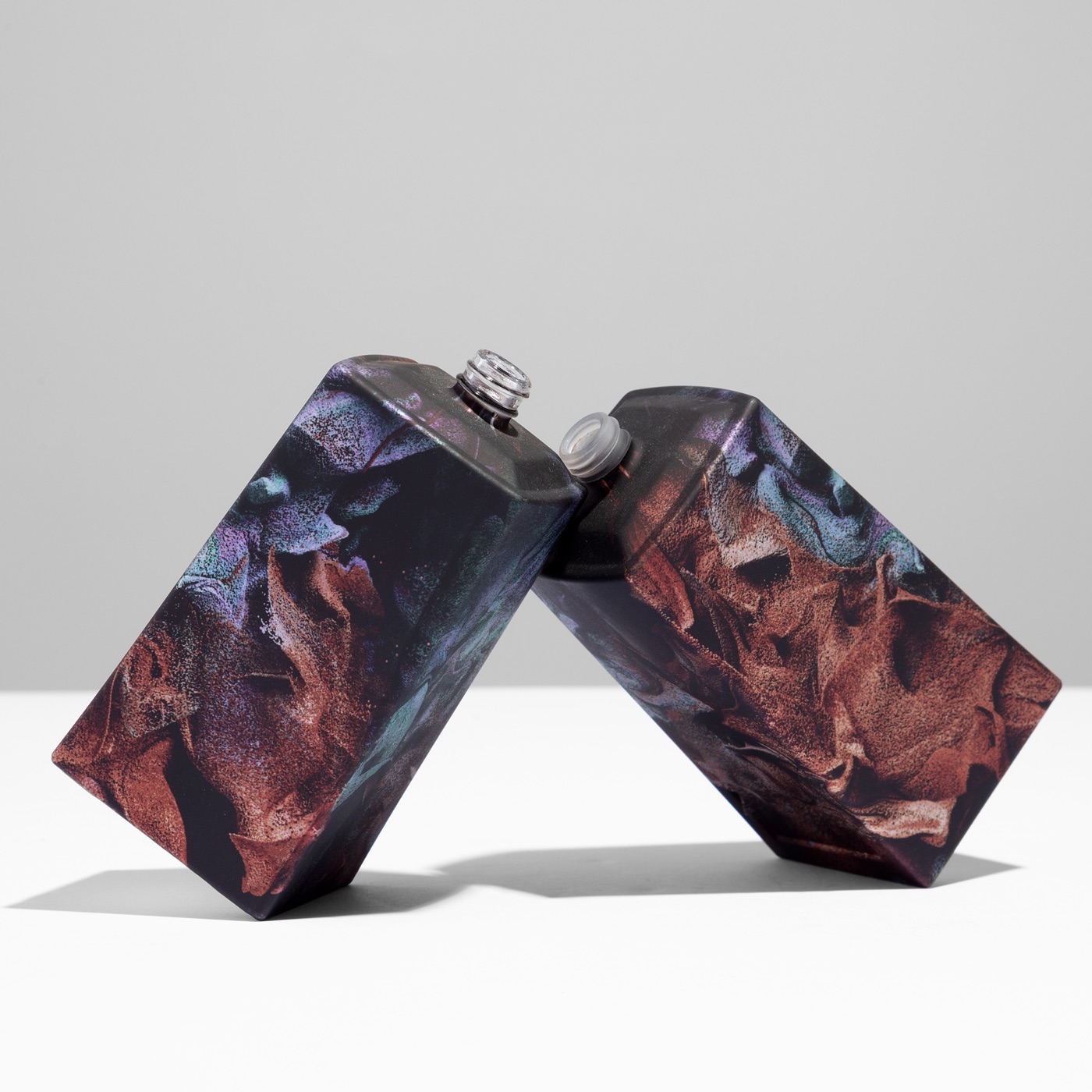
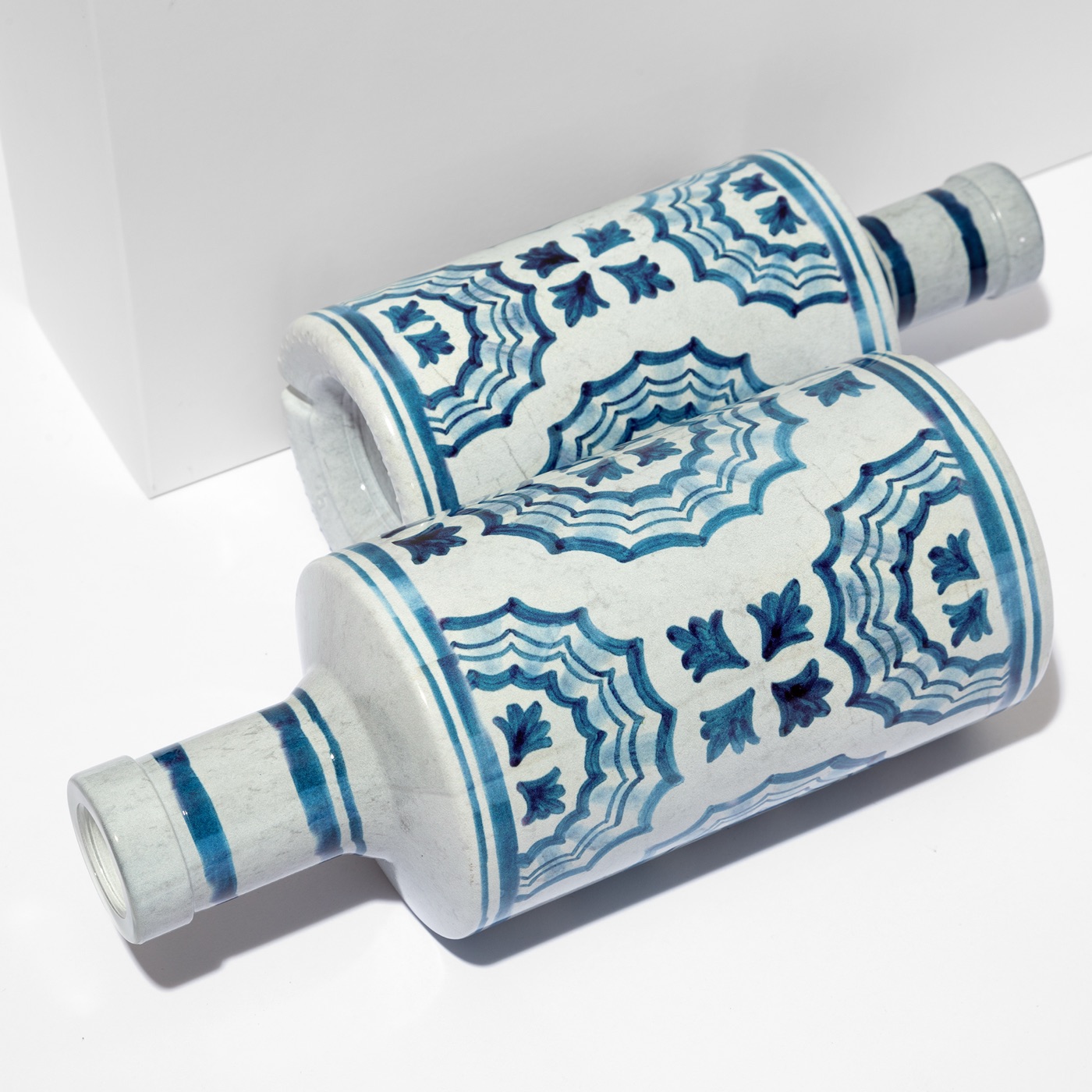
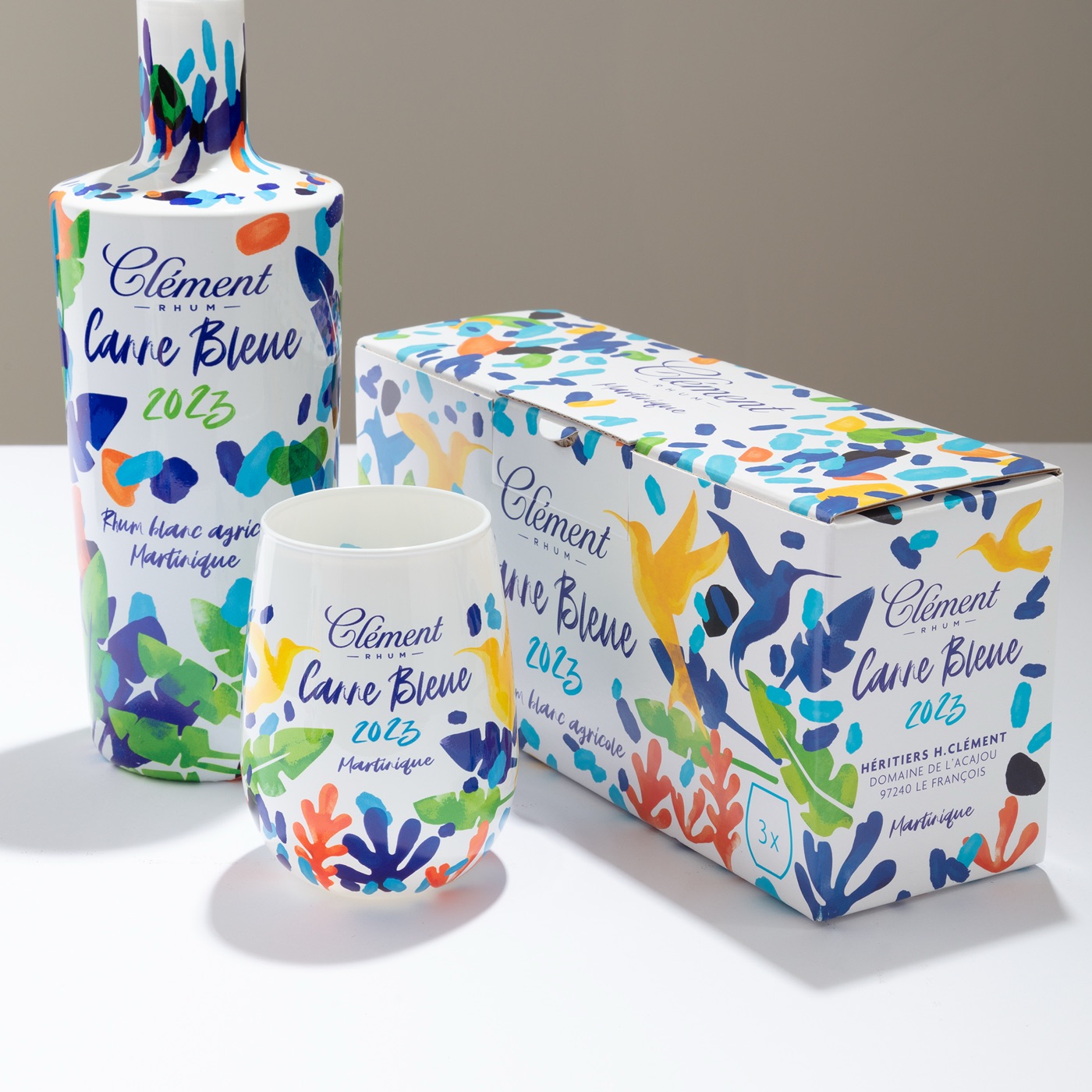
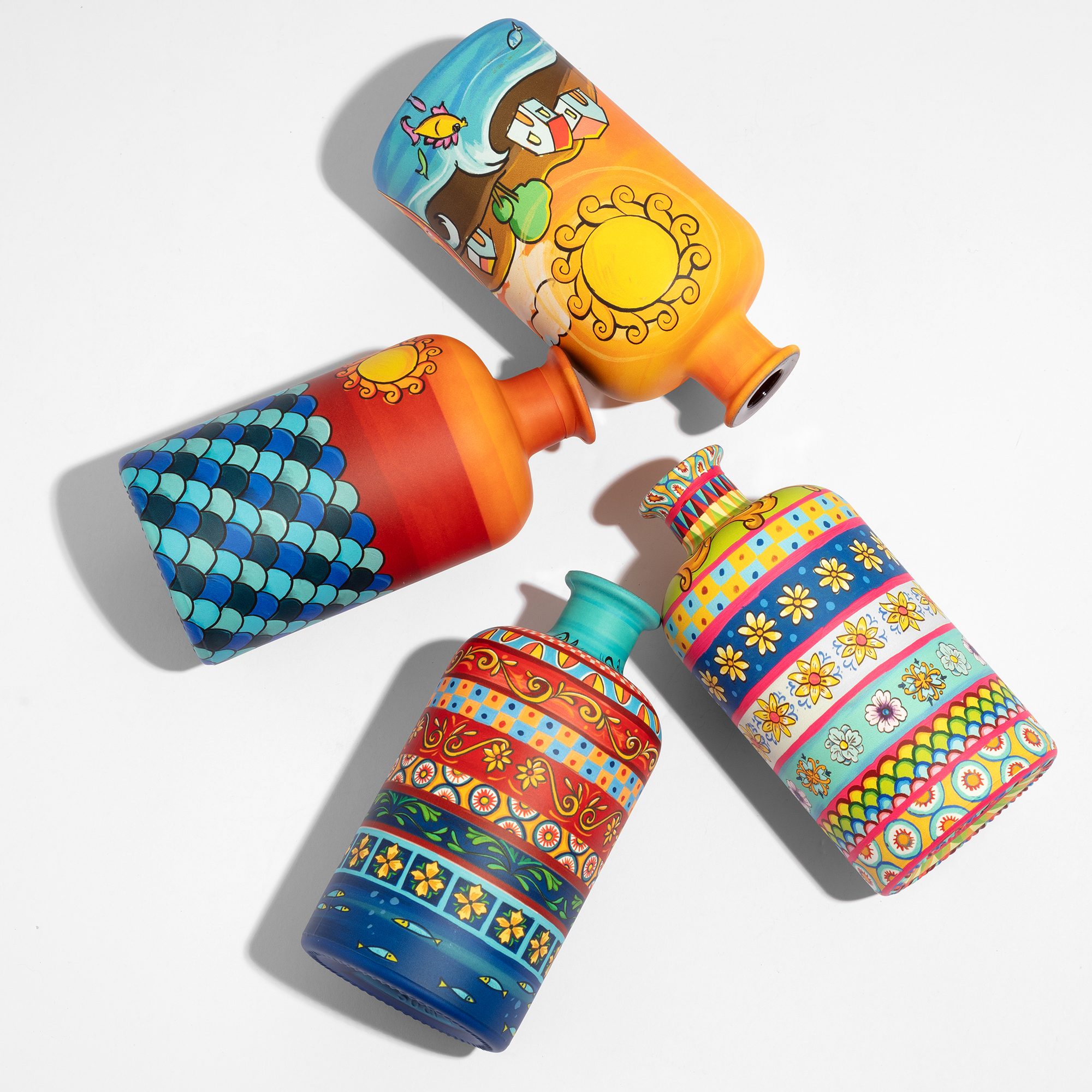
But the foundation was never the point. What gives a bottle its voice is what comes next: photographic artwork, full-body, wrapped 360° around the glass and fused into the surface in a single pass. Digital sublimation.
That is how an iconic house gets a new way to speak on the shelf — not a decorated bottle, but a canvas with no limits of shape, geometry or colour. ATIU is the co-creation partner behind it, for some of the most iconic names in perfumery and spirits. We call it Glass Experience Design.
This page explains the foundation — what glass bottle coating is, the colour and finish options, and how durability is chosen — and then where the real work begins.
What glass bottle coating is
Glass bottle coating is the application of a colour or functional layer to the surface of a glass container. Once cured, the coating becomes a permanent layer that sets the bottle's colour, its finish, and the surface that decoration is built on. In premium packaging it is rarely the whole job — it is the base of a longer process: primer, colour coat, artwork, protective finish.
Colour and finish
Glass bottle spray coating is the standard way to give glass a uniform colour — tinted, opaque or gradient — without depending on stock coloured-glass runs. The finish is a choice: gloss, satin, matte, frosted, soft-touch or metallic. Colour is matched to a brand reference and applied as an even layer across the body of the bottle.
Durability is a choice, not a default
The durability of a decorated bottle is the durability of its coating — and that is something you specify, not something fixed. Depending on the formulation selected, the coating can be made harder or softer: more resistant for demanding handling and logistics, or tuned differently where that is not the priority. The right specification is matched to the product's end use, agreed before production.
Where coating ends and the brand begins
Coating gives a bottle a uniform surface: one colour, one finish, edge to edge. That is the foundation. Where a brand actually becomes recognisable is in the artwork — and that is a different discipline.
ATIU's digital sublimation applies a primer — a functional coating — to the glass, then fuses full-colour, photographic artwork into that primed surface with heat and pressure. The result is HD decoration at 1200 dpi, wrapped a full 360° around the bottle, with gradients, fine detail and unlimited colour at no extra cost per colour. The coating sets the stage. The sublimation is the performance.
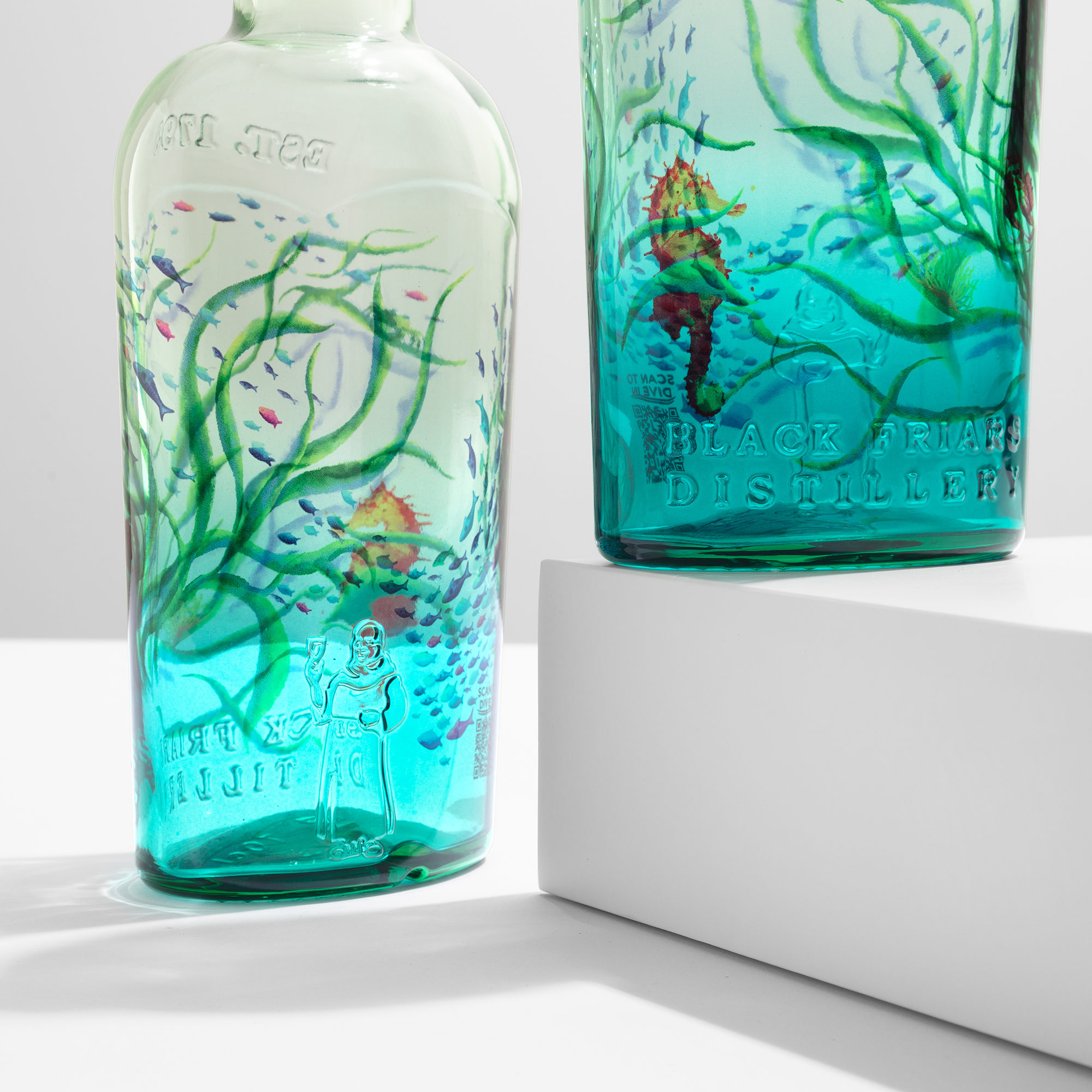
A real production example makes the build-up concrete. For Plymouth Gin's ocean-conservation edition, the base layer was a clear waterborne primer — one of the multiple primer finishes ATIU works with, chosen here to keep the glass itself visible. The artwork was then fused on top of that primed surface, wrapping the full body of the bottle. The primer sets the character of the finish: on Plymouth it stays transparent, while a project such as Bvlgari's called for a metallic soft-touch matte. Same process, different foundation — the coating decision is made per brief, and everything above it follows from that choice.
For the full picture of how it works — substrates, resolution, the project workflow — see our complete guide to digital sublimation on glass.
Sustainability
ATIU works with water-borne coating and inks, reducing solvent use across the process, and has maintained zero-net CO₂ operations (Scope 1, 2 and 3) since 2023 — recognised with a Pentawards Gold 2025 award in the Sustainability category.
Does ATIU do coating?
Yes. ATIU applies coating in-house — colour, finish and functional primers — and takes on coating work in its own right, with the same waterborne chemistry and the same colour discipline as everything else we produce. But the real value is the complete process: coating and decoration under one roof, in a single step — the uniform base and the artwork above it, delivered as one finished bottle by one supplier, with less handling and less transport than a multi-supplier chain. If you are briefing a bottle, the colour and finish are the starting line — and the same line can take you all the way to the finish.