AI can imagine any bottle. Far less can build it.
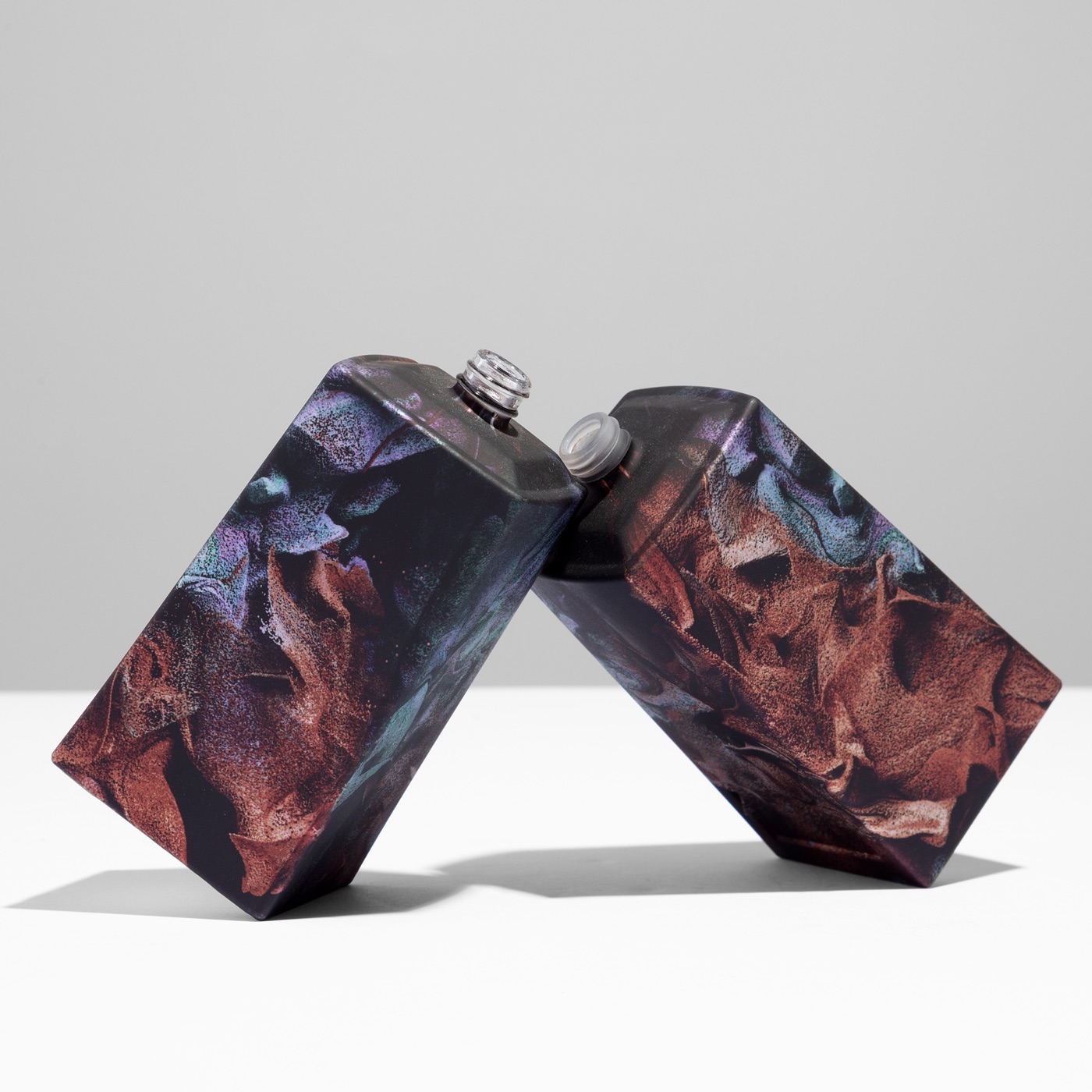
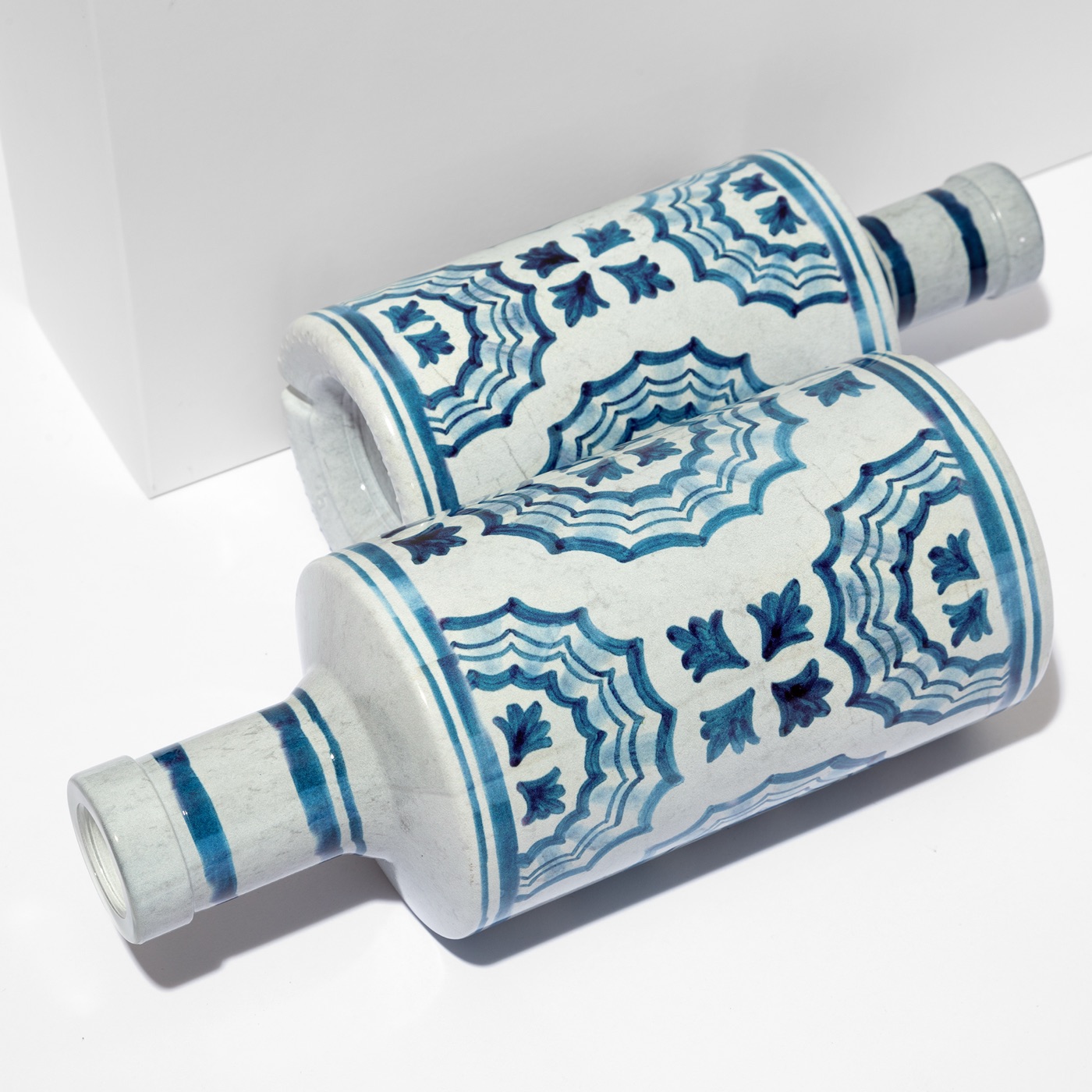
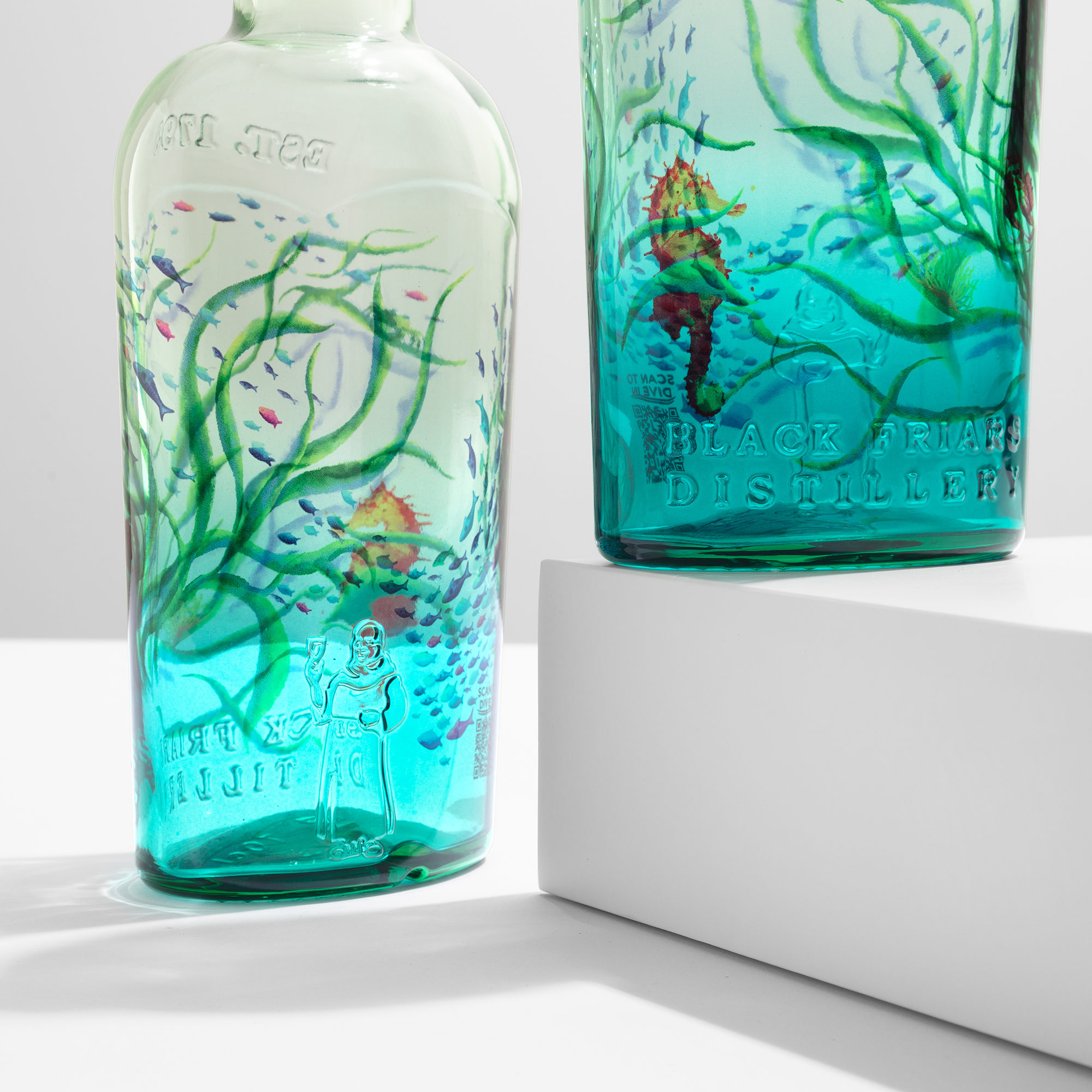
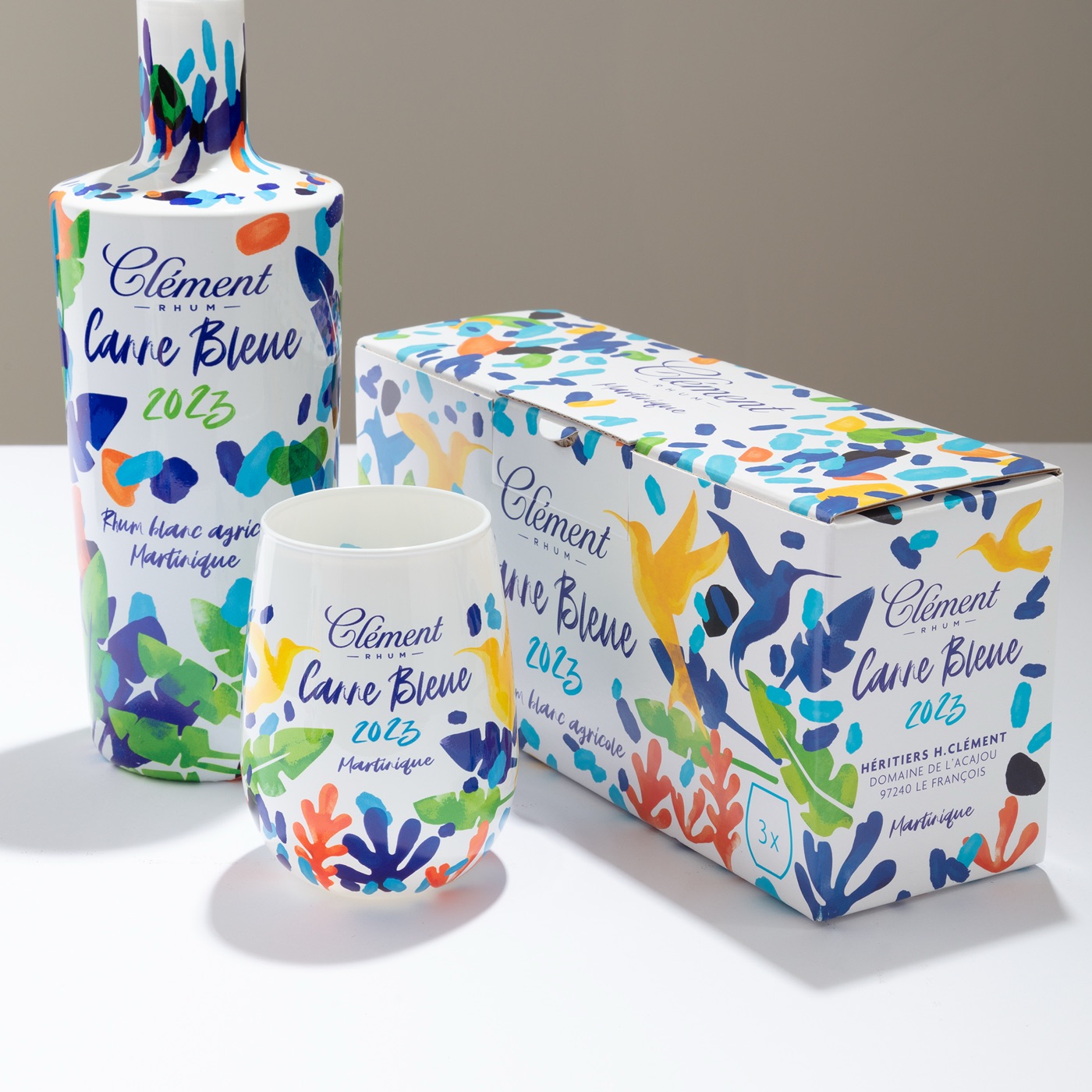
In the space of a year, AI changed what a bottle design can be. A small team can now generate artwork that wraps the entire bottle, blends hundreds of colours, and flows across every curve — in an afternoon. The hard question is no longer "what can we imagine?" It's "what can we actually produce?"
That question matters more than it sounds, because the answer quietly decides whether an idea reaches the shelf intact or arrives as a watered-down version of itself.
The new bottleneck is translation, not imagination
For decades, the limit on bottle decoration sat at the design stage: complexity was expensive, and most methods rewarded simple, repeatable artwork. AI removed that limit almost overnight. The constraint didn't disappear — it moved downstream, to the moment a digital design has to become colour on physical glass.
This is the part few people outside production think about. A design that looks effortless on screen still has to be translated onto a curved, primed surface, at scale, without losing its detail. Whether that's possible depends entirely on the decoration method — and most were built for a different era of design.
Why most glass decoration methods can't keep up
Every established method has a working range. None of this is a criticism — each is excellent at what it was designed for:
Screen printing is superb for bold, defined graphics, but every colour is a separate screen, which limits how many tones and how much continuous detail you can carry. Hot stamping and foiling add striking metallic accents, not full-surface imagery. Pad printing excels at small, intricate marks on a limited area. Direct spray coating handles solid colours and gradients beautifully, but not fine, all-over artwork.
Put a full-360°, hundred-colour AI render in front of these and something has to give: the colour count drops, the coverage shrinks to a panel, the gradients flatten. The design survives — but smaller than it was imagined.
Where full-body sublimation fits
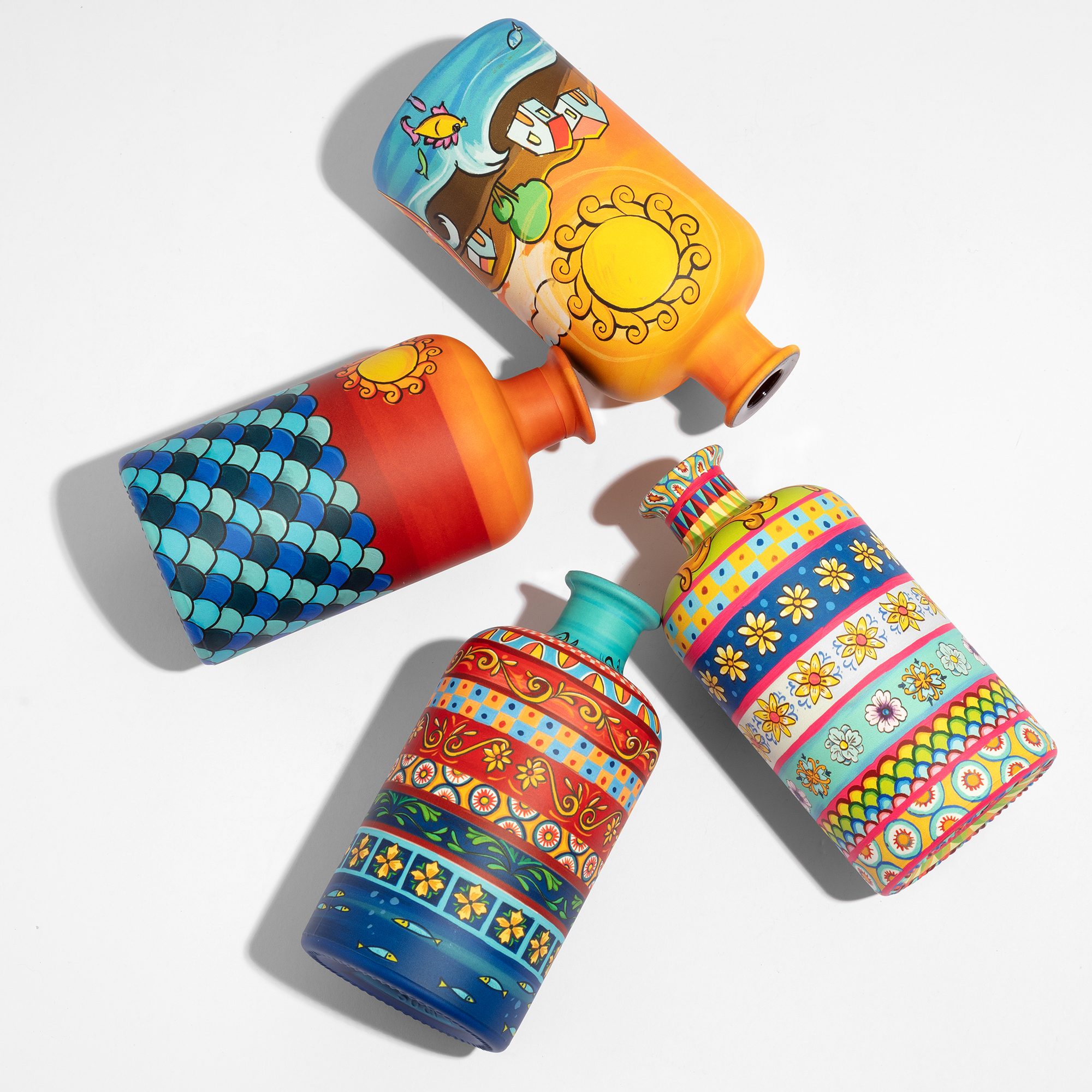
Full-body digital sublimation is one of the very few processes able to take a complete, full-colour digital file and carry it across the entire bottle — 360°, continuous-tone gradients, an effectively unlimited range of shades through CMYK — bonding the colour into the coating on the glass rather than laying it on top.
There's a second, subtler advantage. Sublimation colours are semi-transparent and sit over a primer, so the same artwork can be made to read glossy, matte, stone-like, metallic or iridescent simply by changing the base beneath it. That's exactly the kind of depth an AI design can specify — and that sublimation can actually deliver.
In practice, it means a design that exists only as a render can become a physical sample in around ten days, then scale to production runs that typically sit between 50,000 and 200,000 units. The idea reaches the shelf while it's still the idea.
The honest envelope
It isn't magic, and the most useful thing we can do is be clear about the edges. Sublimation works best on pieces between roughly 200 ml and 1.5 litres, though we can decorate from 10 ml up to 5 litres. Minimum runs sit around 5,000 pieces, so it isn't the route for a few hundred artisan bottles. Very intricate hollow shapes need extra study, and because the colours are semi-transparent, a true opaque white depends on the primer underneath. Knowing those limits up front is what lets a design team push confidently right up to them.
Why this matters now
As AI-generated design becomes the norm, the advantage shifts from who can imagine to who can realise. Generative tools have made ambition cheap; the scarce thing is a production method that doesn't force that ambition to shrink. Brands that pair the two — bold generative design and a process built to carry it — will set the visual pace of the next few years.
This is what we mean by Glass Experience Design: the bottle as a faithful carrier of the brand's vision, worthy of what it holds — made for beauty, for the planet, and for the people who pick it up.
Related reading: sublimation vs screen printing and why the coating is the first layer. Or request a sample.