Ceramic Aesthetics on Glass Bottles: Why Brands Are Switching
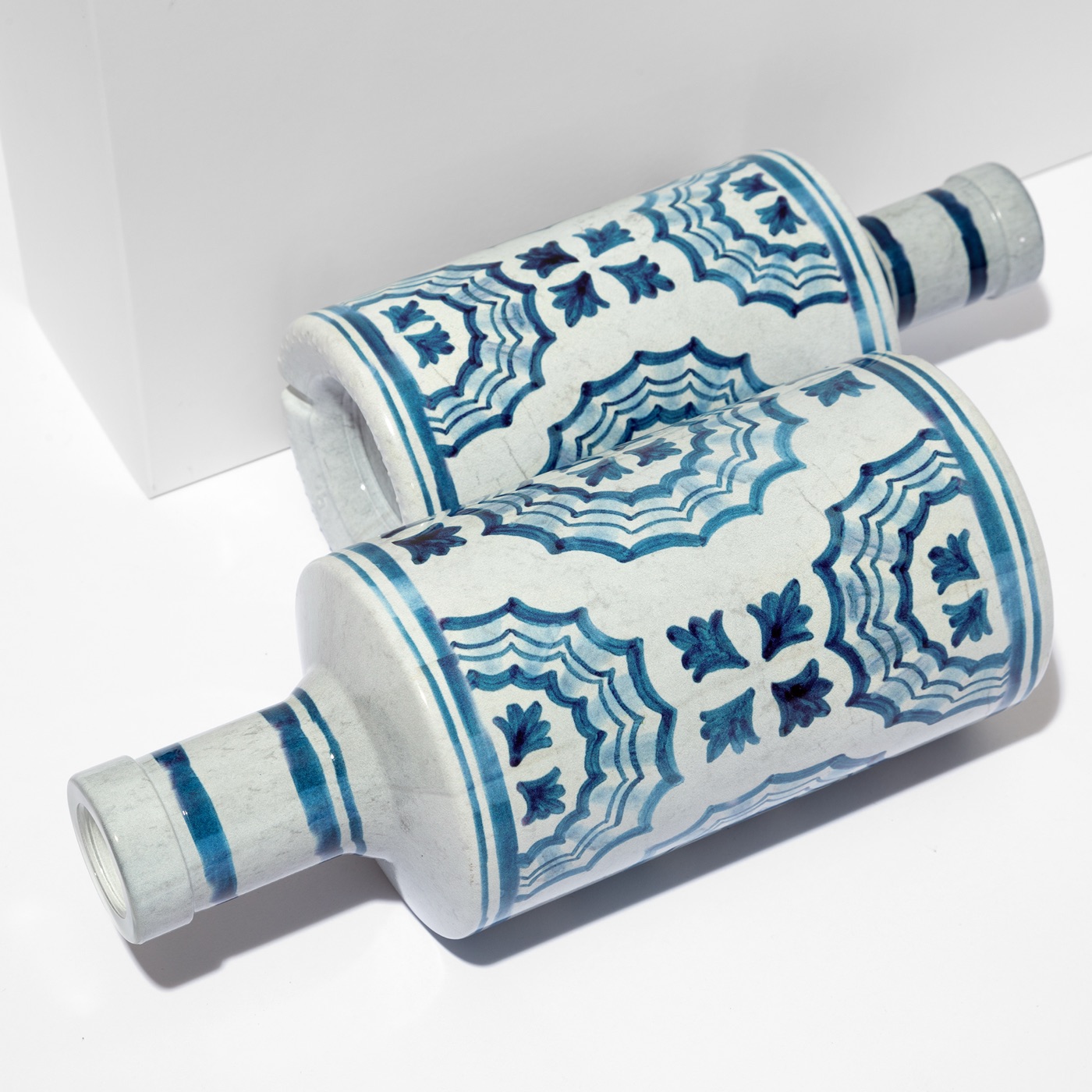
Ceramic packaging has a tactile warmth that glass alone does not convey. It suggests craft, heritage, artisanal production. Premium perfumery and spirits brands have used ceramic vessels for decades to signal exactly those qualities.
The problem is practical. Ceramic is heavy. Custom container development — whether by mould or by hand — adds time and cost before a single bottle is decorated. It cannot be recycled in standard glass cullet streams. Lead times are long.
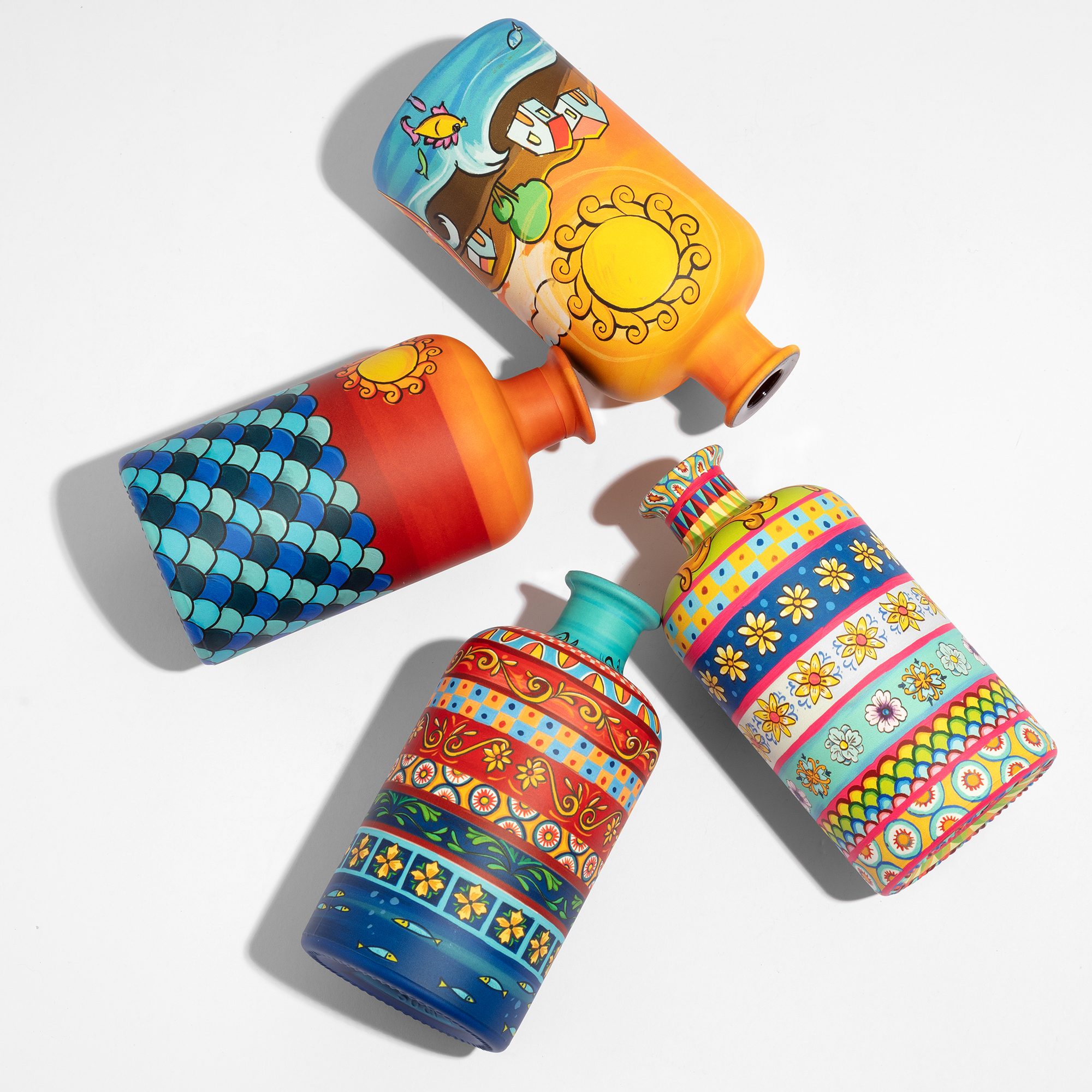
A growing number of brands are replacing ceramic packaging with standard glass bottles decorated to look and feel like ceramic. Digital sublimation makes this possible.
How the ceramic effect works
The process starts with a standard glass component — a perfume bottle, flacon, spirits bottle or candle jar — sourced from manufacturers such as Saverglass, Vetreria Etrusca or Stoelzle.
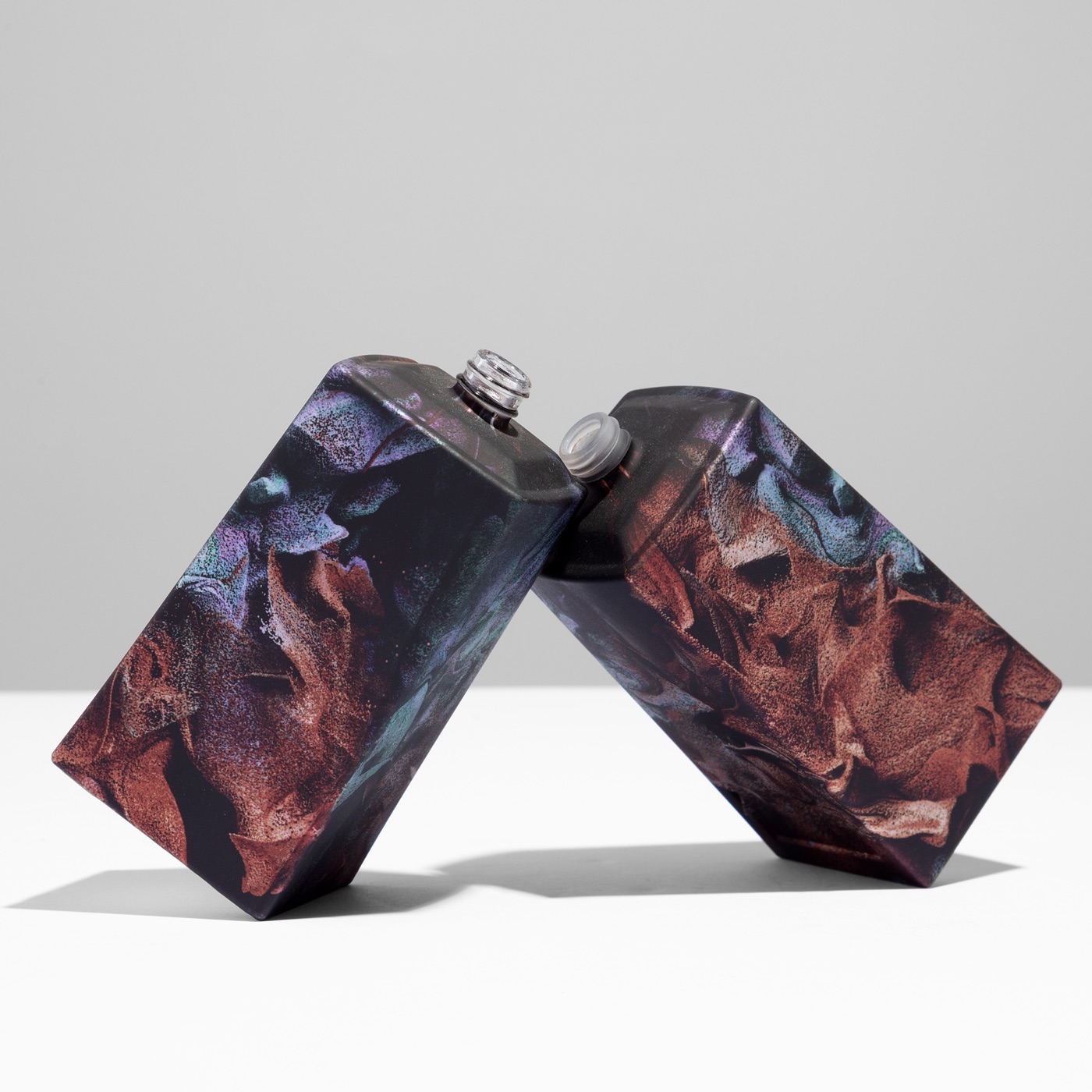
A matte primer is applied to the glass surface. This primer creates the tactile foundation: a soft, slightly textured finish that mimics fired ceramic. The primer colour can be calibrated to match any base tone — warm white, terracotta, stone grey, matte black.
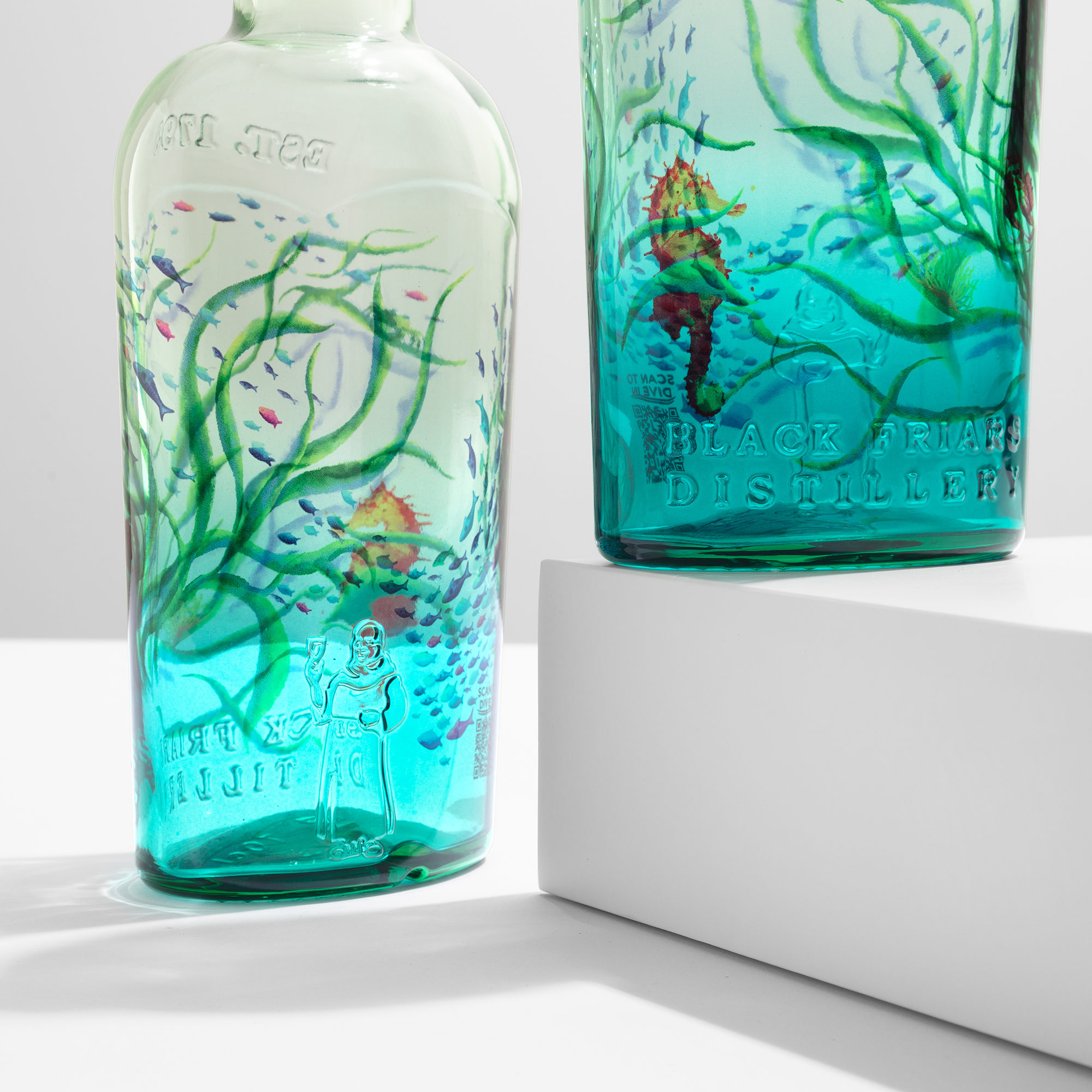
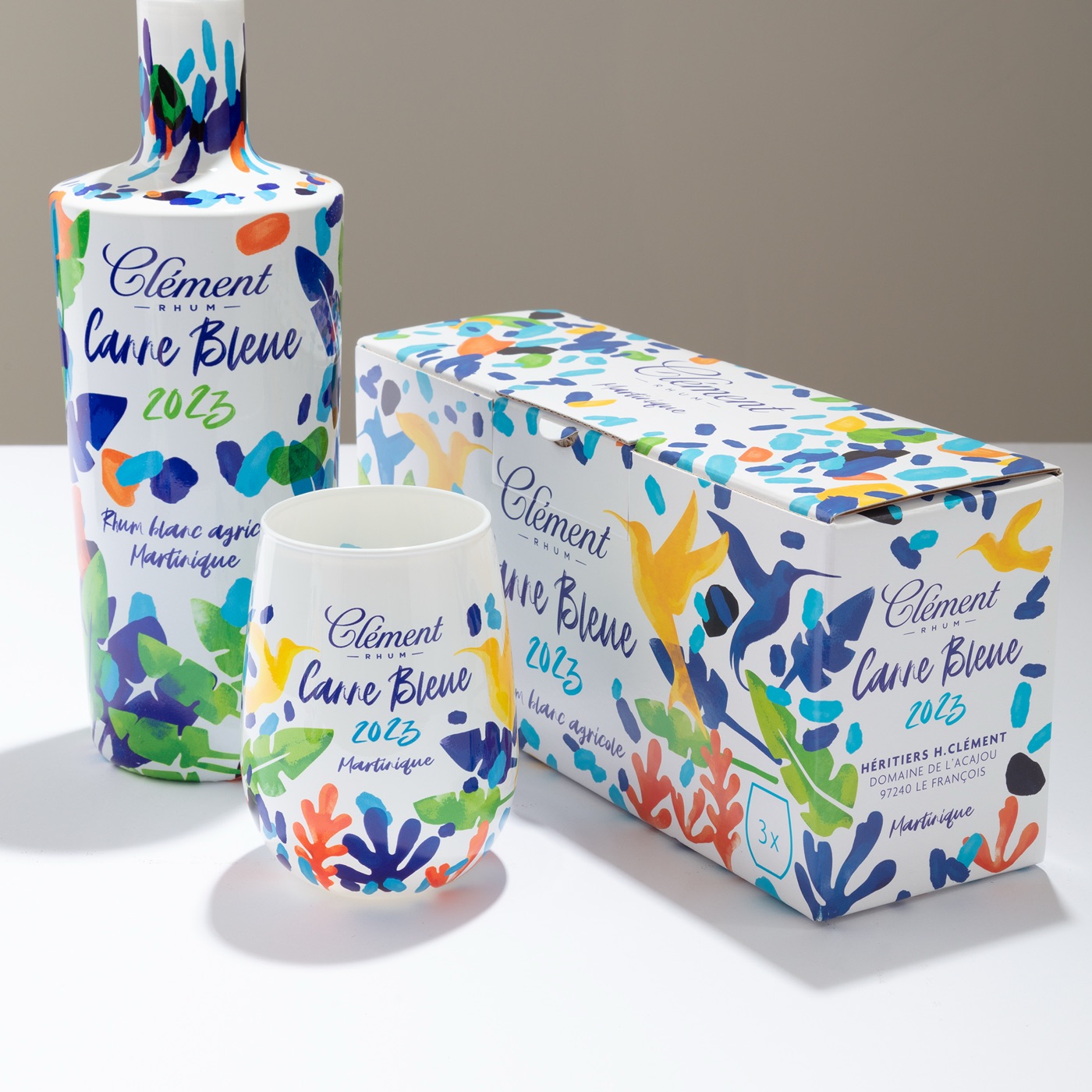
Digital sublimation then transfers the decorative artwork onto the primed surface at up to 1200 dpi. Patterns, illustrations, typography and HD images fuse permanently into the primer layer. The visual and tactile result is indistinguishable from glazed ceramic at arm's length.
Advantages over actual ceramic
No container development required
Ceramic vessels — whether mould-made or hand-crafted — are custom containers by definition. Every production run requires a dedicated form. With glass sublimation, brands can select from existing shapes in supplier catalogues: no development, no lead time, no investment. Where a brand wants to preserve the silhouette of an existing ceramic vessel, glassmakers such as Vetreria Etrusca can produce a matching glass form — but this is a choice, not a prerequisite. The decoration does the heavy lifting regardless of which route is taken.
Full recyclability
Decorated glass remains glass. It enters standard cullet recycling streams without separation or sorting complications. Ceramic cannot be recycled with glass — it contaminates the cullet and must be disposed of separately. For brands with sustainability commitments, this distinction matters.
Lighter weight
Glass components are lighter than equivalent ceramic vessels. This reduces shipping costs and carbon footprint per unit. For global distribution, the weight saving compounds across the supply chain.
Faster lead times
When using catalogue glass shapes, components are available from stock and decoration begins as soon as artwork is approved. Even when a custom glass form is commissioned to match an existing ceramic profile, the timeline is typically faster than developing an equivalent ceramic vessel from scratch. Total lead time from brief to finished product compresses substantially.
No forced tooling investment
With ceramic, container development is unavoidable — and that cost must be recovered across the production run. With glass sublimation, brands using catalogue shapes carry zero tooling cost. Those who commission a custom glass form to match an existing ceramic silhouette do incur mould investment, but glass mould economics are generally more favourable than ceramic, and the decision is driven by brand continuity rather than by production necessity.
Applications
The ceramic-effect approach is gaining traction across several categories. Premium perfumery brands use it for collector editions and flanker launches. Spirits brands apply it to aged expressions where a craft narrative aligns with the product positioning. Home fragrance brands use it for candle jars and diffuser vessels where the tactile experience is central to the product.
ATIU produces these decorations at industrial scale from two plants in Verona, Italy, serving groups including Pernod Ricard and LVMH. ISO 9001 certified. EcoVadis Committed.
Design freedom
Because sublimation is a digital CMYK process, the decoration is not limited to simple patterns or single-colour prints. Brands can apply full-colour artwork, HD imagery, intricate illustrations and unlimited gradients — all on a ceramic-feel surface. The combination of tactile matte finish and HD visual detail is difficult to achieve with any other decoration method.
Learn more about our sublimation technology or request a sample.