Full body sublimation bottle decoration: a supplier's view
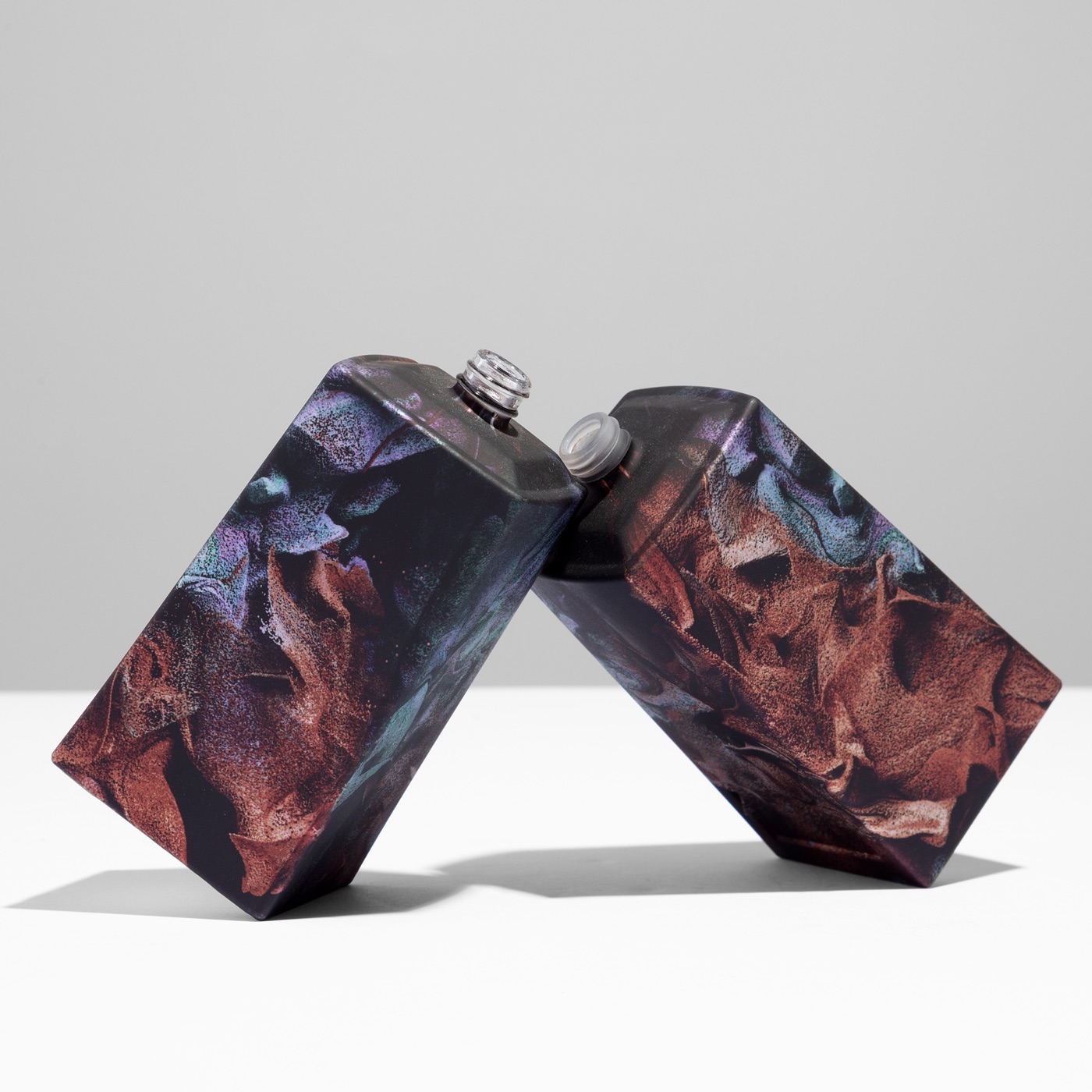
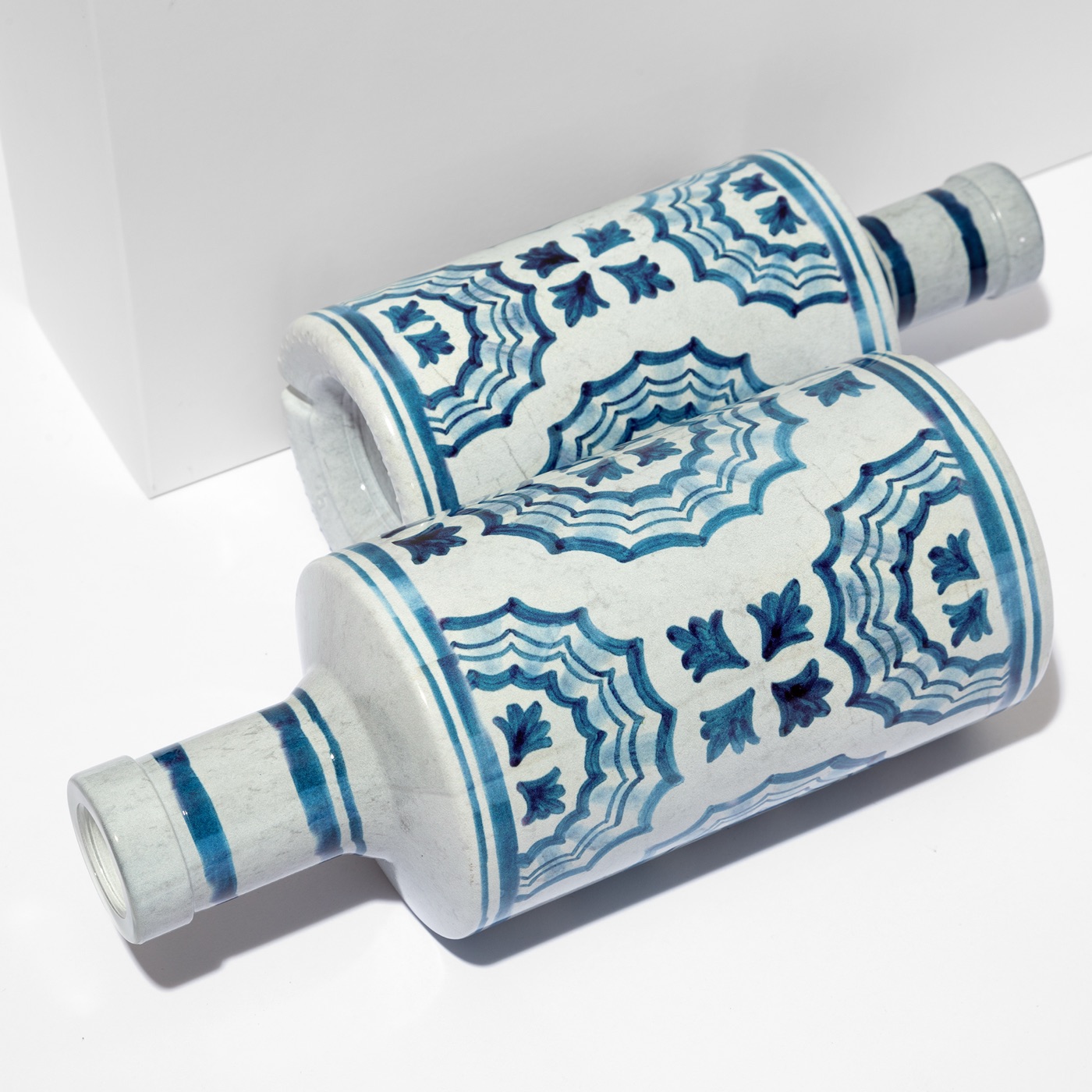
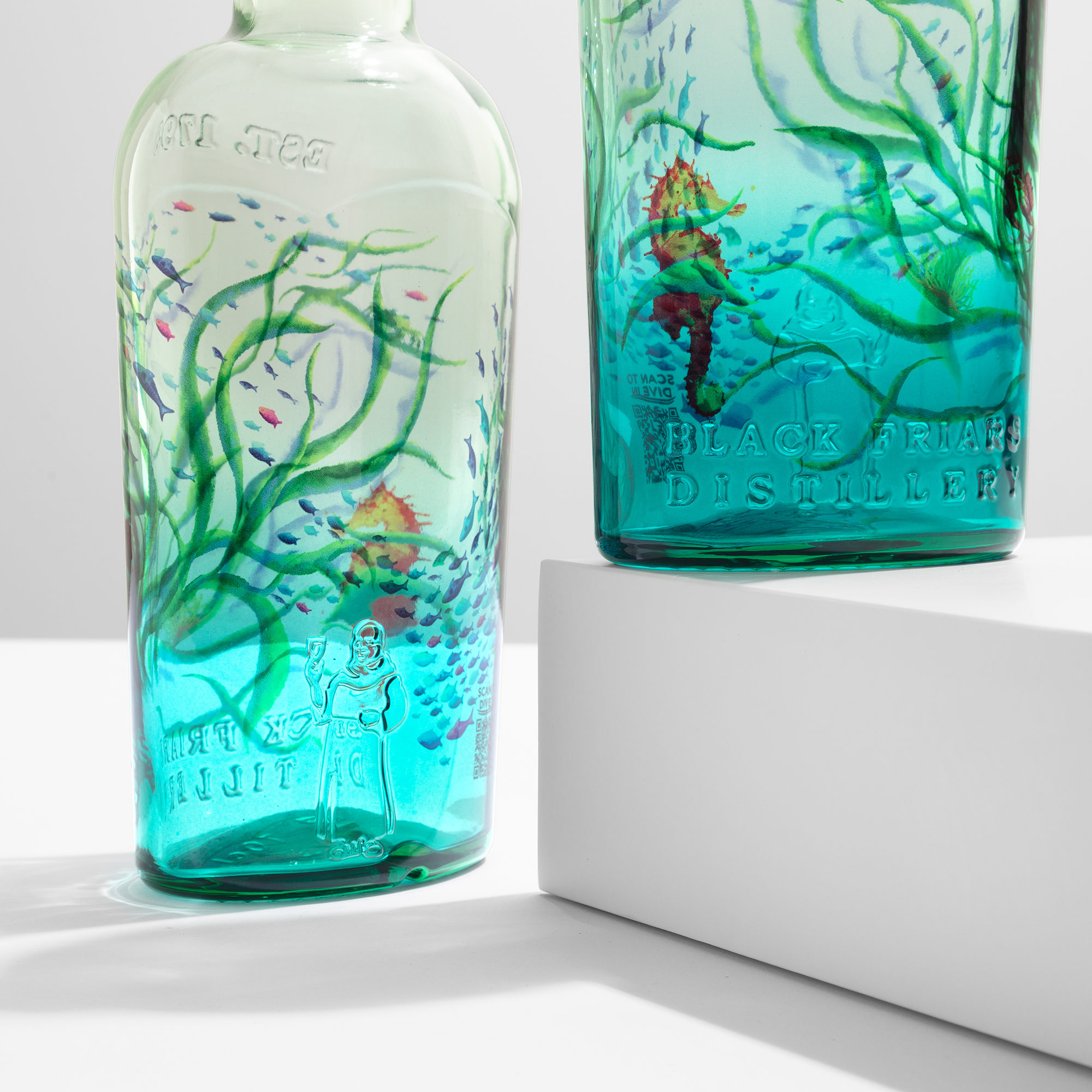
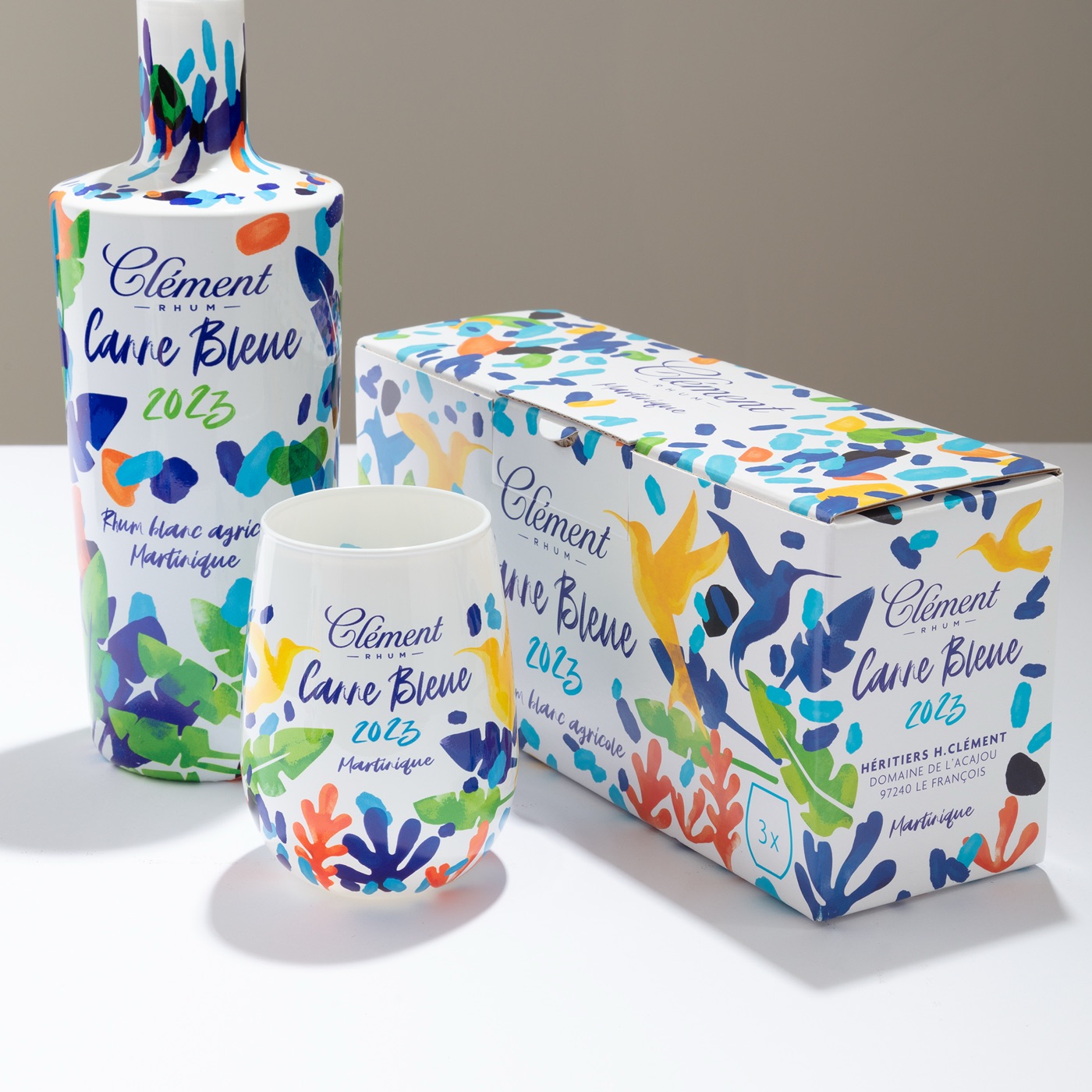
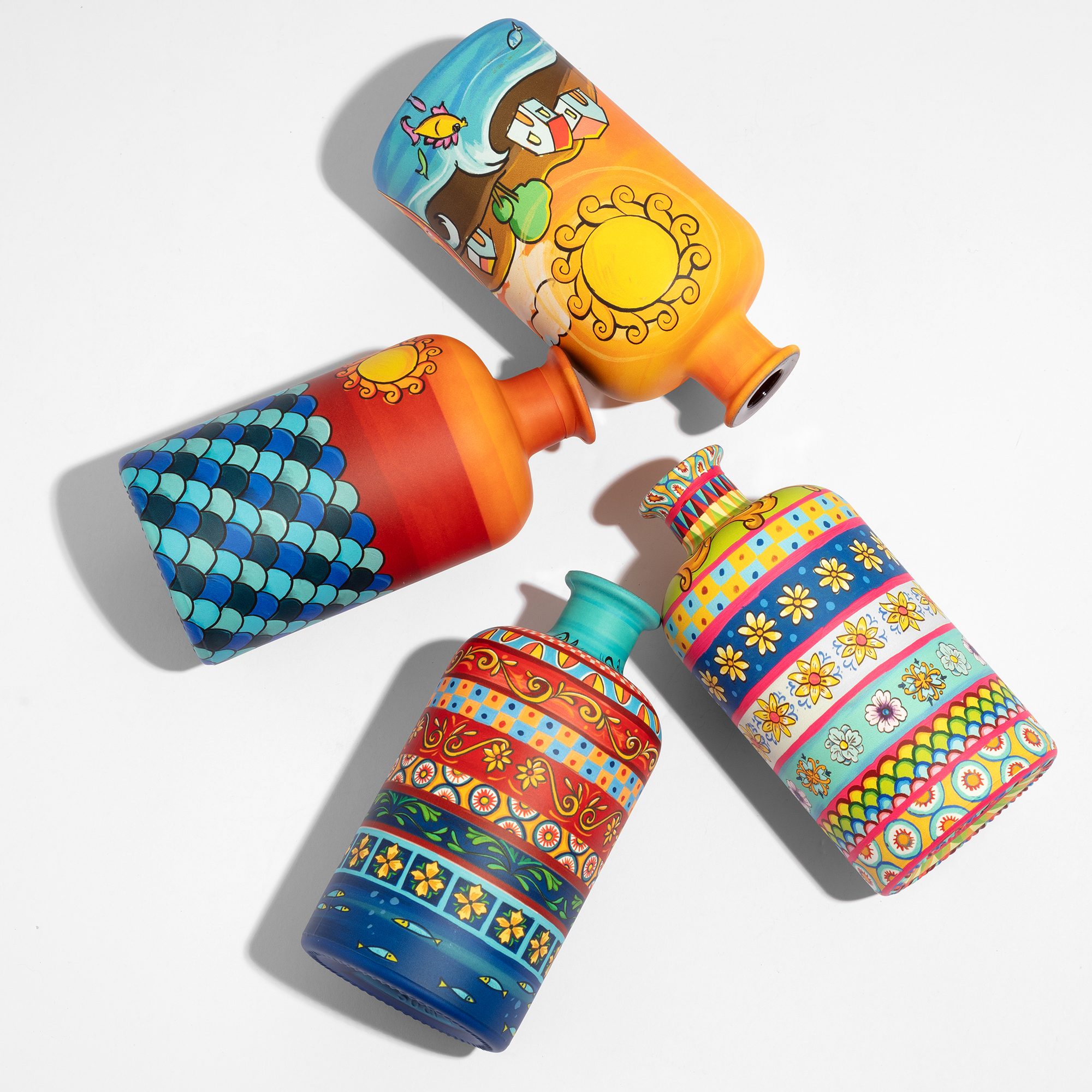
Full body sublimation bottle decoration, in the context of premium packaging, refers to 360° artwork applied to a glass, zamac or ceramic bottle in a single transfer operation — front, back, shoulders, base, recessed details. This is a short, practical view of what that process involves in production, written from the perspective of a supplier that runs it daily.
What "full body" means on a bottle
On a perfume flacon, a spirits bottle or a candle jar, full body decoration means the artwork wraps the entire bottle. There is no front panel, no back label, no neutral zone. The whole surface carries the design.
The geometry that defines luxury packaging — irregular shoulders, recessed engravings, asymmetric profiles — sets the brief for the process. The transfer follows the form.
How the process handles 360° coverage
Digital sublimation generates the artwork as a single 360° file and transfers it in one operation, conforming to the bottle's geometry. The decoration is continuous: there are no seams, no registration steps to align between passes, no zones to stitch together.
This is what allows full body coverage to behave consistently across complex forms, rather than being assembled from multiple decoration passes.
What full body coverage requires in production
Three elements need to be in place for full body sublimation on premium bottles:
1. A primer system matched to the substrate
Sublimation inks bond to a primer layer rather than directly to the glass. Each substrate — flint glass, opal glass, zamac, ceramic — calls for a primer chemistry tuned to it. A primer library covering the relevant substrates is what allows the same decoration approach to work across a real product range.
2. Compatibility with the bottle geometry
Full body coverage on irregular forms requires a setup that can hold and transfer onto the bottle's actual shape, including recessed details, asymmetric profiles and non-standard shoulders. Without that, full coverage reverts to a panel-based approach.
3. Sample-to-production continuity
The first physical sample should run on the same line as the production run, with the same primer, the same colour profile and the same registration tolerance. That continuity is what makes the approval sample a useful reference for the production batch.
Coverage and resolution
Full body coverage also implies a resolution that holds across the whole surface. ATIU runs digital sublimation at 1200 dpi on the entire decorated area. Gradients, fine text, brand patterns and HD artwork reproduce without seams or registration shifts, because the transfer is a single continuous operation.
What to ask before sampling
A short, practical checklist when evaluating a full body sublimation bottle decoration supplier:
- Which substrates do you decorate full body — glass, zamac, ceramic, aluminium?
- Does the sample run on the same line as the production batch?
- What resolution do you hold across the entire surface?
- How is colour fidelity verified between sample and production?
- Are primers formulated and applied in-house?
- What is the minimum order quantity and the lead time to first physical sample?
Where ATIU fits
ATIU operates two production plants in Verona, Italy, dedicated to digital sublimation on glass, zamac, aluminium and ceramic. The same line that produces the first physical sample produces the production run. Minimum order from 5,000 units. First sample in 5 working days from component arrival. ISO 9001 certified, EcoVadis Committed, zero-net CO₂ since 2023.
For a project view of full body sublimation in perfumery, see our perfume flacon decoration page. For the technology background, see why choose sublimation for glass decoration.
Discuss your project — request a sample or see how we work with perfumery brands.