How to choose a bottle decoration partner for spirits and perfumery.
A packaging director’s working guide to the early-stage vendor search — before the first meeting, before the brief tightens, before the wrong supplier costs a quarter.
The brief is loose. The budget is provisional. The timeline says Q4. And the list of bottle decoration vendors on the desk? Zero names.
For every packaging team inside a spirits or perfumery group, the search for a new decoration partner begins in exactly this shape. A problem without a vendor. A creative direction without a supplier. A calendar window that’s closing faster than the brief is tightening. The instinct is to start calling the incumbents — the same three or four names the last project used.
Sometimes that works. Often it doesn’t. A partner suited to mass-market packaging isn’t always suited to limited editions. A vendor who delivered on screen printing for a wine line can’t necessarily deliver on full-body sublimation for a duty-free spirits launch. Last year’s brief was not this year’s brief.
This is a working guide to running the search — before the first meeting, before the brief tightens, before the wrong supplier costs a quarter.
Start with the question, not the vendor list
The first mistake is building a shortlist before knowing what the brief actually needs. It feels efficient — everyone starts with names. But names map to capabilities, and capabilities only matter in relation to what you need.
Start here instead:
Is this decoration technology-constrained or design-constrained? Technology-constrained briefs come with a fixed process in mind (screen + foil + hot stamping, because that’s what the group has always used). Design-constrained briefs start with the creative vision and ask how to deliver it. Different shortlists.
Is it volume-critical or geometry-critical? High-volume, simple-form bottles look for scale and consistency. Limited editions on complex glass look for agility and freedom of expression. The same vendor rarely leads on both.
Is sustainability a gate or a nice-to-have? If the retailer’s procurement team is asking PPWR compliance questions or plastic-free packaging certifications, that filter cuts half the shortlist immediately.
Once the driver is clear, the vendor list writes itself.
What a decoration partner actually does (and doesn’t do)
Confusion in this space is expensive. A decoration partner is not a glass supplier, and is not a packaging design agency.
Glass supplier: makes the bottle. Saverglass, Bormioli Luigi, Heinz-Glas, Verescence, Stoelzle. Several operate in-house decoration divisions for certain techniques, and work with independent decoration specialists for others. Which arrangement fits the brief depends on the technique at the core of the work.
Packaging agency: designs the bottle, the artwork, the brand direction. Stranger & Stranger, Butterfly Cannon, Denomination, Maison Linea.
Decoration partner: takes the blank glass and the artwork and turns them into a finished, shelf-ready bottle. This is where the decoration technique decision happens — digital sublimation, screen printing, pad printing, foil, coating, hot stamping, often layered.
The decoration partner is the one who converts the creative into the industrial. That makes them the single biggest variable in how the final bottle feels on shelf. And the one most often left to procurement to select on price.
The shortlist: who should be on it
A strong shortlist has three types of vendor.
One proven scale player. The decoration house the group has used for years on mass-market. Low risk, known capability, known limits.
One specialist for the technique the brief needs. If the creative is pushing toward full-body artwork, that means a specialist in digital sublimation. If it’s a metallic luxury decanter, a foil specialist. If it’s a ceramic-effect finish on glass, a primer specialist for ceramic aesthetics.
One innovator who can change the constraint. The partner who can make the brief better, not just execute it as given. A 30-minute introduction can reshape a whole project.
Three vendors is the right number. Two isn’t enough to see contrast. Four is too many to brief thoroughly in the timeline the retailer is giving.
Questions to ask before the first meeting
The right questions filter out 80% of mismatches before anyone gets on a call.
Can you show a full-body decoration, on glass, that you ran in production — not a sample? Most vendors send prototypes. The ones with a real production reference are the ones who can ship.
What’s your minimum order quantity, and what’s your setup cost? The ratio tells more about a vendor’s economic model than any pitch deck. Low MOQ + zero setup = digital-first platform. High MOQ + six-figure setup = a traditional analog process paid for per SKU.
On a new complex brief, how many days from brief to first physical sample? Five days suggests a production-line-based sampling — the prototype runs on the same equipment as the final. Three weeks suggests a separate sample bench — expect re-sampling between prototype and production.
Where do you sit on sustainability? Water-based inks? Organic pigments? Net Zero certifications (Scope 1–3)? Recyclability of the final decorated glass? Specific answers, not brochure talk.
Walk me through a brief you had to decline — why? The answer tells where the real limits are. A vendor that has never declined anything is a vendor that says yes to work they can’t deliver.
A more detailed guide to briefing a decoration partner →
Red flags that save weeks
A few signals that usually mean the vendor isn’t the right fit, even when the portfolio looks impressive:
Every case study in the portfolio is the same category. Specialist in one space — fine if that’s your space, a problem if the brief crosses verticals.
Samples made on different equipment than production. There can be quiet drift between a prototype made on a sample bench and the first cases off the line. Knowing exactly how samples are produced — and how closely they match production output — matters more than most briefs assume.
Vague answers on decoration technique. "We can do everything" can mean strength across techniques — or that the core of the work will be produced elsewhere, without always being told where. Both in-house and partner arrangements can work well. Opacity about which one is happening on your project is the problem.
Long lead time on the first call. Early-stage vendor conversations should happen within a week. A vendor who can’t meet for a month won’t be more responsive once you’re a client.
Where ATIU fits
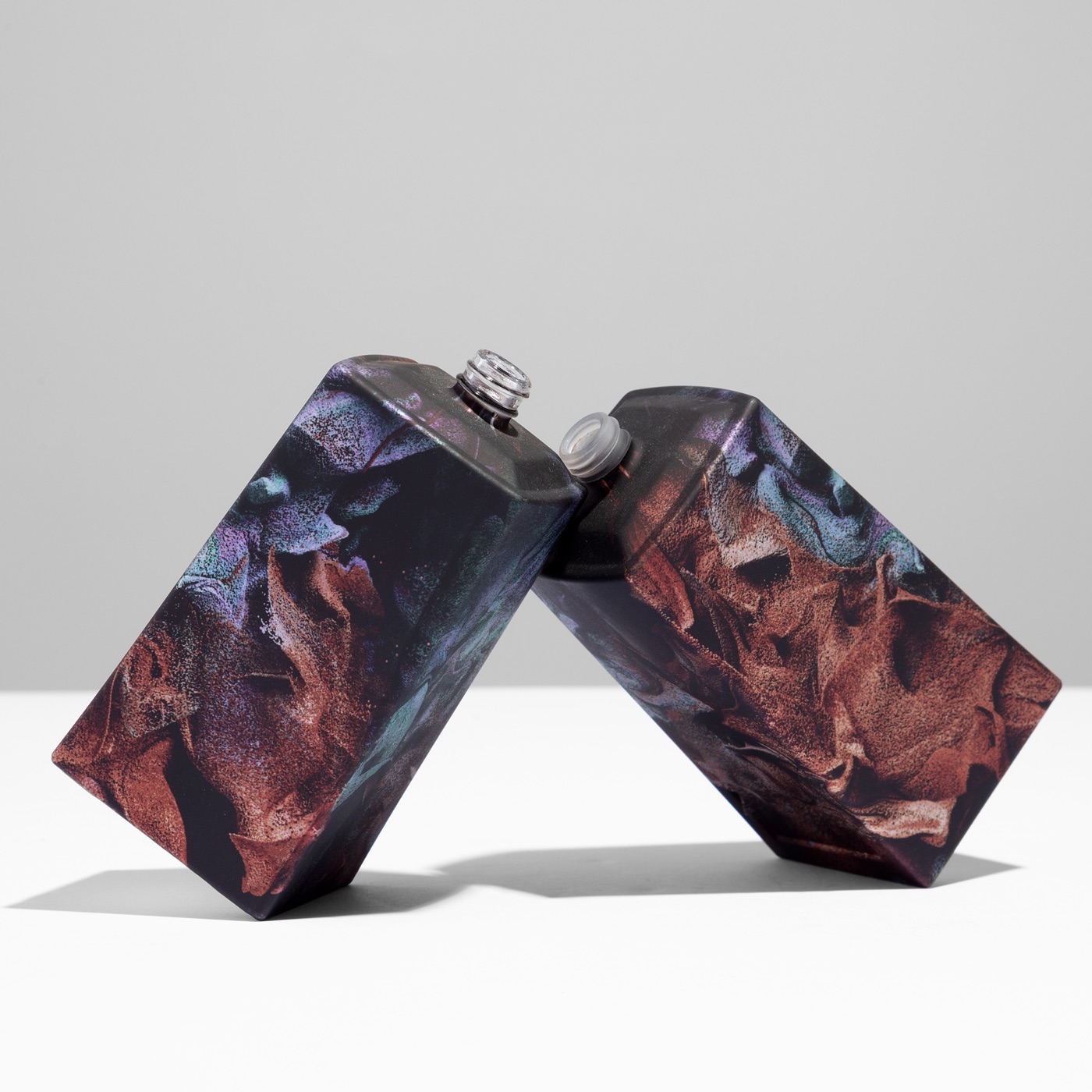
ATIU leads on one specific answer to the decoration brief: full-body digital sublimation on complex glass forms, at industrial volume, with sample-equals-production discipline. HD artwork at 1200 dpi across the full bottle, neck to base, in a single pass. Zero setup costs. Water-based inks. Net Zero CO₂ since 2023.
This is the category ATIU has been shaping since 2019 — from limited-edition spirits drops to full-scale perfumery lines for LVMH, Pernod Ricard and Puig groups.
That makes ATIU the right shortlist entry when the brief is:
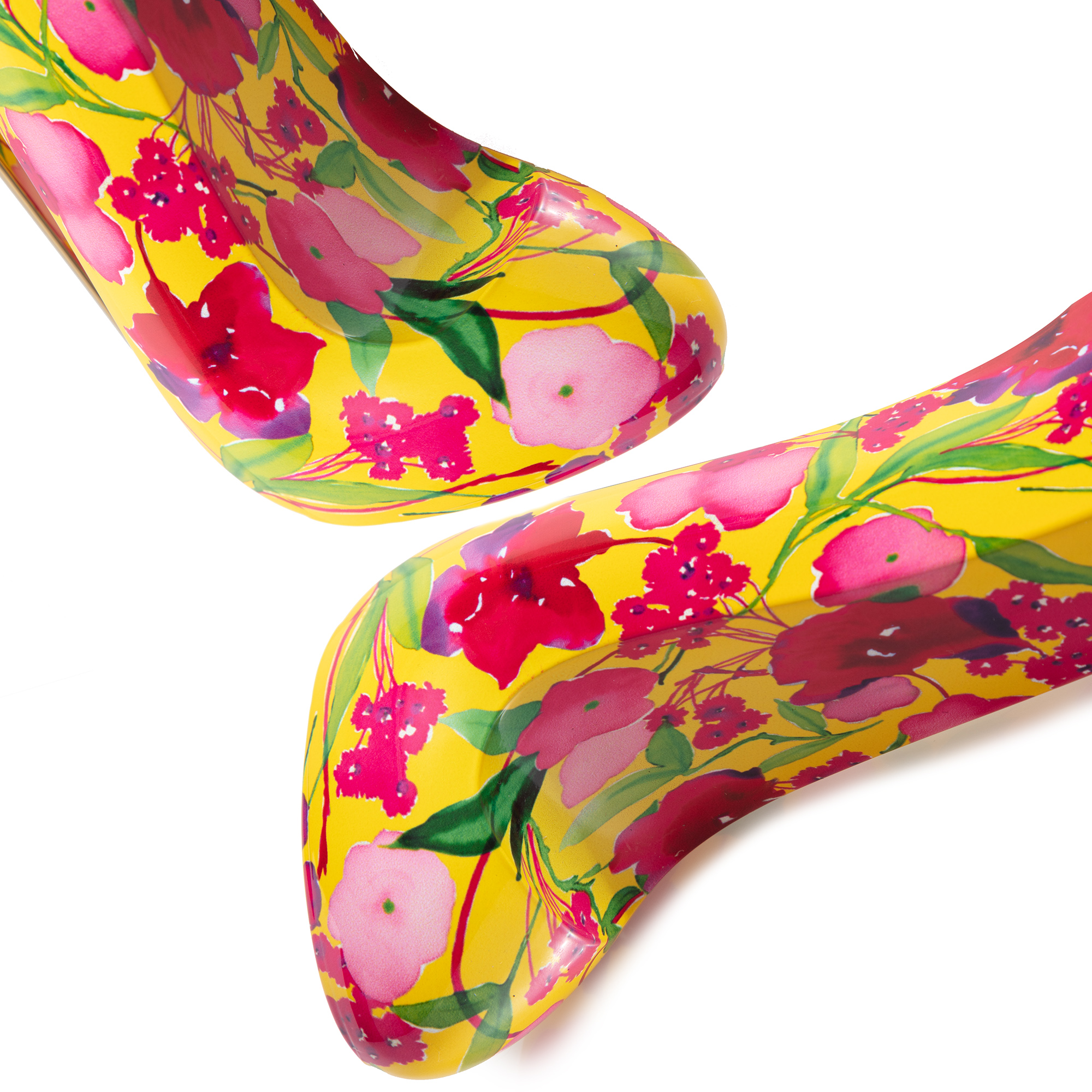
Design-led and geometry-complex — stiletto flacons, decanters, irregular shapes, multi-material assemblies.
Volume between 5,000 and 30 million pieces per year, in up to 3 SKUs per run.
Time-critical — five working days from component to sample, with the sample coming off the production line.
Sustainability-gated — decorated glass that stays 100% recyclable, mono-material, water-based inks.
ATIU is not the right answer for every brief. A traditional screen-printing house may lead on simple flat-panel labels on cylindrical bottles. A foil specialist will lead on metallic accent work. Good decoration partners know what they lead on, and are honest about where they don’t.
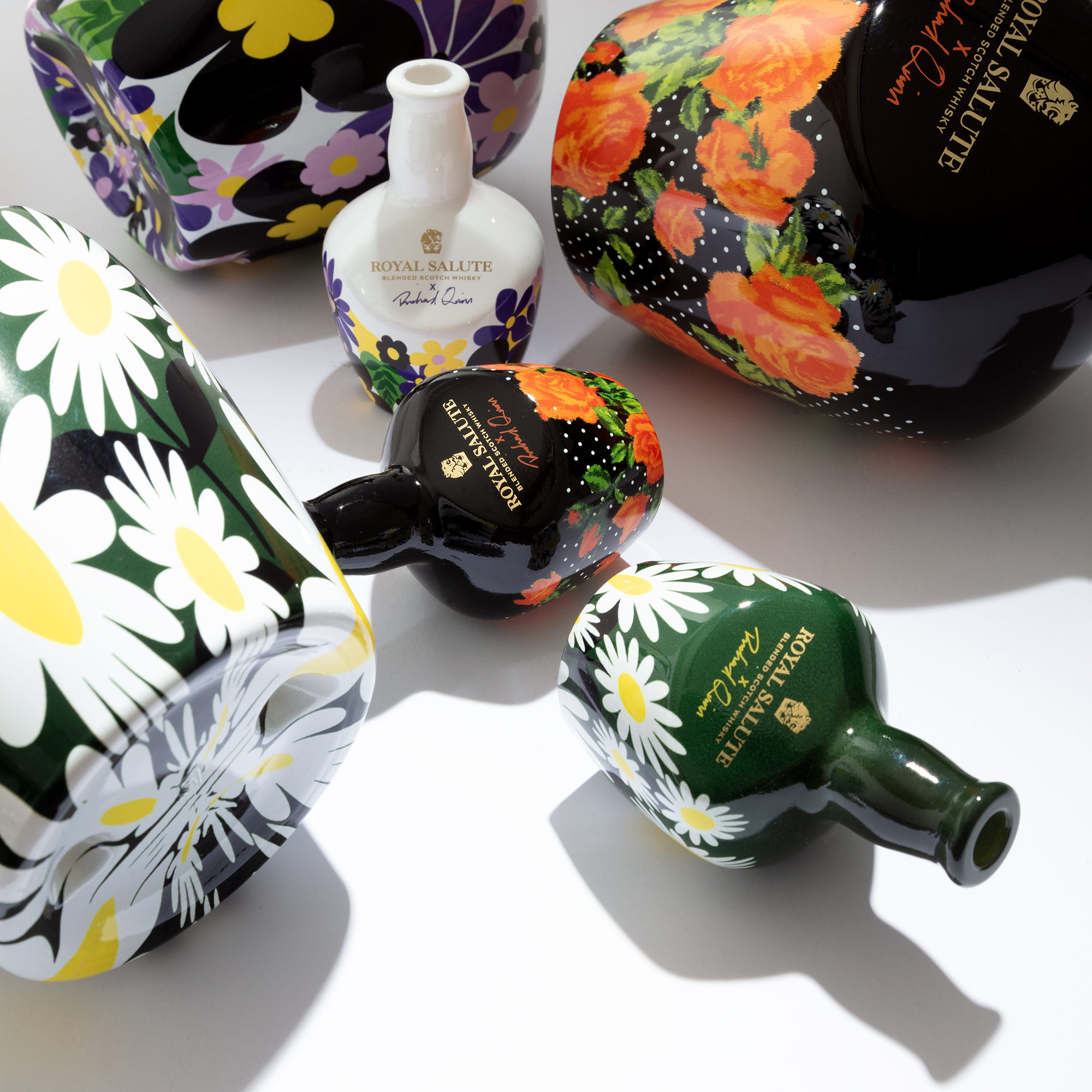
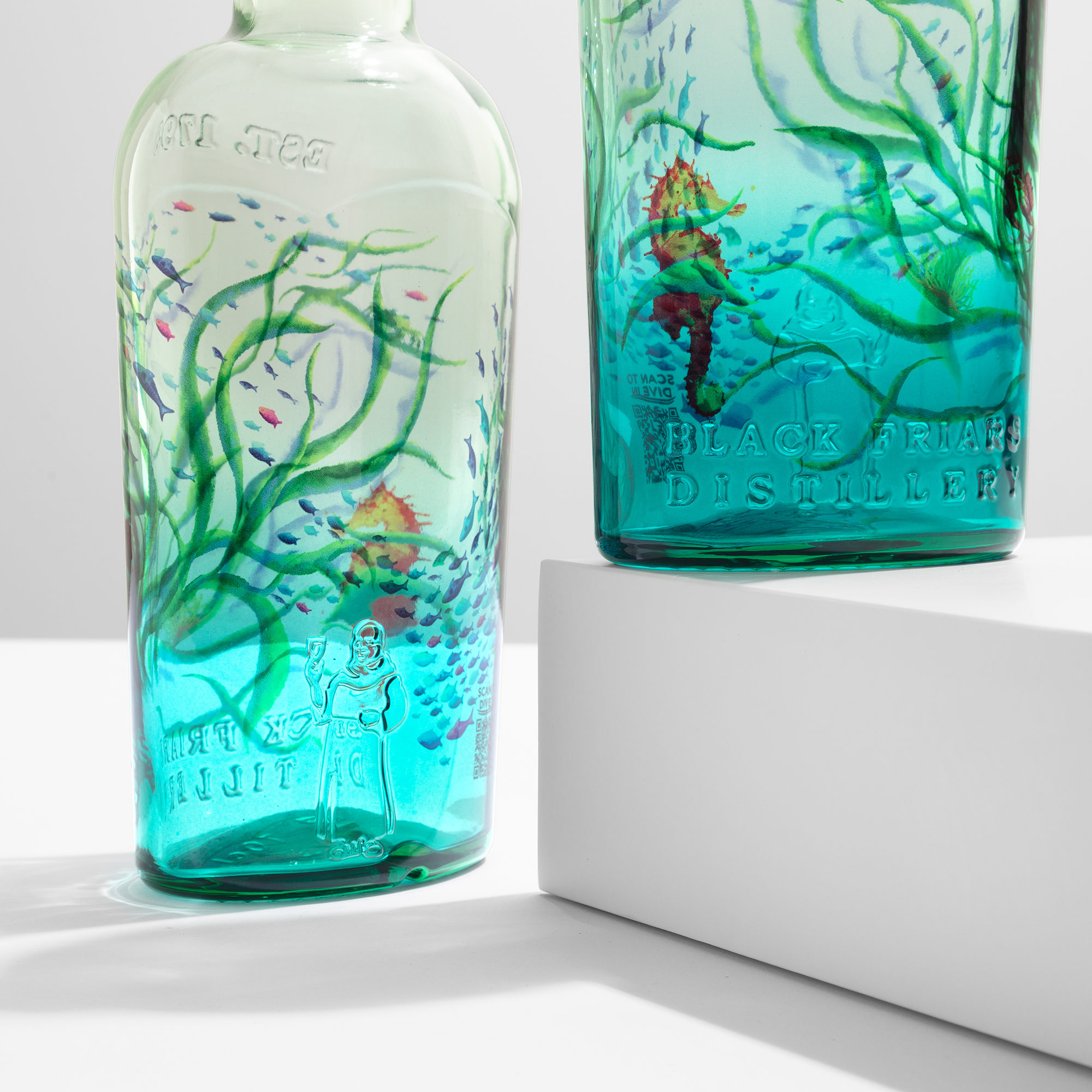
See recent work: Bvlgari Le Gemme Tygar × Refik Anadol · Royal Salute Fashion Edition · Plymouth Gin × Ocean Trust
The brief that wins
A bottle decoration partner search is easier to run backwards. Start with what a finished, approved sample has to look like, feel like, and cost at the volume the retailer wants. Work back from there.
Three vendors on the shortlist. Ten sharp questions. Two red flags that save weeks.
Do that in week one. Everything else gets easier.
Talk to ATIU about your next bottle. Start with a sample →