Beyond the liquid.
What happens when spirits brands bet on AI, no-alcohol formats, and decoration as their next competitive edge.
Walk the floor at any major spirits fair and you notice something. The bottles that stop you are not always the oldest. Or the most expensive. They are the ones that feel designed with intent — where the shape, the colour, the surface all point to a story the liquid alone cannot carry.
That moment, when your hand reaches for a bottle before your brain has processed why, is what the best spirits brands engineer deliberately. And in 2026, they are engineering it harder than ever.
The pressure to evolve beyond proof
Spirits is at an inflection point. Growth in premium and super-premium segments is still strong. But the competitive layer is thicker — more distilleries, more SKUs, more limited editions competing for the same four seconds of consumer attention at duty-free. At the same time, two structural shifts are accelerating simultaneously.
First: no-alcohol and low-alcohol spirits are no longer a niche. They are a category. Growing at double digits annually, they attract consumers who want the ritual without the alcohol — and they sit, physically, on the same shelf as the full-strength originals.
Second: artificial intelligence is moving from marketing jargon into decision-making infrastructure. Spirits brands are using AI for consumer personalization, for real-time limited edition drops triggered by purchase signals, and for compressing the internal ideation cycle. A campaign that once took six months to conceptualize is being built in six weeks.
Both shifts create the same challenge: the bottle must work harder. Because the liquid — or the absence of it — can no longer close the deal alone.
Two vectors. One design problem.
No-alcohol formats are not line extensions. They are positioning decisions.
A no-alcohol version of a premium gin or single malt is not a smaller product. It is a full brand statement. It sits next to the original on shelf. It asks consumers to trust that it deserves the same ritual — the same glass, the same ceremony, the same price point. For that trust to hold, the bottle must carry exactly the same visual authority as the full-strength product. Sometimes more.
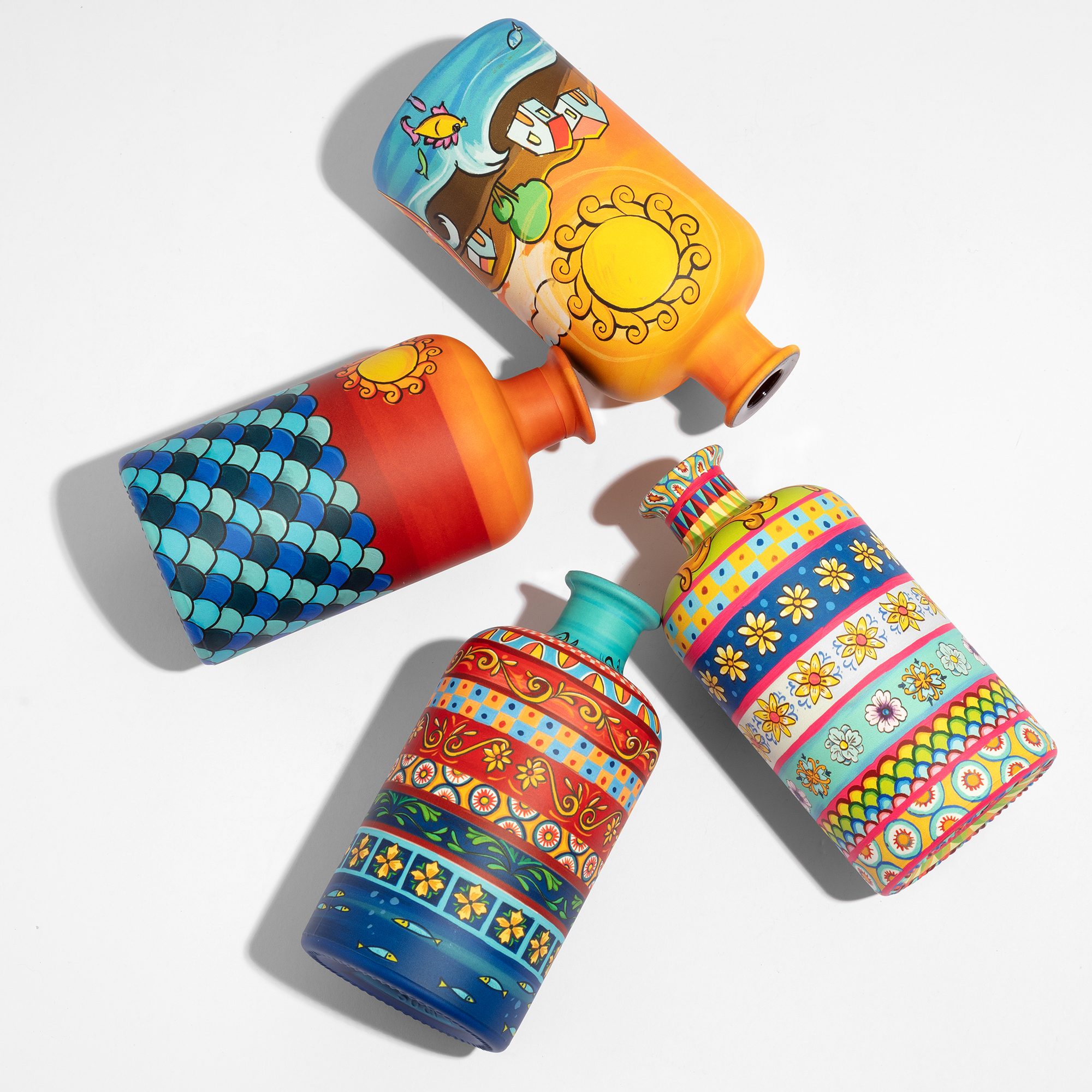
The brands succeeding in this space treat no-alcohol launches with the same decoration budget and design ambition as their flagship lines. That means HD printing at 1200 dpi. Colour systems that hold across the entire bottle surface. Geometry that reads premium at arm's length, on a backlit shelf, and on a smartphone camera. A bottle that looks like a reformulation — slightly different label, same geometry, standard print quality — signals lesser product. A bottle that asserts itself signals new category, same authority. That is not a subtle distinction. It is the difference between a launch that lands and one that apologises for itself.
AI is changing who designs — and how fast.
The second vector is less visible but structurally significant. Premium spirits brands are running AI experiments across two fronts: outward-facing (personalization at point of sale, interactive consumer experiences, data-driven limited editions) and internal (AI-assisted concept generation, faster visual testing, brief compression).
Neither replaces the creative director. Both accelerate the brief cycle. When a brand's AI system identifies a consumer preference cluster and recommends a limited edition drop, the creative and decoration brief follows within weeks, not quarters. When AI-generated concepts enter the visual review process, the design pipeline shortens and the number of concepts in play multiplies.
For decoration suppliers, this creates a clear pressure: the brands that can move from brief to sample in a compressed timeline become the natural partners. The ones that cannot become the bottleneck.
Where strategy becomes object
This is where the abstract becomes concrete.
A spirits brand pivots to no-alcohol. The liquid is ready. The marketing brief is approved. The timeline from concept to shelf becomes the operative constraint. If decoration takes months, the launch window closes.
The same logic applies to AI-driven limited editions. A run of 50,000 bottles with HD decoration — sample in 10 days, production in a single shift — says something different than a “limited edition” that is a sticker variant on the standard bottle. The former is a statement of creative seriousness. The latter is a marketing exercise. Consumers — and creative directors — know the difference.
A super-premium Scotch fashion edition is a useful reference point. That project required decoration that could hold the visual logic of a fashion collaboration — precise colour, complex surface coverage, aesthetic coherence across a full collector series. The brief was not simple. The execution had to be. Because the launch schedule did not flex.
Decoration is where strategy becomes object. And objects are what consumers photograph, share, and remember.
The infrastructure this requires
ATIU's process is built for exactly this type of challenge.
Agility. From approved brief to physical sample in 10 days. When a brand's AI-driven campaign has a narrow activation window, the decoration timeline cannot be the bottleneck. The behind-the-scenes on 360° sublimation explains how the process is structured to move fast without compressing quality.
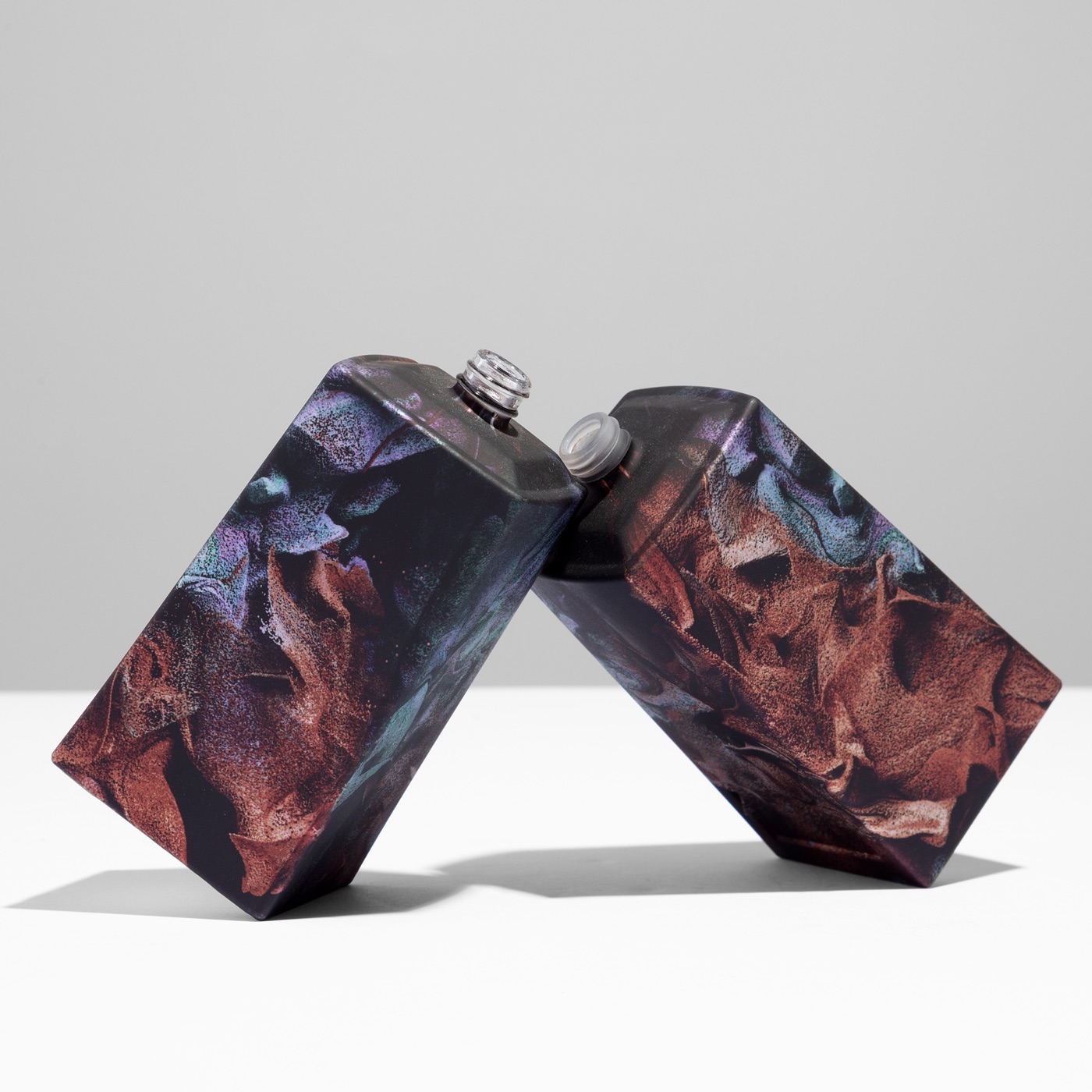
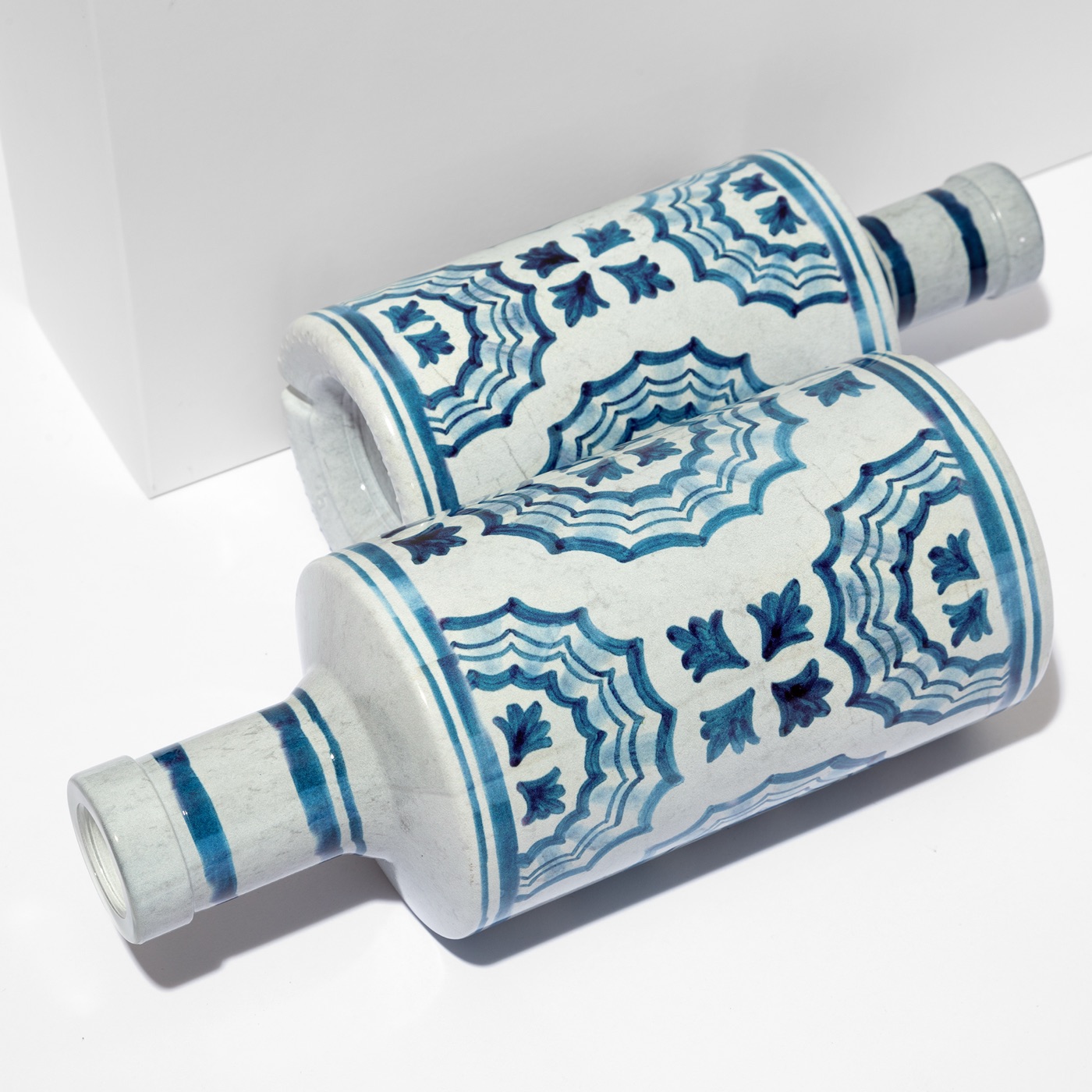
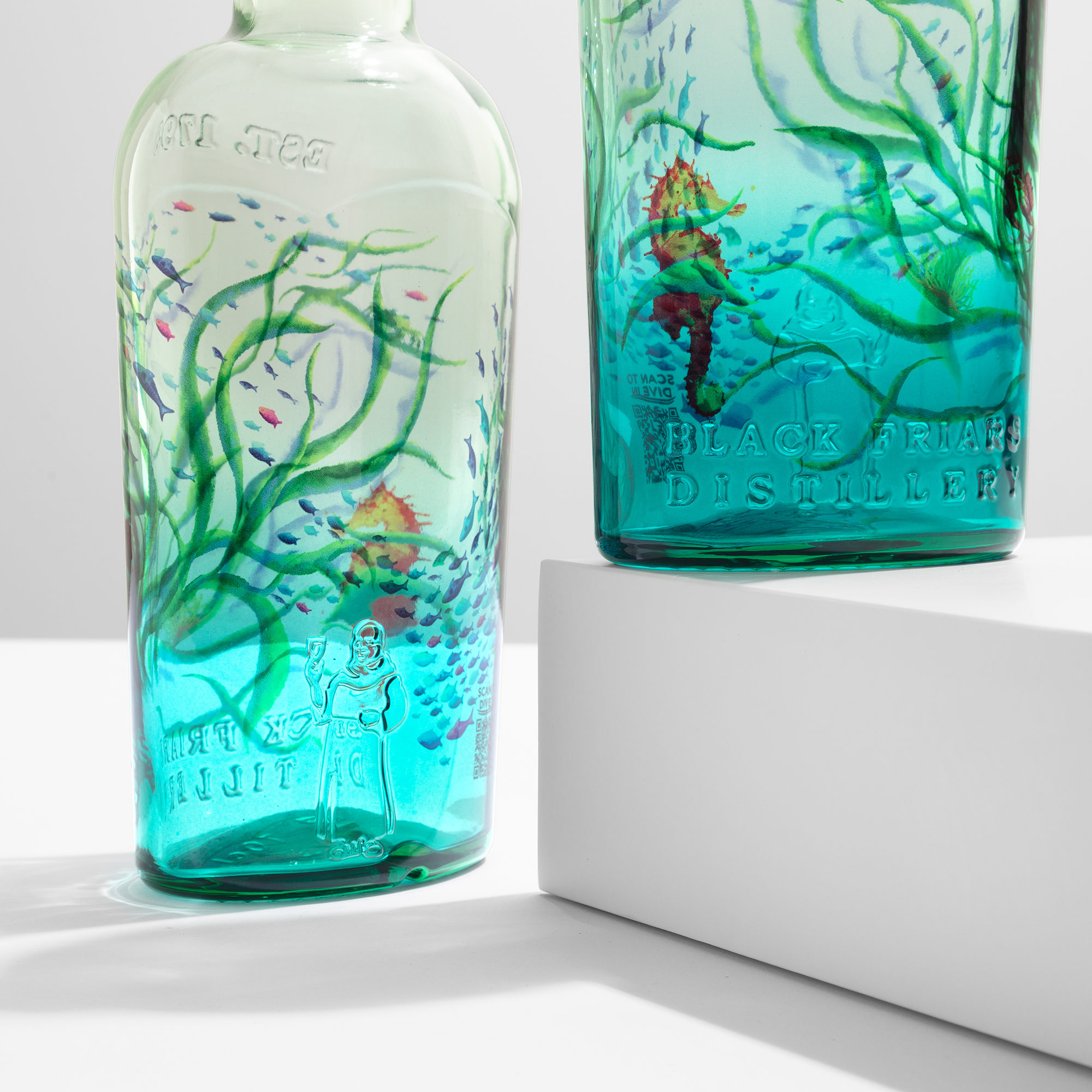
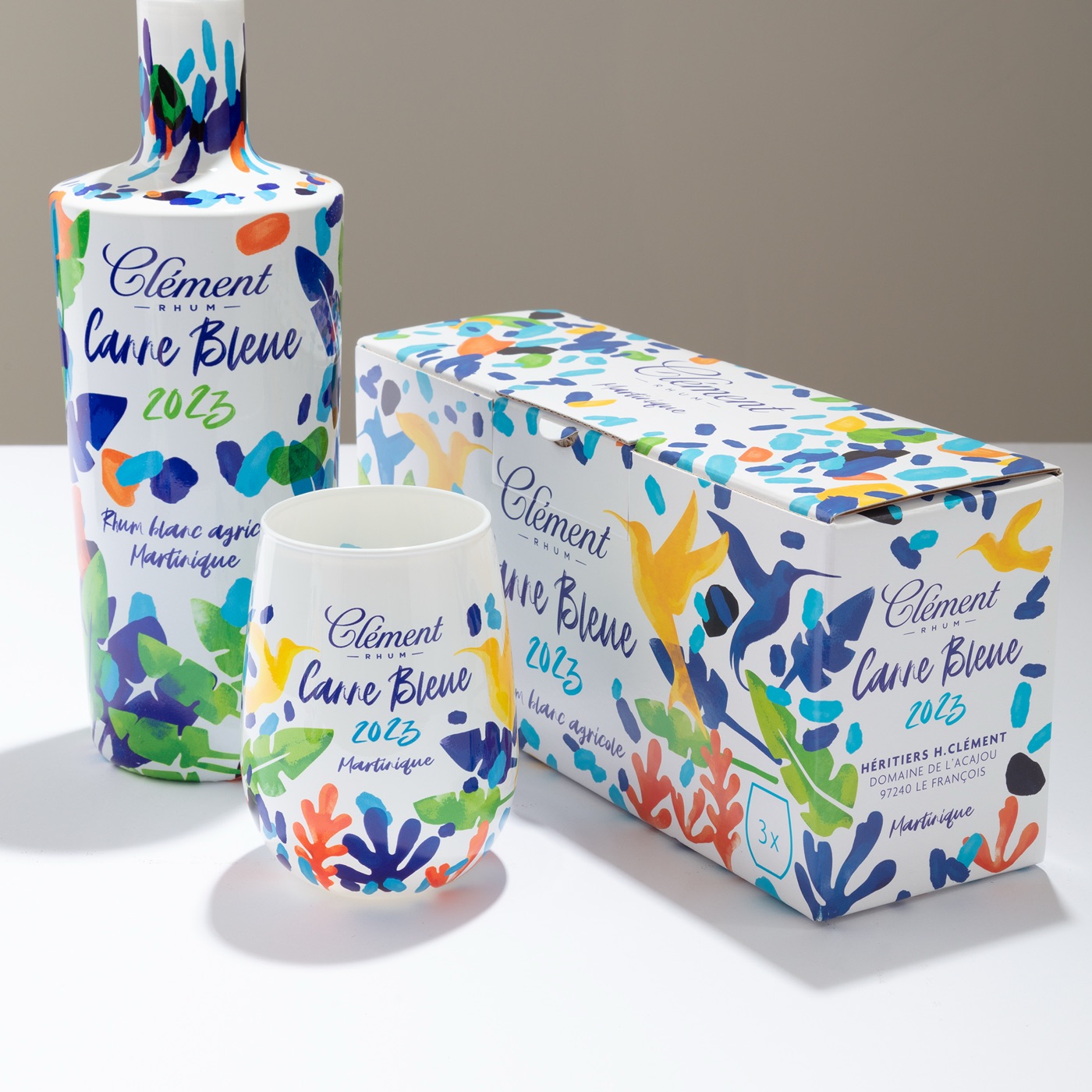
Canvas. The entire bottle surface as a single, continuous decoration field. 360° coverage, no registration breaks, no visible joints. For no-alcohol launches that need to assert full visual authority — not a partial label suggesting partial commitment — this matters.
No limits on colour. The proprietary sublimation process works with water-based inks directly on glass, delivering HD output at 1200 dpi with a colour range that holds from shoulder to base. For brands testing new visual identities — for AI-generated concepts that push beyond standard print ranges — this is the technical infrastructure that makes the concept viable.
Freedom to surprise. Round, oval, square, custom geometry. When a creative director arrives with a shape that standard techniques handle with compromise, that is the brief ATIU is built for. The answer is not “we can adapt your brief to our process.” The answer is “bring the brief.”
The window is now
The spirits brands making the most interesting decisions in 2026 are not waiting. They are running AI pilots, launching no-alcohol SKUs, compressing their timelines. The bottle is no longer a follow-up to the liquid brief. It is part of the same creative and commercial decision.
If your brand is in this transition — rethinking a line, launching a format, exploring what AI-driven personalization means for your visual identity — the question is not whether the bottle should follow. It is whether your decoration partner can keep up.
Start with a sample. Talk to us →