Sustainable Glass Bottle Decoration: Why Sublimation on Glass Is the Better Way
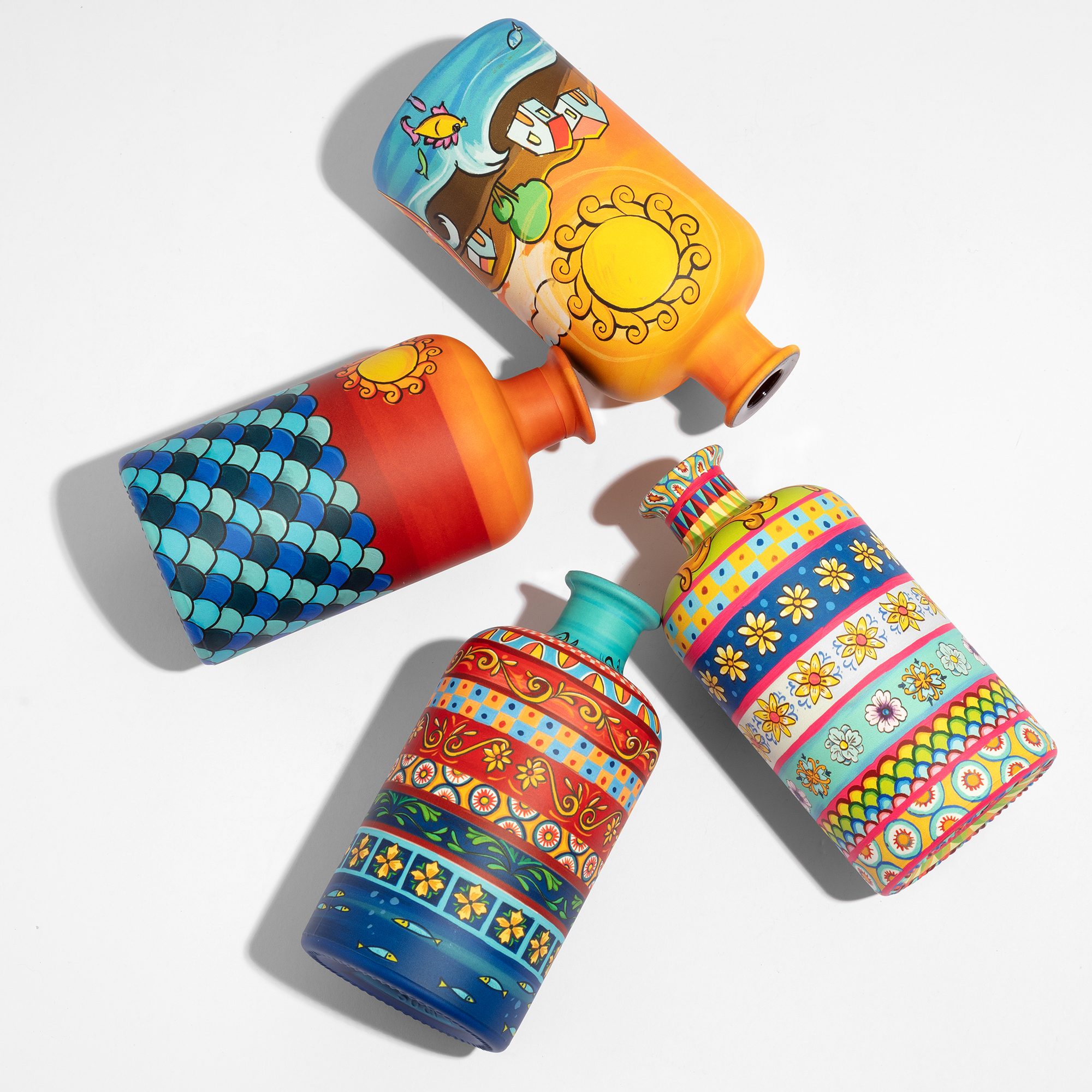
Beautiful and sustainable used to be a trade-off. A bottle could look extraordinary on the shelf, or it could carry a clean environmental story — rarely both, because the very techniques that made packaging spectacular also loaded it with solvents, heavy metals, plastic layers and multiple energy-hungry steps. That trade-off is over. Sublimation on glass proves the most striking decoration can also be the most responsible — through the chemistry, the energy, the logistics and the material logic of the process itself. Told without a single overclaim.
It starts with what you don't add
The clearest way to lower the footprint of a decorated bottle is to put less onto the glass, and use less to get it there. Every part of the process is waterborne — both the primer coating and the inks. No solvents, in either. That removes the volatile organic compounds released by the solvent-based systems that still dominate traditional glass decoration, cuts the chemical footprint and simplifies waste — a real advantage for brands navigating REACH and tightening packaging rules. The inks are also formulated without lead, cadmium or other heavy metals.
The energy side is just as deliberate. Conventional screen printing fires ceramic inks above 600 °C; ATIU's curing never goes above 180 °C. That is a large gap, and it translates directly into lower gas consumption, less thermal stress on equipment and a smaller carbon footprint per decorated bottle.
The glass stays glass — and stays recyclable
Glass is one of the few truly endlessly recyclable materials: it can be remelted again and again with no loss of quality. Sublimation keeps that intact. Because the decoration adds only a minimal layer on the surface — no plastic sleeve, no laminate, no heavy build-up of material — it does not compromise the glass's recyclability. The decorated bottle remains a recyclable glass bottle. Beauty on top, and the material underneath still does what glass does best.
Reusable — ready for the refill era
Recycling is no longer the only end-of-life story that matters. As refill schemes and the EU's packaging framework (PPWR) push brands to keep bottles in circulation rather than just in the recycling stream, decoration becomes the weak point: whatever is applied to the glass has to stay on the bottle through the return cycle, or the bottle's second life ends at its first return. Sublimated decoration is fused into the coating itself, with longer-lasting resistance than an applied label. The decorated bottle stays reusable, so the same object can carry the brand through multiple cycles before it is ever recycled. For a premium brand exploring refill or returnable formats, that removes the usual conflict between the bottle that looks extraordinary and the bottle that comes back.
One process, one supplier — far less transport
There is a hidden footprint in traditional glass decoration: it takes many steps, and often many suppliers. A coating here, a multi-colour screen print there, a run of digital printing, sometimes an applied label or a foil — each stage frequently at a different company, each hand-off adding transport and carbon before the bottle is even finished. Sublimation on glass does in a single pass, under one roof, what that whole chain would otherwise take — a result that stacking those methods could barely reproduce anyway. One supplier, one location, one step: fewer stages, fewer trucks, less carbon.
Geography compounds it. ATIU sits in Verona, in the heart of a region dense with Europe's leading glassmakers — so glass reaches the plant over short distances, is fully decorated in one place, and moves on. And it is part of ATIU's plan to open further plants around the world — closer to clients in markets like the Americas — so the finished bottle travels less, too. Decorating near where the glass is made, and near where it is used, designs transport out of the footprint.
Ennobling lighter glass
The most powerful sustainability lever in glass packaging is often the glass itself. Every gram carries an embodied footprint, so lightweighting a bottle is one of the highest-impact moves a brand can make — held back only by the fear that lighter, thinner glass looks less premium. Sublimation removes that fear. Because the decoration is a continuous, high-resolution layer rather than a heavy material build-up, it is the ideal way to ennoble lighter, thinner glass and still deliver a genuinely premium result — 360° coverage, HD detail and depth on a bottle that weighs less. Less material to make and to ship, same shelf presence.
Proof, not promises
In a market where greenwashing is spotted fast, verifiable proof beats adjectives. ATIU has been zero-net carbon since 2023, independently certified by Up2You across Scope 1, 2 and 3 — direct operations, purchased energy and upstream supply chain, not a Scope 1-only figure. For procurement teams managing ESG targets, a supplier that is already net-zero resolves a line of Scope 3 reporting before the audit begins.
The company holds EcoVadis Committed status — a recognised, standardised framework assessing environment, labour, ethics and sustainable procurement — and in 2025 its sublimation methodology won a Pentawards Gold in the Sustainability category, external and competitive verification that the story stands up from outside the company. ISO 9001 completes the quality picture. And when a specification requires evidence at product level, the testing is third-party too: food-contact and recyclability testing through Intertek, and glass-transmittance testing for recycling streams through Stazione Sperimentale del Vetro — typically within 20 working days of the request.
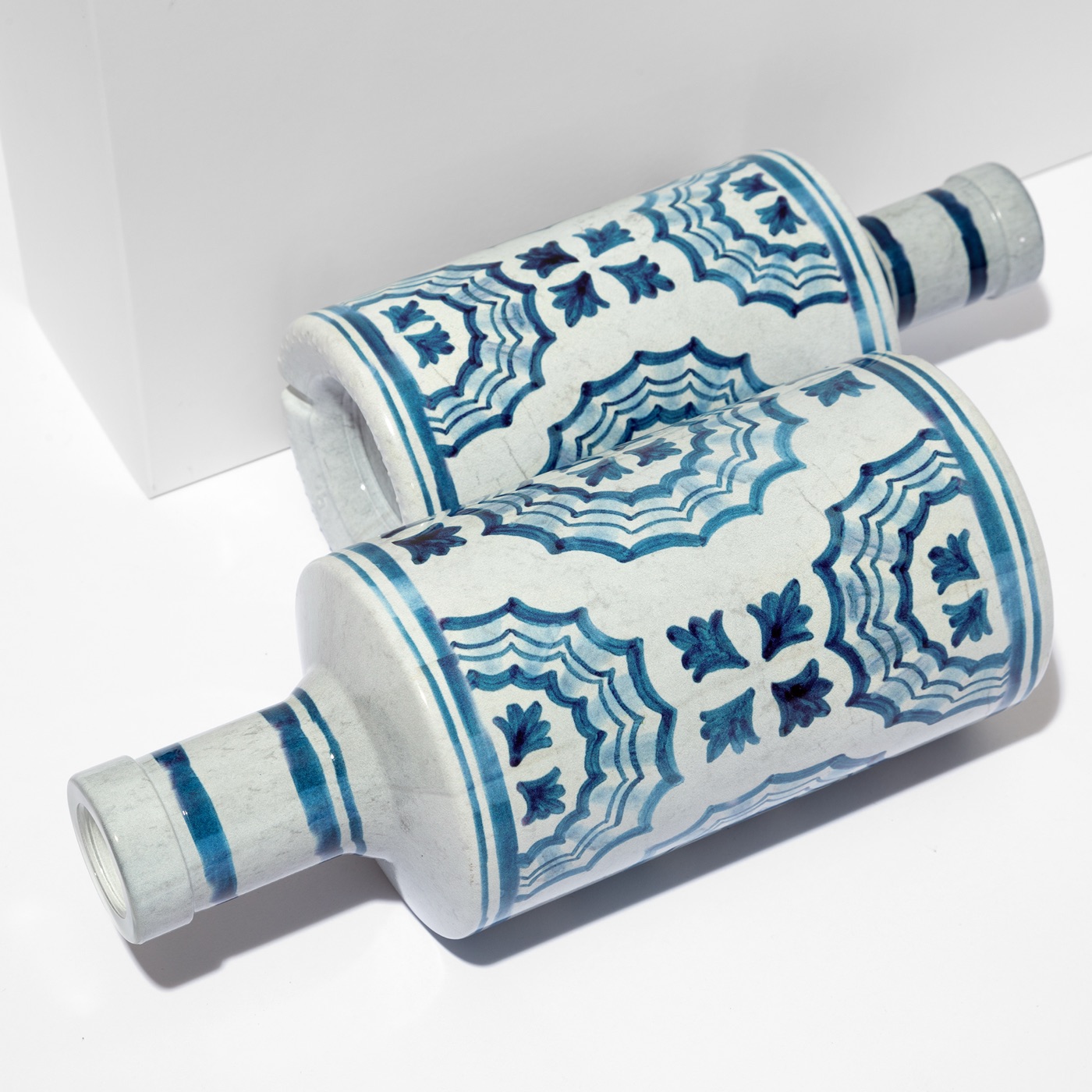
The clearest proof, though, is a bottle you can hold. Centonze Ice Blue is a premium Sicilian olive oil bottle decorated with a majolica-effect artwork — the blue-and-white ceramic language of the Mediterranean, reproduced through sublimation on glass across the full body of the bottle. It is this project that won the Pentawards Gold 2025 in the Sustainability category: not a concept render or a lab sample, but a decorated bottle on the market. Every principle in this article is present in it — waterborne coating and inks, low-temperature curing, a single decoration step under one roof, and glass that stays fully recyclable underneath the artwork. The jury's recognition confirms exactly what the process makes possible: a decoration rich enough to evoke hand-painted ceramics, delivered with the environmental profile described above. When a brand asks what sustainable decoration looks like in practice, Centonze Ice Blue is the answer ATIU points to.
What ATIU is doing next
Zero-net carbon since 2023 is a milestone, not a finish line. The emissions that cannot yet be eliminated are offset through environmental restoration projects here in Veneto — a short drive from the plants that generate them, not abstract credits on another continent. In parallel, ATIU is investing in on-site solar generation at its Verona operations and growing the share of renewable energy powering production — lowering the real energy footprint at source, so the story rests on producing fewer emissions rather than balancing them. Sustainability treated as an operating discipline that improves year on year.
The procurement checklist: seven questions to ask any decoration partner
Procurement and CSR teams audit packaging suppliers with sharper questions every year. These are the seven that matter for decorated glass — and the answers a partner should be able to put in writing.
1. What is in the chemistry?
Ask for the full picture: coating and inks. ATIU's answer — waterborne in both, no solvents, and inks formulated without lead, cadmium or other heavy metals.
2. How much energy does the decoration take?
The curing temperature tells you most of it. Conventional ceramic screen printing fires above 600 °C; ATIU's process never exceeds 180 °C.
3. Does the decoration compromise recyclability?
No plastic sleeve, no laminate, no material build-up — the decorated bottle remains a recyclable glass bottle, and glass-transmittance testing for recycling streams is available through Stazione Sperimentale del Vetro.
4. Is it compatible with reuse?
Under PPWR, this question is becoming unavoidable. Sublimated decoration is fused into the coating, so the bottle works in refill and returnable schemes as well as in the recycling stream.
5. Can the claims be verified by a third party?
Food-contact and recyclability testing through Intertek; ISO 9001; EcoVadis Committed; a Pentawards Gold 2025 in the Sustainability category won by a bottle on the market, not a concept. The certifications are listed on our About page.
6. What is the supplier's own carbon status?
Zero-net carbon since 2023 across Scope 1, 2 and 3 — documented so it slots directly into your own Scope 3 reporting, resolving that line before the audit begins.
7. How many steps — and how many trucks?
One process, one plant, one supplier, in the heart of Europe's glassmaking region. Fewer stages and fewer hand-offs mean less transport carbon before the bottle is even filled.
If you are running this audit now, ask us for the documentation pack — it exists, and it is the same set of answers written above.
Why it matters to the brands who decorate with us
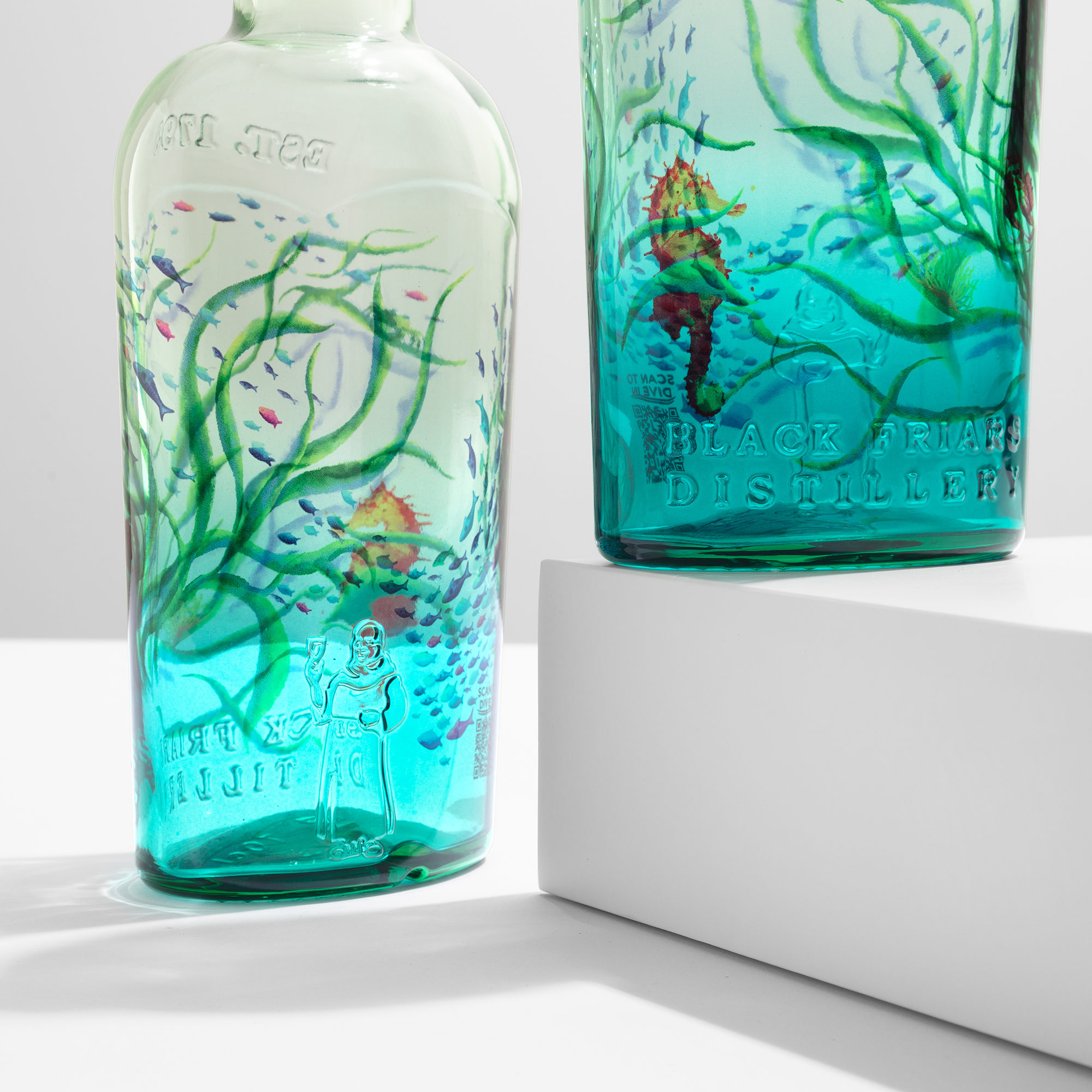
For a brand, packaging is where sustainability becomes visible — the part a customer holds, and increasingly the part a retailer or regulator audits. Sublimation on glass gives brands something they can stand behind: a premium result with no solvents, no plastic added, no heavy metals, glass that stays recyclable, a shorter transport chain, and a supplier whose carbon performance is externally certified. That lets a team communicate sustainability with confidence — verifiable facts, not hopeful language. And when sustainability is part of the brand's own story, the decoration can carry it: Plymouth Gin's ocean conservation editions turned the bottle itself into the campaign. The quiet promise: you no longer have to choose between the bottle that turns heads and the bottle you can defend.
See how sublimation on glass works, or get in touch.