Before ATIU was ATIU.
The untold origin story of the company that reinvented glass decoration.
For two years, nobody at ATIU said the word sublimation out loud.
Not in a meeting, not on a call, not in front of a client — and not out of secrecy for its own sake. The word already meant something specific in the packaging industry: a slow, manual craft in which a bottle was clamped to a frame and decorated one piece at a time, beautiful in the right hands but never designed for industrial volumes. What was taking shape in Verona used the same physical principle and almost nothing else — a different architecture, a different chemistry, a different economy. Borrowing the old word would have set every conversation on the wrong track before it began, so the team retired it and let the samples do the introducing. This is the story of how a small workshop’s craft became the platform ATIU runs today, and why the vocabulary took longer to catch up than the technology did.
The workshop in Verona
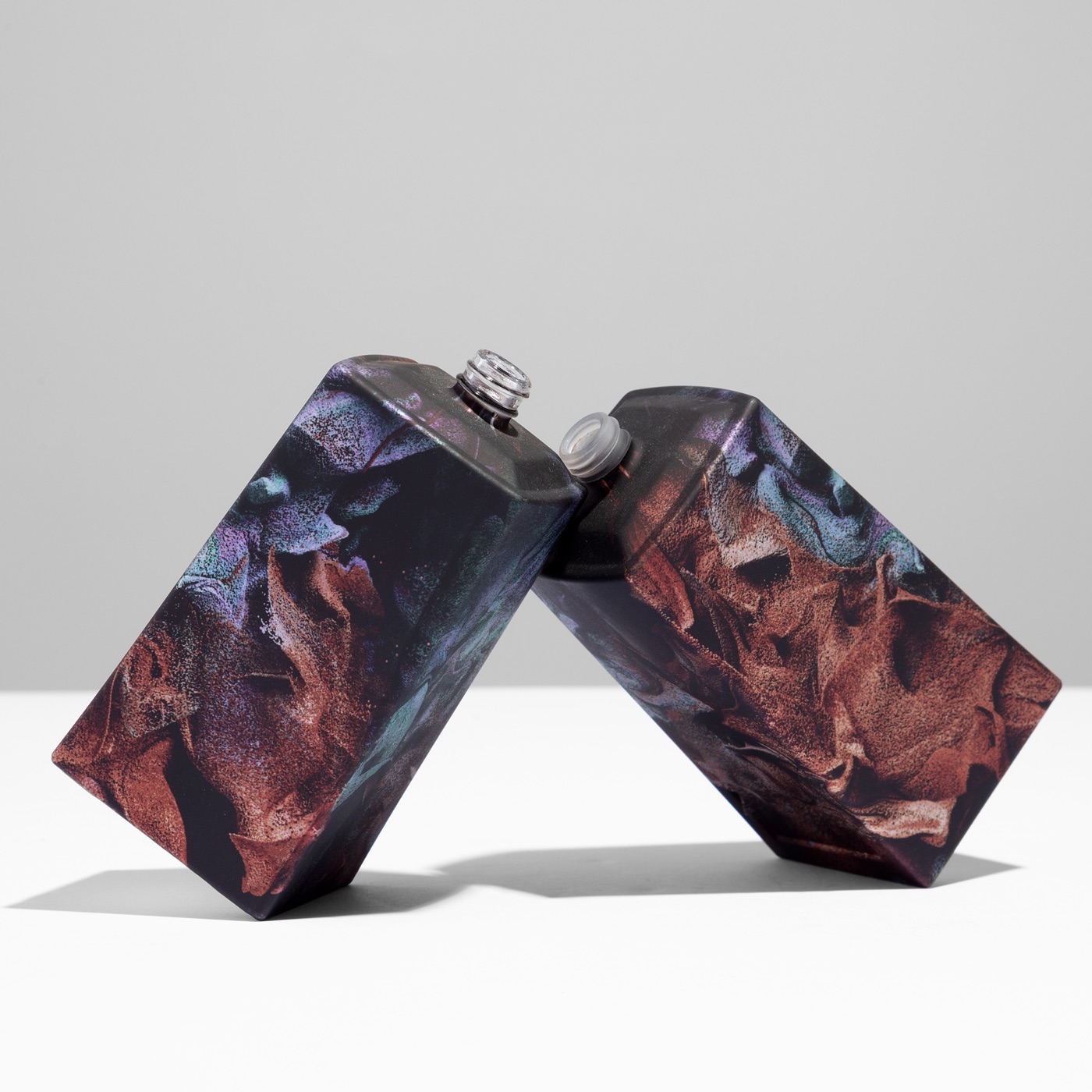
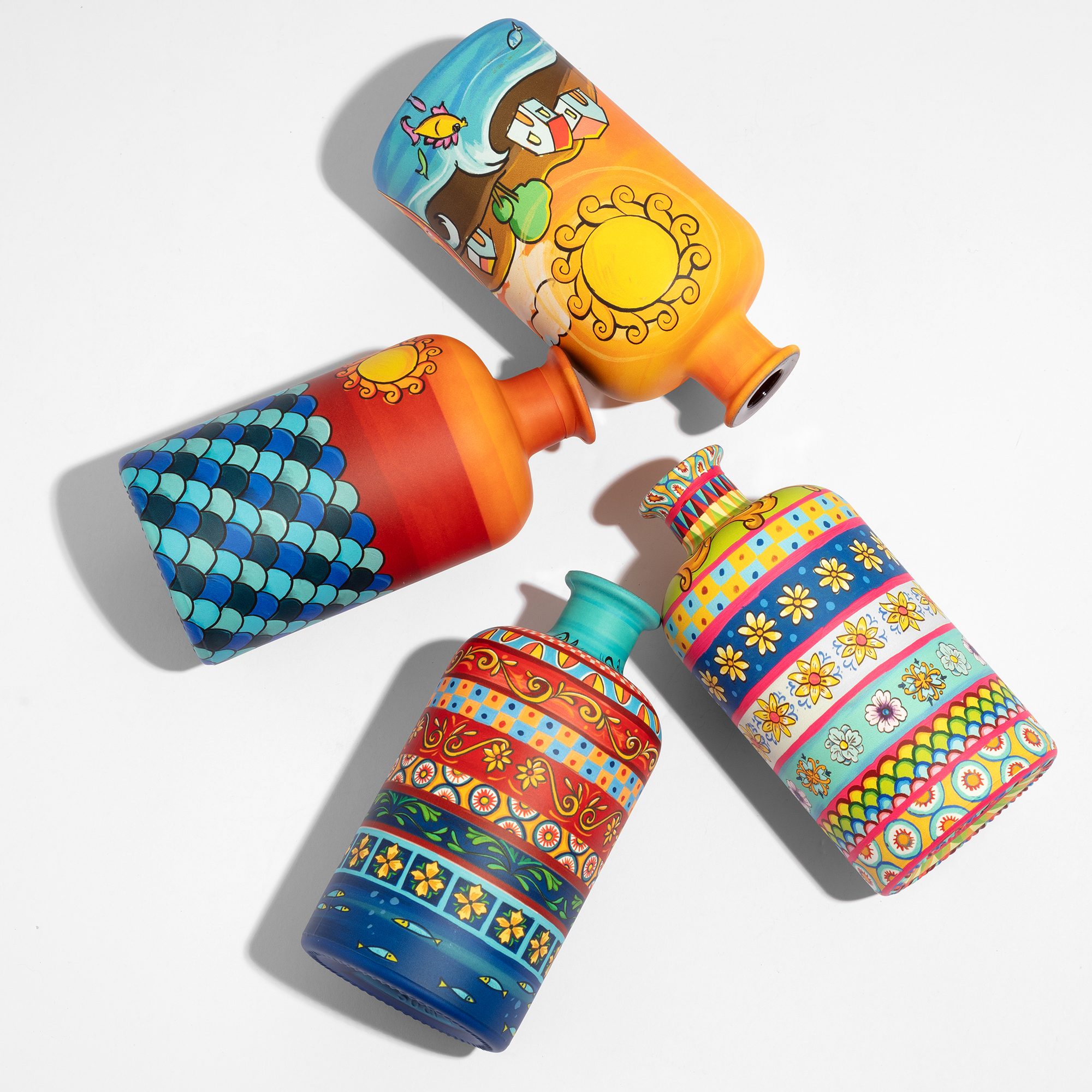
ATIU’s origin is a workshop in Verona in 2019: five employees, a single customer, and one unusual capability — putting full-colour artwork onto glass with a precision that a handful of luxury perfumery brands relied on without ever saying so publicly. The work was quiet, obsessive and deliberately small; perfumery flacons are produced in refined volumes, and the craft had settled comfortably into that niche. It could have stayed there indefinitely. What changed everything was a question that sounds obvious only in hindsight: if this level of colour and detail is possible on a perfume flacon, why is it only in perfumery? One category over sat a market many times larger — spirits — full of brands asking for exactly the kind of surface this workshop already knew how to create.
The insight
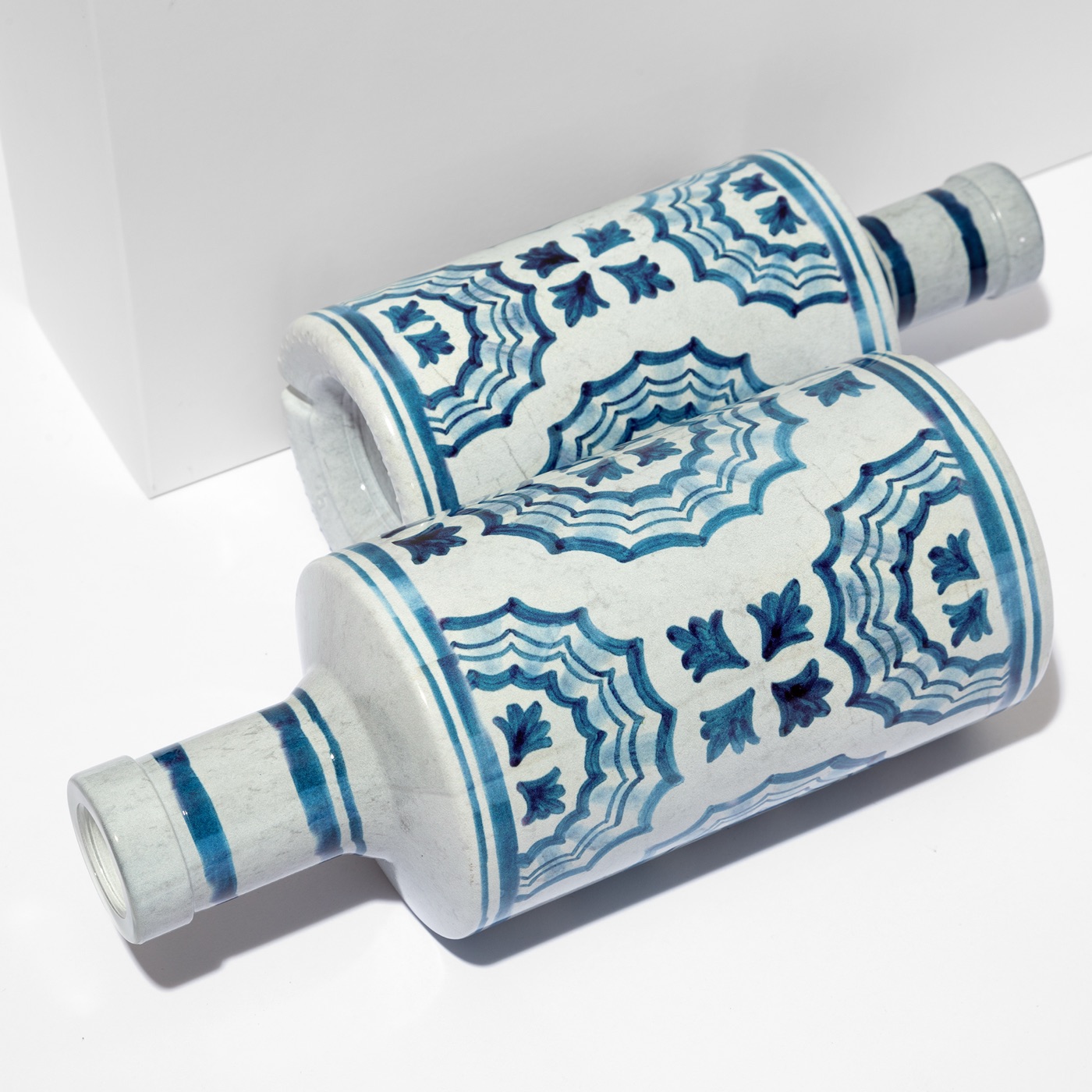
Spirits was attractive not because it was glamorous, but because it held two open ambitions that the workshop’s craft could answer at once. Brands across the market wanted decoration that kept the bottle a single recyclable material, with nothing added that would need to be removed at end of life. And creative teams at the top of the category wanted artwork that behaved like one idea — full colour, travelling continuously across the whole body of the bottle — rather than an assembly of separate passes of coating, screen print, pad print, foil and hot stamping, each planned and priced on its own. Sublimation on glass answers both: the decoration lives in the glass surface itself, the artwork is printed digitally in full colour, and a single process carries the entire design.
What existed in Verona was the seed. What ATIU would become was the platform.
The platform meant scaling the craft without losing what made it beautiful: digital printing, water-based inks, a sample identical to production, and economics that could work at spirits volumes rather than only in niche perfumery. None of that machinery existed yet. ATIU was about to become possible — but first it had to be built.
“That’s impossible.”
The same answer came back from every direction: sublimating a spirits bottle at scale had been tried before, and the earlier attempts had not carried through to production. That history was real — but it described how the process had always been approached, not what ATIU was designing, which shared a name with the old craft and very little else. Rather than spend every meeting untangling the two, the team simply stopped using the word: for two full years there was no sublimation in meetings, emails or decks, and the technology was judged on samples rather than on vocabulary. The company was not iterating on the industry’s existing idea of sublimation; it was starting from zero, with glass, spirits and industrial scale as the design brief from day one. In retrospect, the silence was the strategy: it forced every conversation to begin with a bottle in someone’s hands.
Building the platform
The first ATIU line ran at 300 bottles per hour — modest by today’s standard, radical for what it proved. It combined water-based inks, digital printing and an application process designed from the ground up for glass, for spirits and for scale. One principle mattered more than any specification on the datasheet: the sample a client approved was exactly what came off the production line — same process, same inks, same result. The prototype was the production, and the production was the prototype. That principle still defines how ATIU works today, with a production-line sample delivered in five working days, and everything the platform later became — the speed, the resolution, the colour depth — was built on that foundation.
The first believers
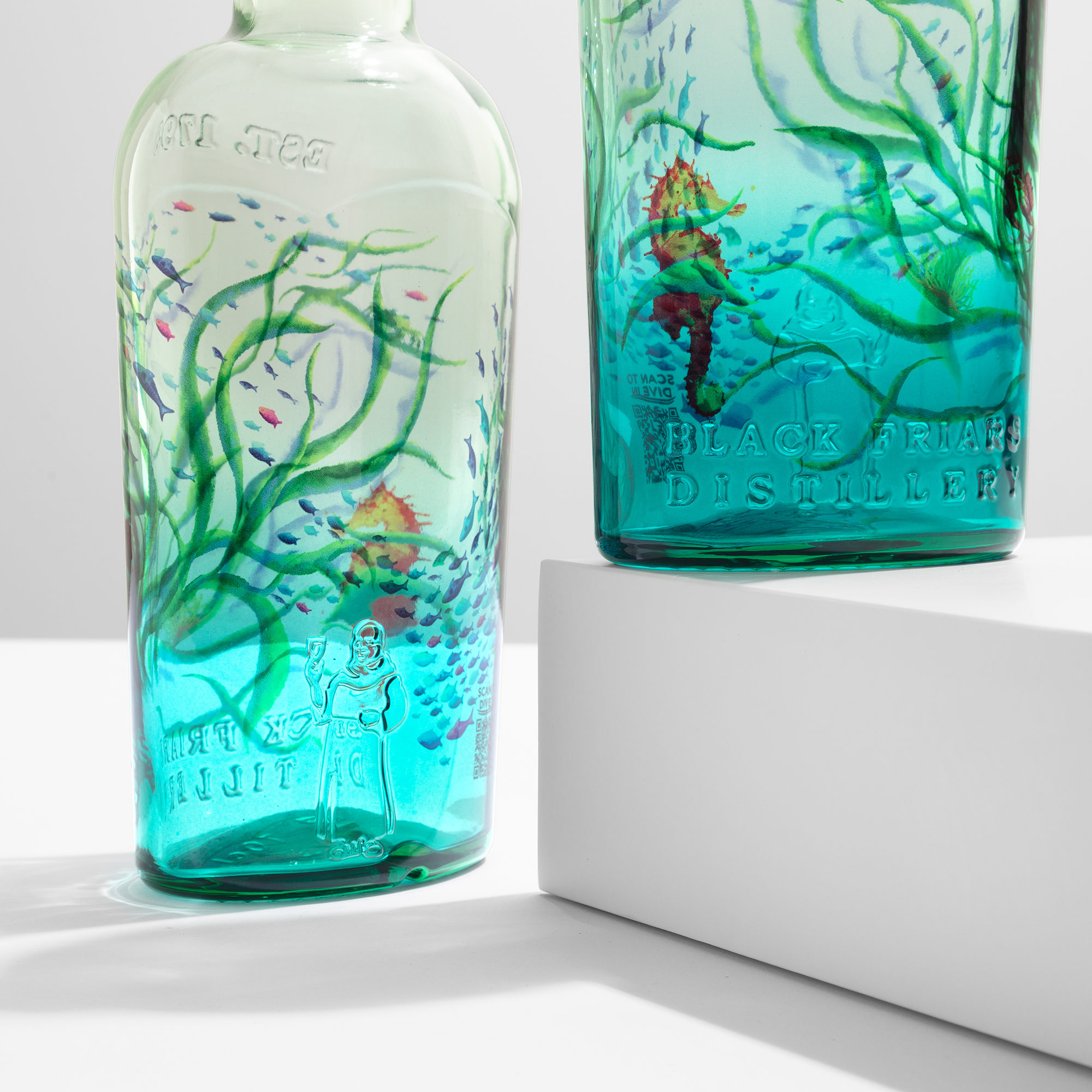
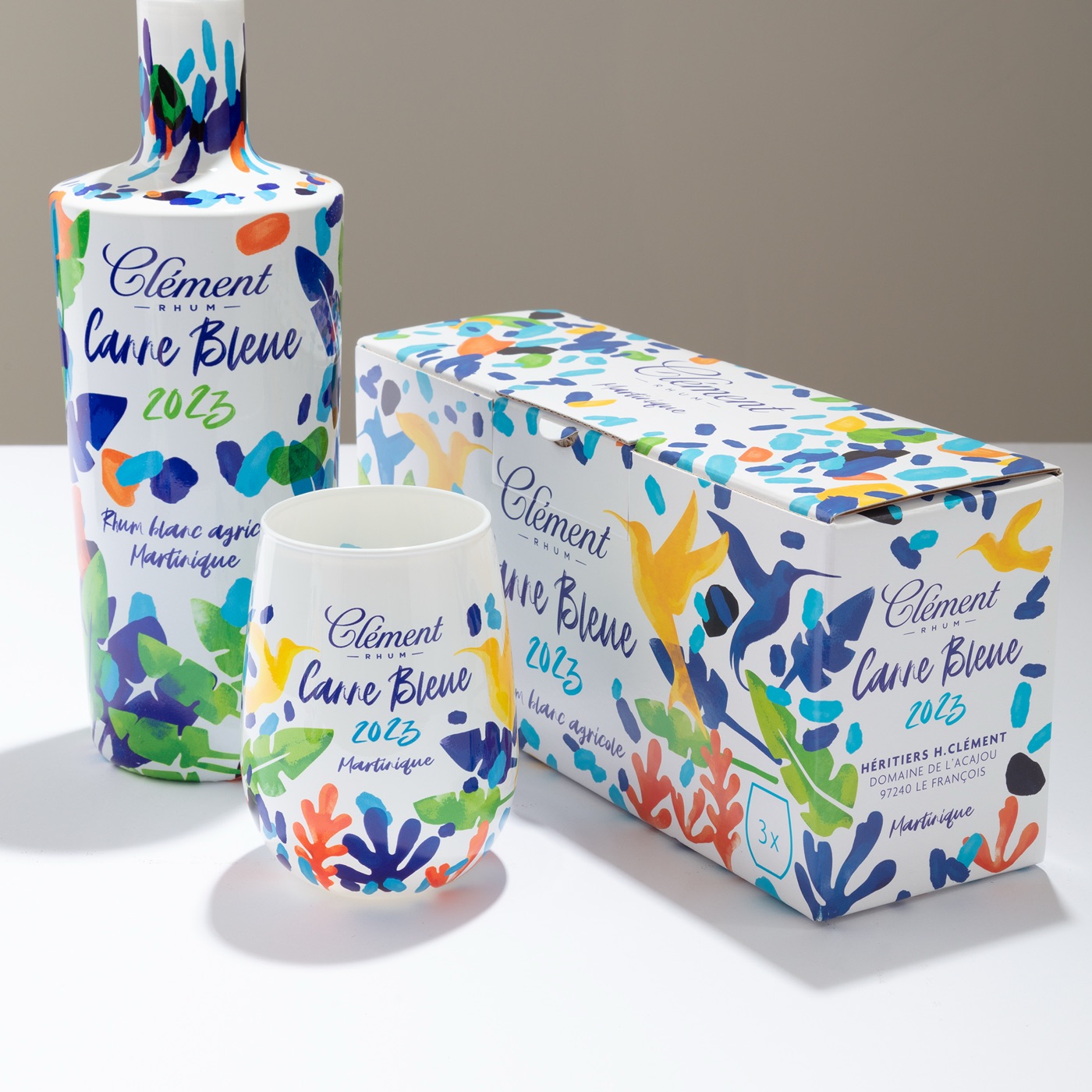
The first believers were brands and buyers willing to hold the early samples, run their own tests, and judge the results on evidence rather than on the industry’s expectations. That pattern has repeated ever since, and today the proof is public rather than anecdotal. Plymouth Gin’s ocean-conservation edition carries full-colour artwork on a clear primer; Bvlgari’s collaboration with Refik Anadol runs data-driven art across a metallic soft-touch matte finish; Centonze’s Ice Blue brought the same decoration language to premium olive oil. Each of those projects began as a brief that would once have been called a stretch, and each ended as a bottle on a shelf.
2020 — Building the network
By 2020 the system was ready, and the team faced a task with no playbook: building a customer network from scratch for a technology most of the industry had never seen perform at this level. There was no established category to slot into and no reference installation to point at, so the demonstrations did the talking. Colour depth, seamless artwork travelling the full 360 degrees from base to neck, HD detail holding steady at up to 1200 dpi across curved glass, and a sustainability story grounded in the process itself rather than in a footnote — every first meeting recalibrated what the person in the room thought was achievable on a bottle. The early adopters were a small group who said yes before the rest of the market was ready, and they opened the door for every client who came after.
2022 — The round that changed the scale
By 2022 ATIU had outgrown its first machine, its first plant, and the pace of its own roadmap, because the spirits industry now wanted the result at real volume. The first funding round closed with a single mandate: protect the IP and engineer the next generation of the platform. The result was a new line running at up to 4,000 bottles per hour — more than ten times the original — fast enough for global spirits programmes, precise enough for luxury perfumery, and economical enough to serve projects from 5,000 pieces up to millions of units. The company that had once retired its own vocabulary now had the capacity to define it.
Who ATIU is for
ATIU makes immediate sense to people who treat the bottle as a canvas: creative directors who want the artwork they imagined rather than a version adapted to tooling, brand teams who want the sample to equal the shelf, and packaging innovators who want the same freedom on glass that they already have on a box, a screen or a fabric. For them the platform feels obvious — of course an artwork can travel across every curve, of course colour can be full, of course one process can carry one idea. For teams whose reference points are the conventions of the last thirty years — screens, tooling, colour separations, setup fees — ATIU usually takes a moment to place, because it does not sit inside those conventions. The first reaction is often a long pause; the second is usually a brief.
Still just getting started
This is ATIU today: two plants in Verona with a total capacity of 30 million pieces a year per plant, a team that has decorated bottles for some of the most demanding brands in spirits and perfumery, and a company that has been zero-net carbon across Scopes 1, 2 and 3 since 2023. The origin story still shapes the culture — every new brief is treated the way the first ones were, as a question the samples have to answer. The work goes on, one brand and one bottle at a time. Come see the work; better yet, come hold a bottle.
Explore our technology or get in touch for your project.