Perfume Flacon Decoration by Sublimation
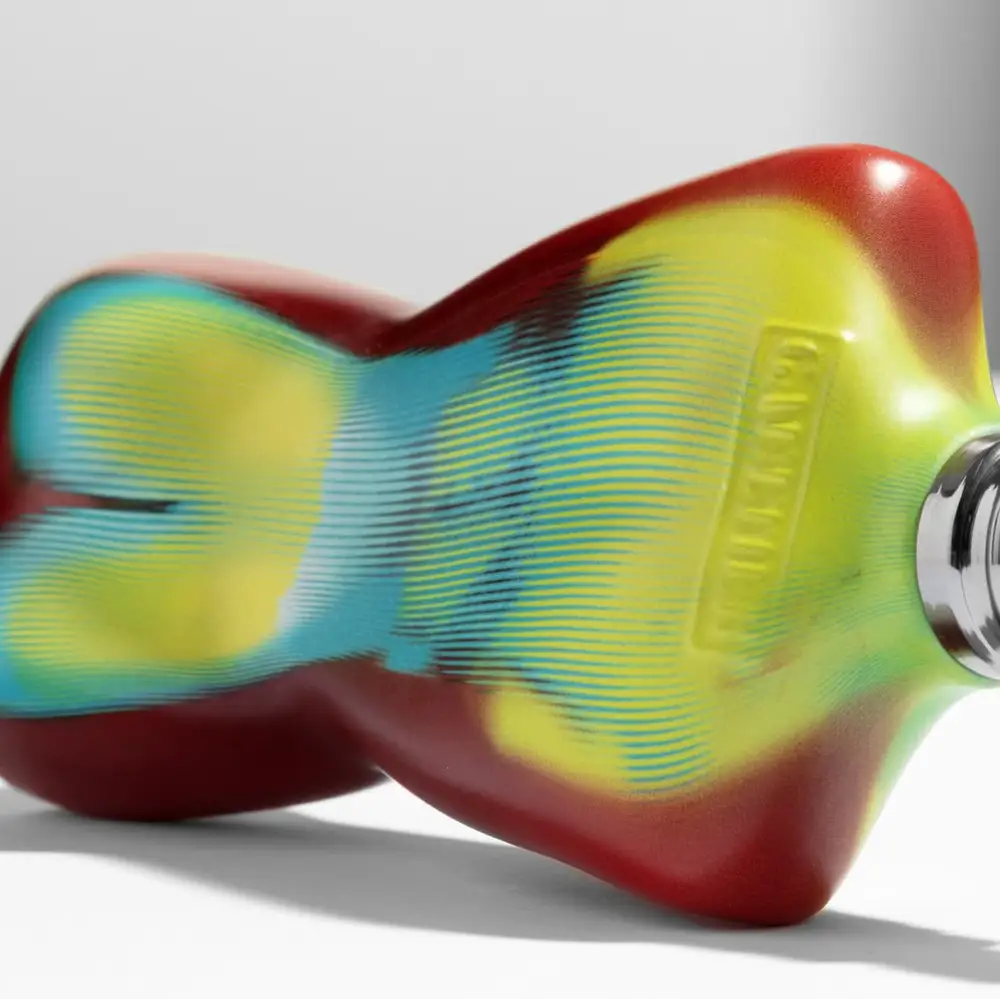
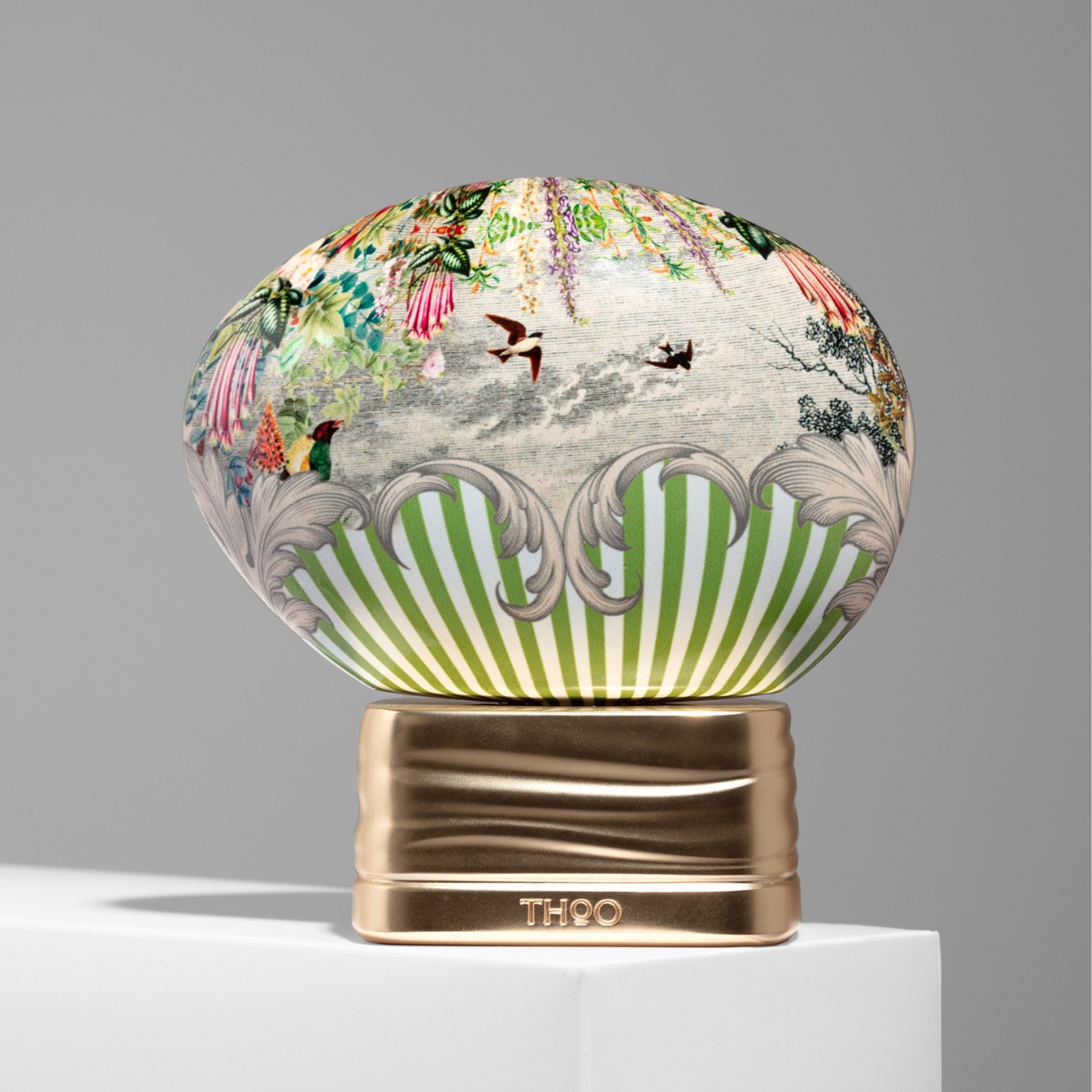
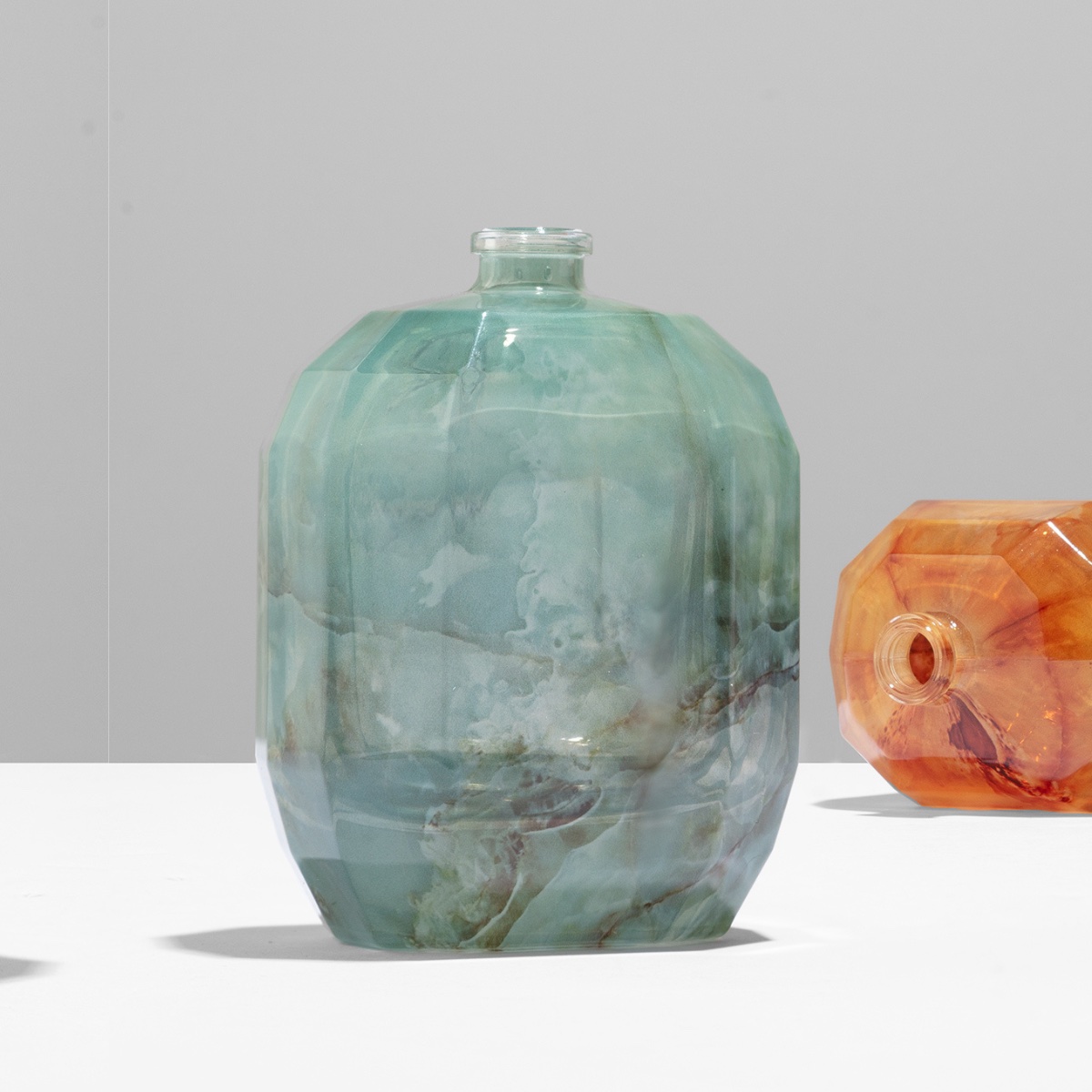
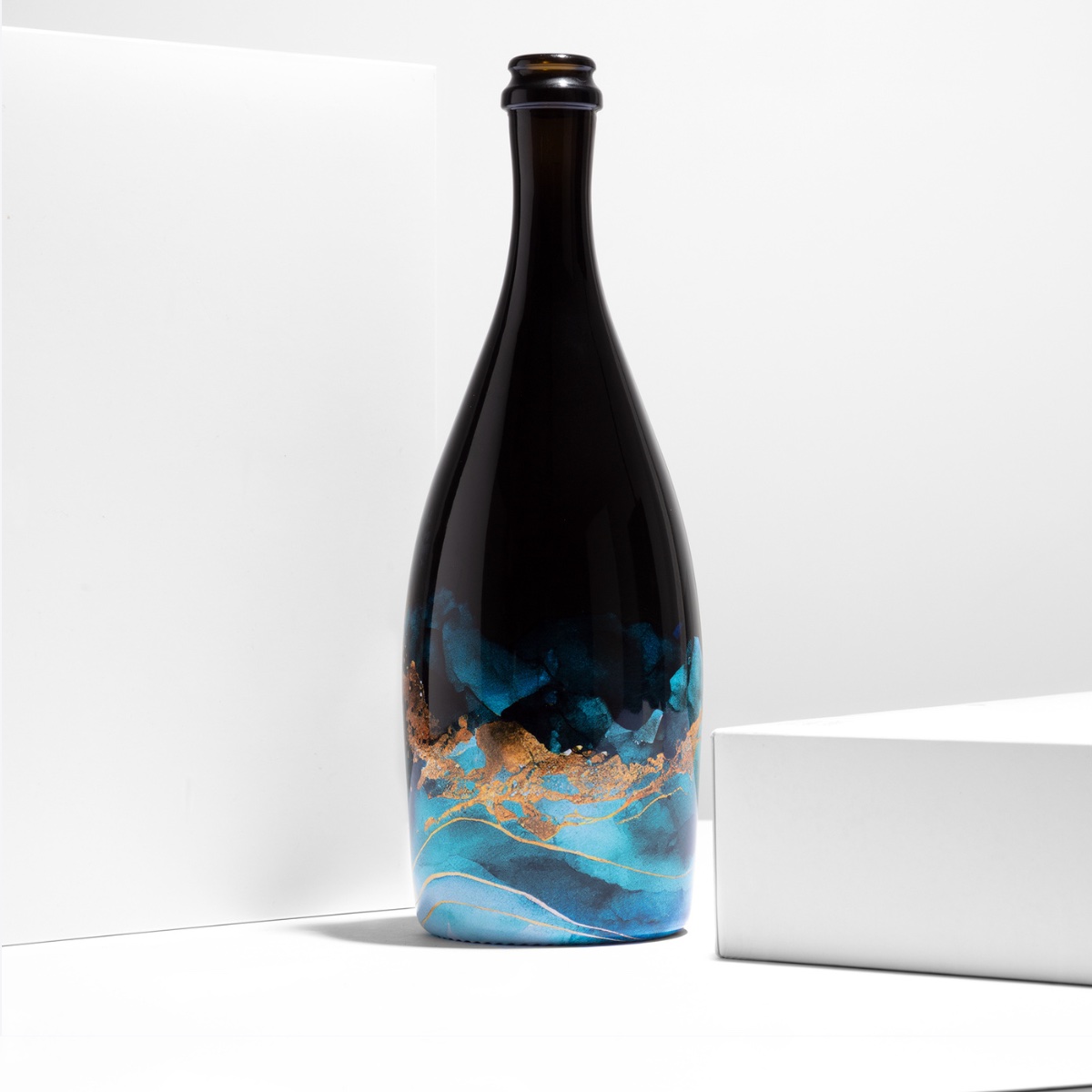
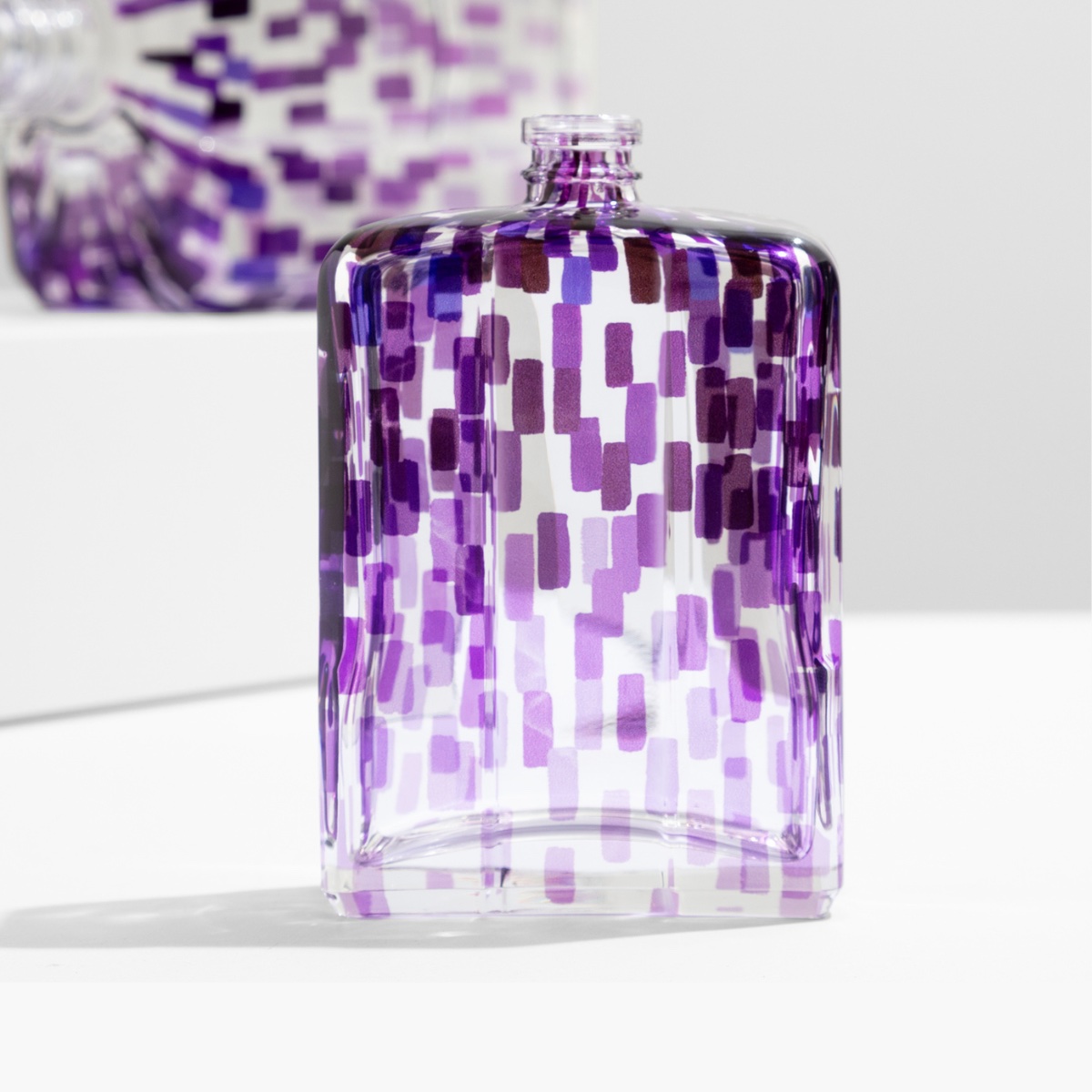
ATIU decorates perfume flacons by sublimation: the artwork is printed in CMYK, fused into a primer and wraps the whole flacon, base to neck, at 1200 dpi. No label, no sleeve, no screens. The same process decorates glass, zamac and aluminium, so flacon, cap and collar carry one continuous artwork. It runs on the tapered, faceted and sculpted shapes that define a luxury flacon, from 5,000 pieces to millions, in Verona, Italy.
What it does on a flacon
In perfumery the flacon is the first thing a customer sees, and the object that stays on the vanity for months. The decoration is not an accessory: it is the fragrance’s first impression.
- 01
Complex geometry, no blind spot
Tapered shoulders, curved faces, concave details, sculpted bases, covered in one 360° pass with no seam
- 02
One artwork, three materials
Glass, zamac and aluminium run through the same process under one colour management: a gradient can start on the shoulder and end on the cap
- 03
No ceiling on colour
Photographic gradients, textile patterns, generative art, fine type at 1200 dpi. Pricing does not depend on the number of colours
One platform
One tested technology, a whole range.
For a development team the decisive point is not one spectacular flacon. It is that one technology, qualified once, serves the whole line. Because the colour is unlimited and the surface is the entire object, the same qualified base produces endless results.
Qualified once
Resistance is tested on the system, not on each design. Once primer, top coat and process are validated for a brand, every variant runs on the same base with no new development cycle.
Design changes are digital
A new file, not a new setup: no tooling, no cost per variant. Several editions can run on the same primer base in the same run.
The whole line
A flanker in a new colour, a seasonal edition, a travel-retail exclusive, a collector’s artwork: the same platform, the same standard, from the first flacon to the last.


One visual language across flacon, cap and collar
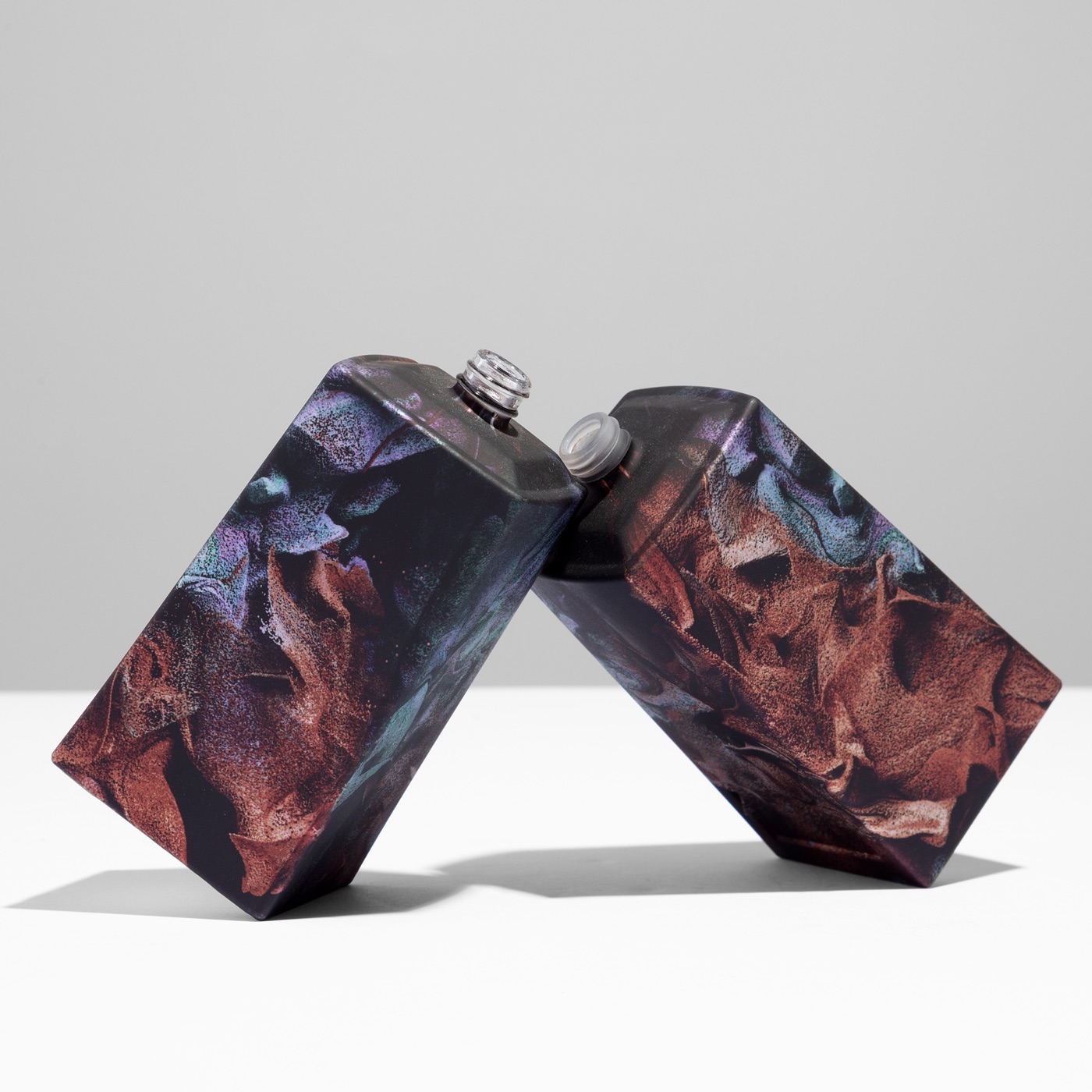
A perfume is never just a bottle. It is a system: a flacon, a cap, sometimes a collar, a travel spray, a gift box, and the consumer reads all of those elements together as a single object. When the cap carries a different finish or a slightly shifted colour from the flacon, the eye registers the break instantly, and a small inconsistency can undo an otherwise luxurious impression. The most compelling packaging treats every component as part of one continuous canvas.
Glass, zamac and aluminium in the same process
One colour management across the three materials
No visible break at the join
The flacon speaks the same language as the box, the store display and every printed piece around it
Where other techniques make more sense.
Coating
A single-colour lacquered flacon with no artwork is a coating job, not a sublimation job: same line, same primers, and for a core range often the right choice.
Glass bottle coating → 02Screen printing
Fired screen print still suits a two-colour mark on a cylindrical bottle in very high volume.
Read the comparison → 03Hot stamping
A logo on a cap or a fine metallic line, where that particular finish is the whole point.
Our complementary technologies →Primer
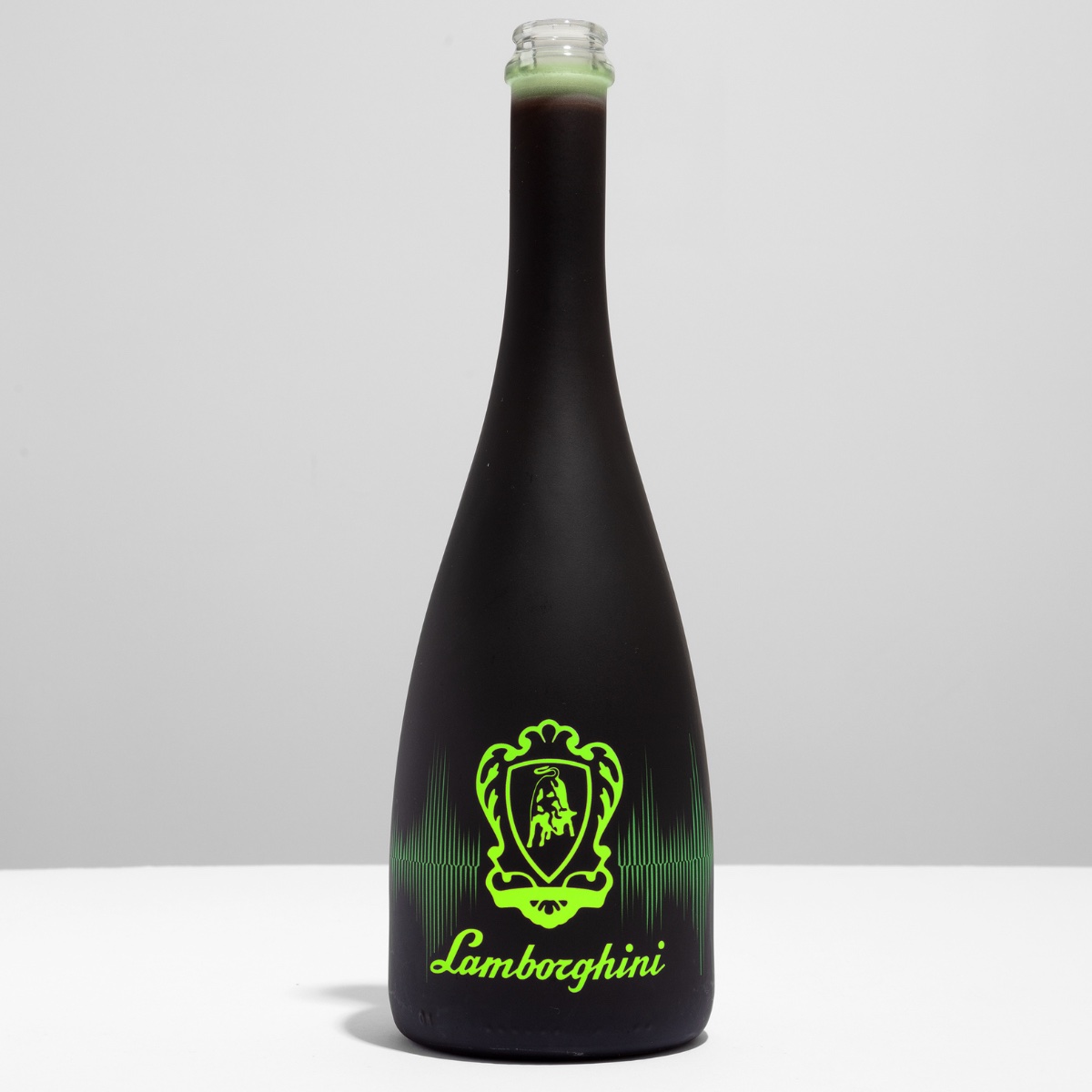
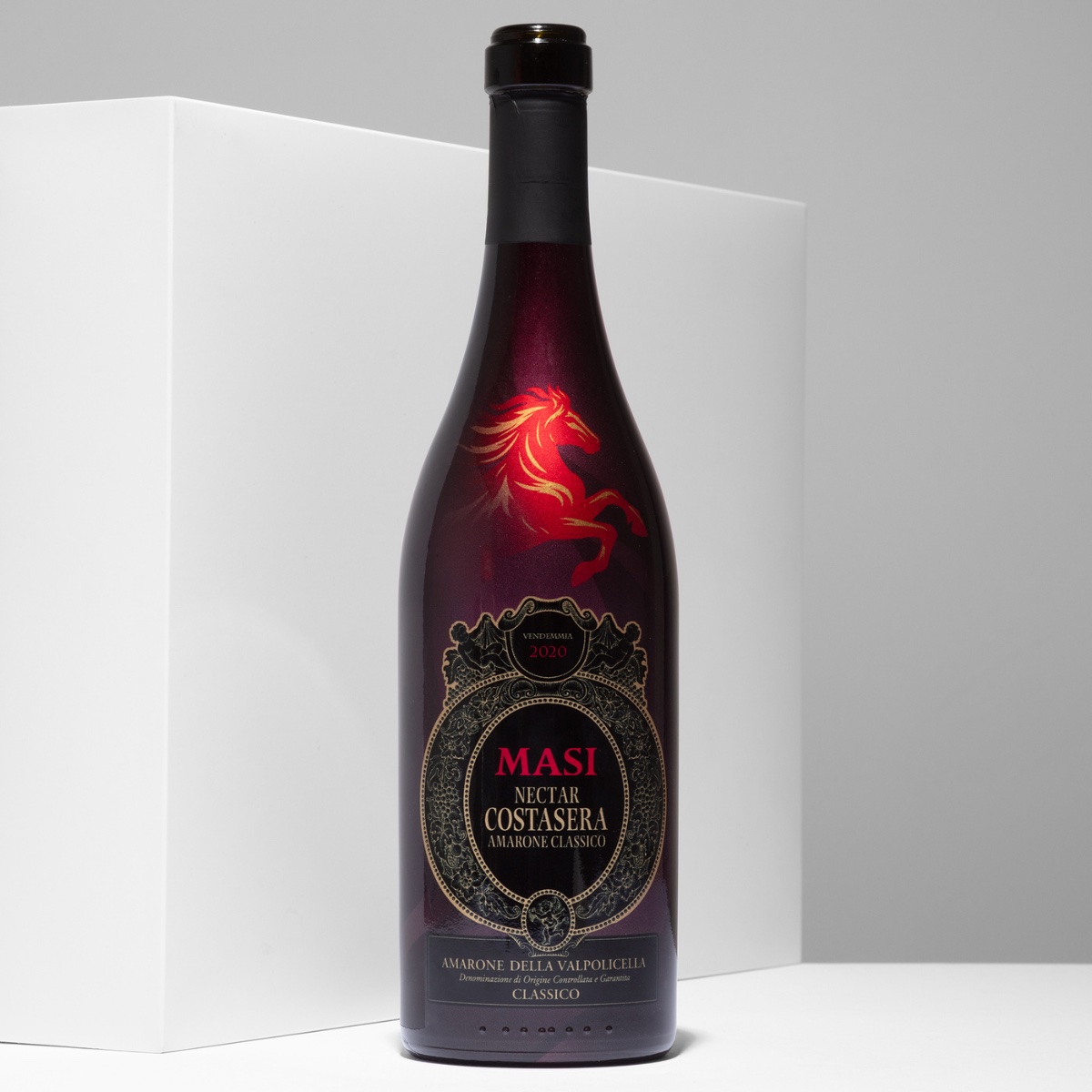
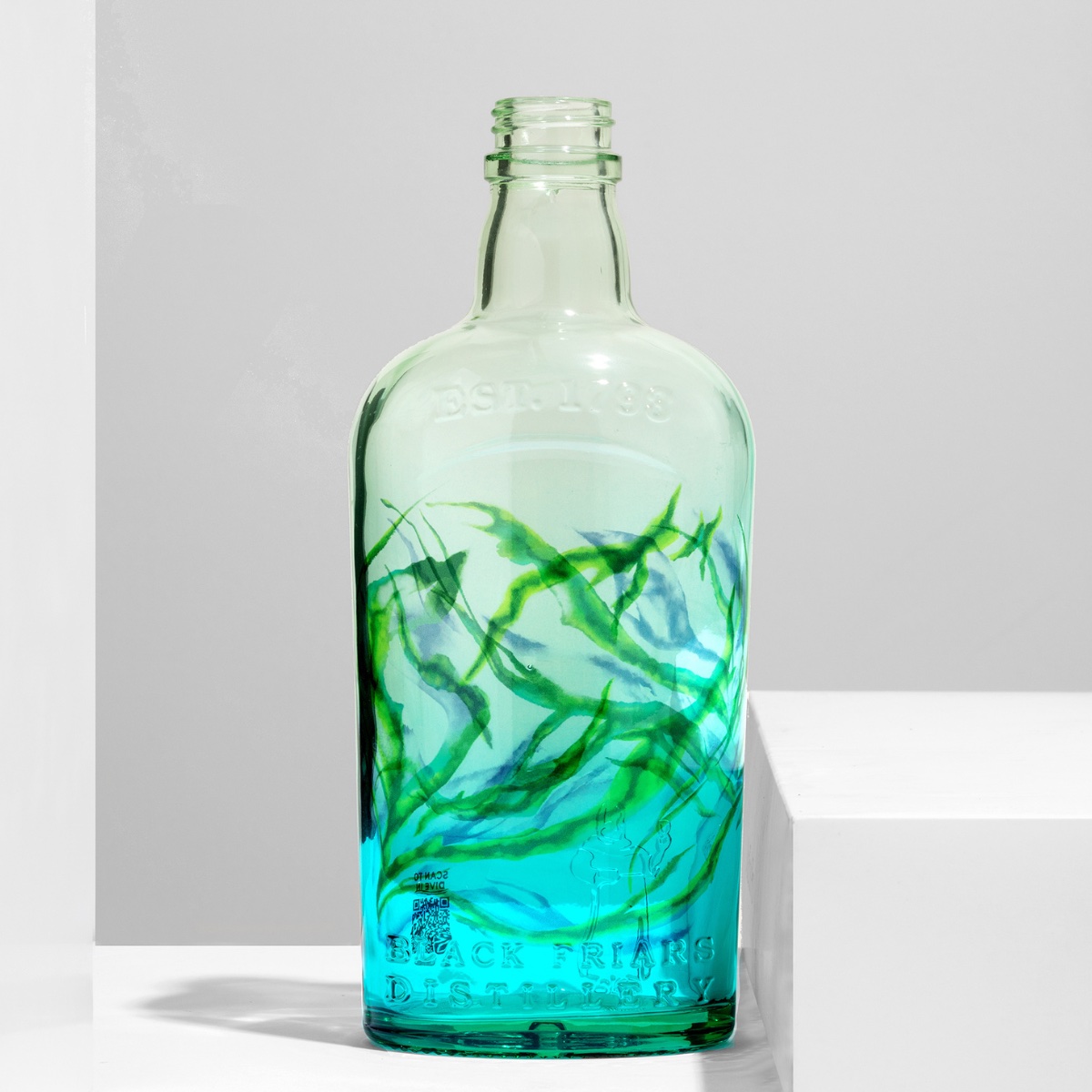
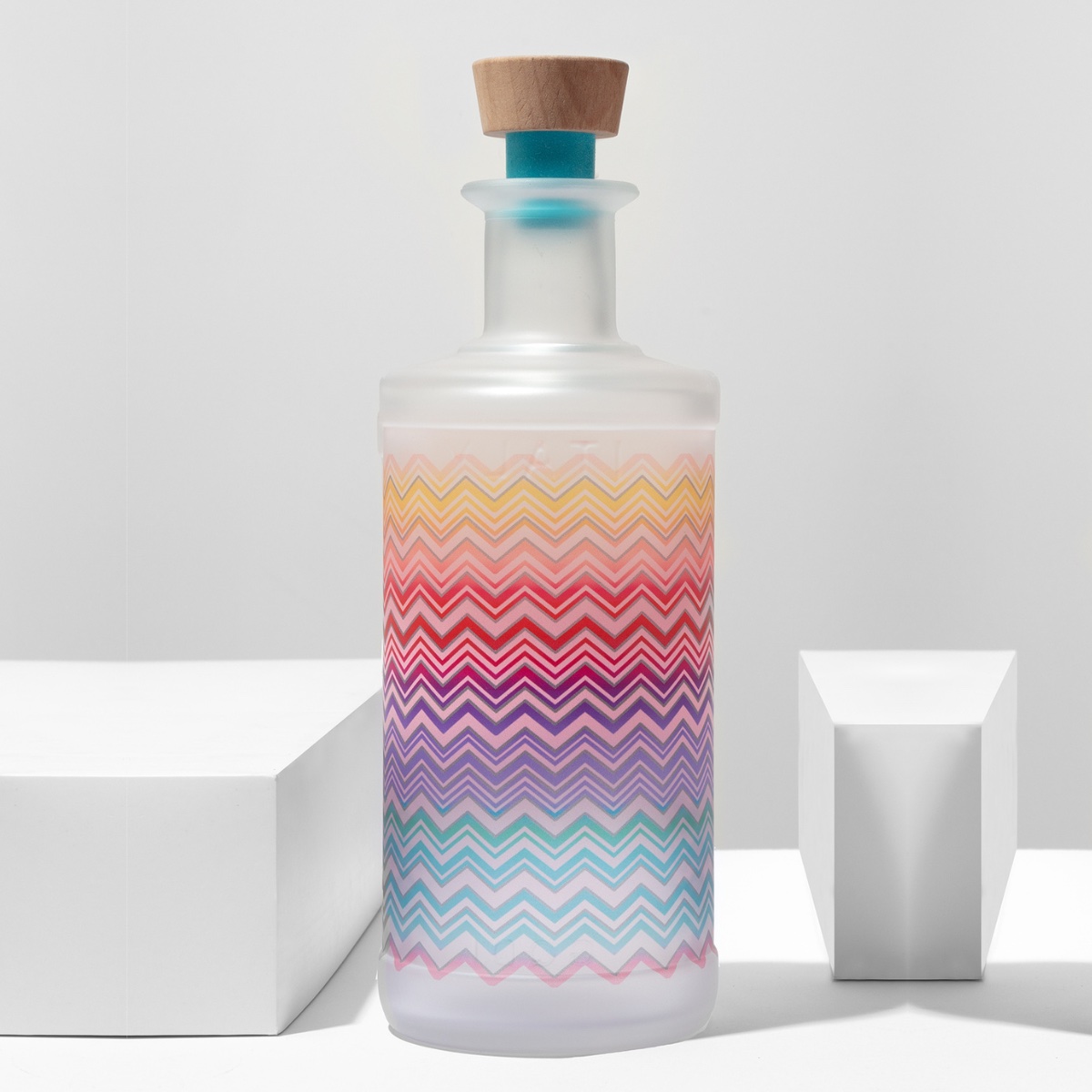
Before the artwork, the surface. The primer sets how the flacon catches light, how it feels in the hand, whether the glass and the juice stay visible. Sublimation colour is see-through, so a light base shows it faithfully; on dark or coloured glass a white or metallic primer does the same job. Finishes are made in-house and practically unlimited; the standards are clear, white gloss, white matte, sheer white, metallic full or dégradé, pearl.
Request the swatch kit →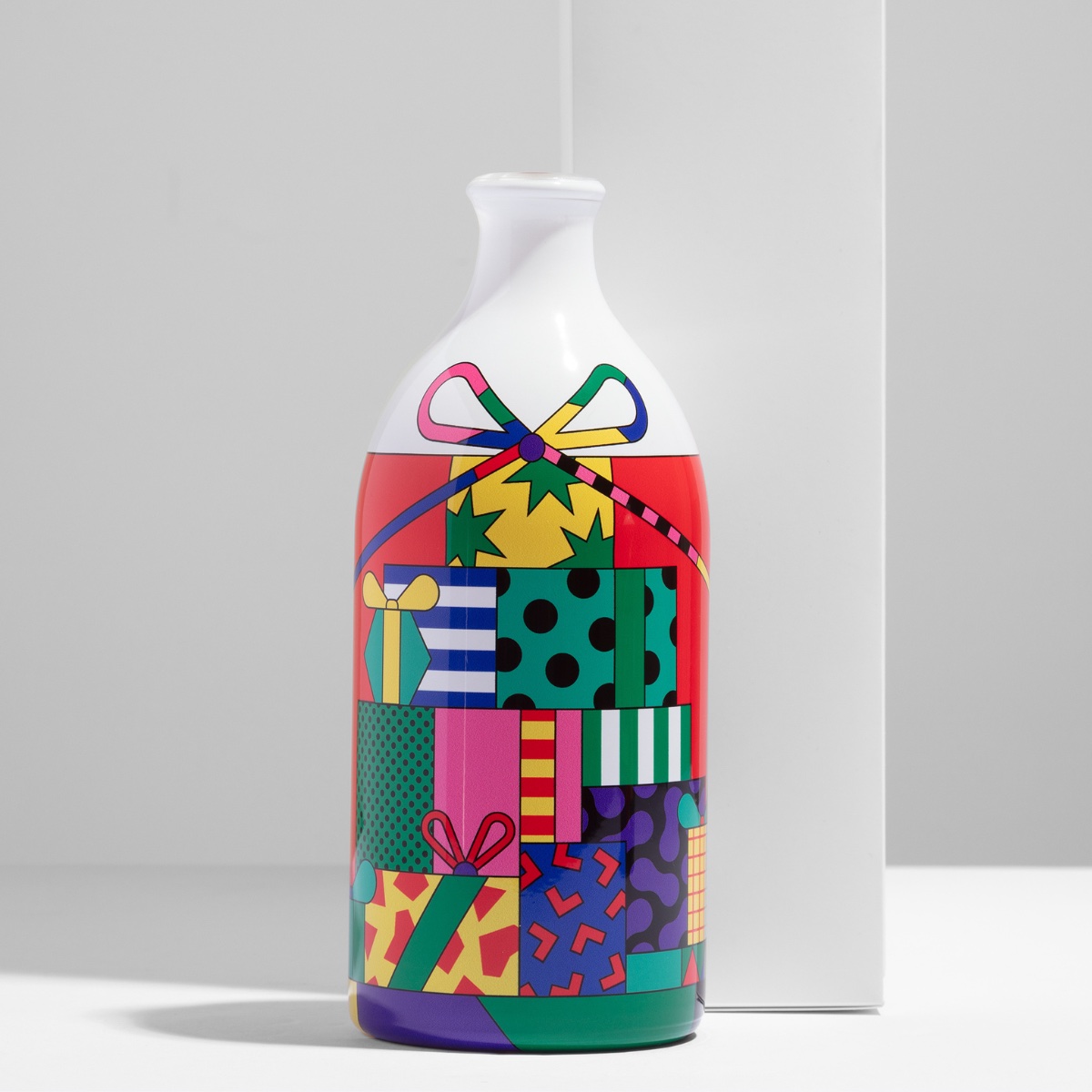
Coverage
Coverage is a design choice, not a fixed setting: from fully transparent to fully covering, with everything in between. How much light passes through, and how much of the glass stays in view.
Creating the artwork
Any artwork that exists as a file can be decorated: photography, gradients, fine serif type, hundreds of colours, at 1200 dpi and a true 360 degrees. Pantone or Cromalin targets are matched through calibrated CMYK, not ink mixing. Four things to get right at the start; then break every other rule. Preparing print-ready files →
Colour space
Work in CMYK, not RGB. Whites, metallics and the base effect come from the primer, not from ink. Define the primer as part of the brief.
Format
Photoshop (.psd) or Illustrator (.ai), layered, at 600 dpi native or more at final print size. Package with linked assets and fonts.
Distortion
Flat artwork takes the flacon’s shape, and on curved areas it deforms. We supply the distortion curve for your component, or pre-distort the file for you.
The joint
On a full 360° wrap the artwork meets itself. The meeting point is hidden inside the design through pattern or texture: design for continuity from the start.
How a project works
Made for fragrance houses, licensees and glassmakers working on a flacon with 5,000 pieces or more, a shape that standard decoration refuses, or a range that needs one language across flacon and cap.
Brief
Flacon reference, artwork and volumes, with Pantone or Cromalin colour targets. Design flat, in CMYK.
Renderings, then the sample
Renderings on your own flacon first, at about 95% fidelity. Then a production-line sample within five working days of the components arriving. During a plant visit, a prototype in about 30 minutes.
Approval
The piece you sign off is locked as the production reference, and every flacon is measured against it within the ΔE tolerances agreed at approval.
Production
From 5,000 pieces to millions, at up to 4,000 pieces per hour. Validated for contact with the fragrance and for handling and logistics; a trial pallet on request for your filling line. About one month from purchase order, retro-planned on your filling schedule. EXW or DAP: Europe, Americas, UAE.
Nothing added to the glass
Waterborne primer and inks. No label, no sleeve, no plastic: the flacon stays glass, in hand and on the sorting line. The chemistry, the energy and the logistics were engineered so that the most striking decoration is also the one your sustainability team signs off.
Waterborne primer and inks, free of heavy metals
No label, no sleeve, no plastic on the glass
Net-zero CO₂ since 2023, full Scope 1–3
EcoVadis Committed
Pentawards Gold 2025, Sustainability
Ready when you are
See it on your flacon first.
Send your flacon reference and your artwork, a print-ready file or a rough concept, and we send back sublimation renderings on that flacon, then a production-line sample in five working days.
About ATIU
ATIU is an Italian B2B specialist in sublimation on glass and premium packaging decoration. The company decorates glass, aluminium, zamac and ceramic components — perfume bottles, flacons, spirits bottles, caps and candle jars — for perfumery, spirits, olive oil and home fragrance brands, including groups such as Pernod Ricard and LVMH. Founded in 2019, 40 people, up to 4,000 pieces per hour. ISO 9001. EcoVadis Committed. Net-zero CO₂ since 2023. Pentawards Gold 2025.
What is the minimum order?
5,000 pieces per design, up to millions of pieces per project. Several editions can run on the same primer base in one run.
Can the cap and the collar match the flacon exactly?
Yes. Glass, zamac and aluminium run through the same process under one colour management, so one artwork carries across the flacon, the cap and the collar with no visual break at the join.
Does a complex design cost more?
No. Price depends on finish and top coat, flacon size and quantity, not on the number of colours.
Does it work on dark or coloured glass, and can the juice stay visible?
Yes. A white or metallic primer gives the artwork a faithful base on dark glass; a clear or sheer primer keeps the juice in view.
Is the flacon still recyclable? What about PPWR?
Yes. Nothing is added to the glass: the decoration is fused into a waterborne primer, and transmittance is treated as a design parameter so the flacon still reads as glass on the sorting line.
How fast can I get a sample, and can we hit a launch date?
Renderings on your own flacon in days, a production-line sample in five working days from component arrival, a prototype in about 30 minutes during a plant visit. Typical lead time is about one month from purchase order, retro-planned on your filling schedule.