Centonze Ice Blue
An ancient majolica, photographed at the estate. Reborn on glass, for America.
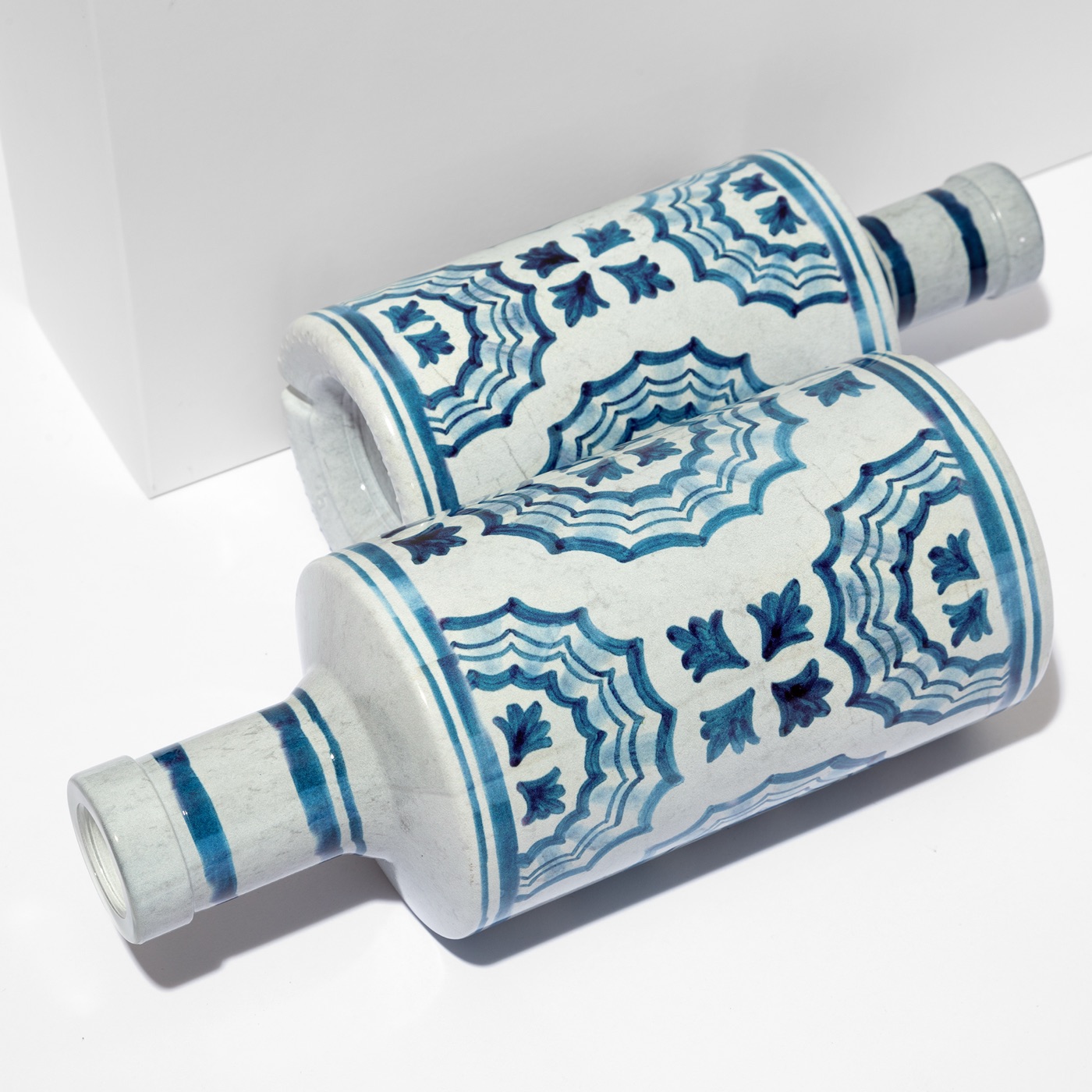
Centonze is a Sicilian olive-oil estate with something most brands can only envy: its bottles are famous. Across the olive-oil industry, the house is known for its handmade ceramic bottles, each one hand-painted after ancient majolica pieces that physically exist at the estate and its olive grove in Sicily. The iconic bottles do not descend from a mood board or a Mediterranean cliché — they descend from real, ancient artworks the family can walk up to and touch. That is the starting point of the Ice Blue story: a brand whose identity lives in original hand-painted ceramic, and a bottle that had to cross the Atlantic. The answer had to be glass. And with ATIU's technology, glass could carry the original artwork with it.
The majolica at the estate
Majolica is one of Sicily's great decorative traditions: ceramic painted by hand, glazed, fired, passed down. At Centonze, that tradition is not a reference — it is property. The ancient pieces that inspired the brand's ceramic bottles sit at the estate itself, physical originals surrounded by the olive grove whose oil they came to represent. When the house decorates a bottle, it is copying its own inheritance, not quoting someone else's. That is the deepest form of authenticity available to a packaging project: the artwork at the source and the artwork on the shelf are the same artwork. Any bottle carrying the Centonze name would have to honour those originals faithfully — brushstroke by brushstroke, not approximately.
The bottle America required
Ice Blue began with a destination: the United States. The US market imposes precise restrictions on food packaging — on volumetric content, and on health and safety. Glass answers both requirements at once. It is a total barrier: inert and food-safe, keeping the oil completely protected inside a container that adds nothing and takes nothing away. And it is precisely calibrated: a glass bottle holds exactly the declared volume, batch after batch, with a regular neck and a consistent closure fit. For a bottle destined for American shelves, glass was not an aesthetic preference — it was the condition of entry. The real question was whether a compliant, industrial glass bottle could still look like an ancient hand-painted Sicilian majolica. That question is exactly what ATIU's sublimation exists to answer.
A photograph becomes a bottle
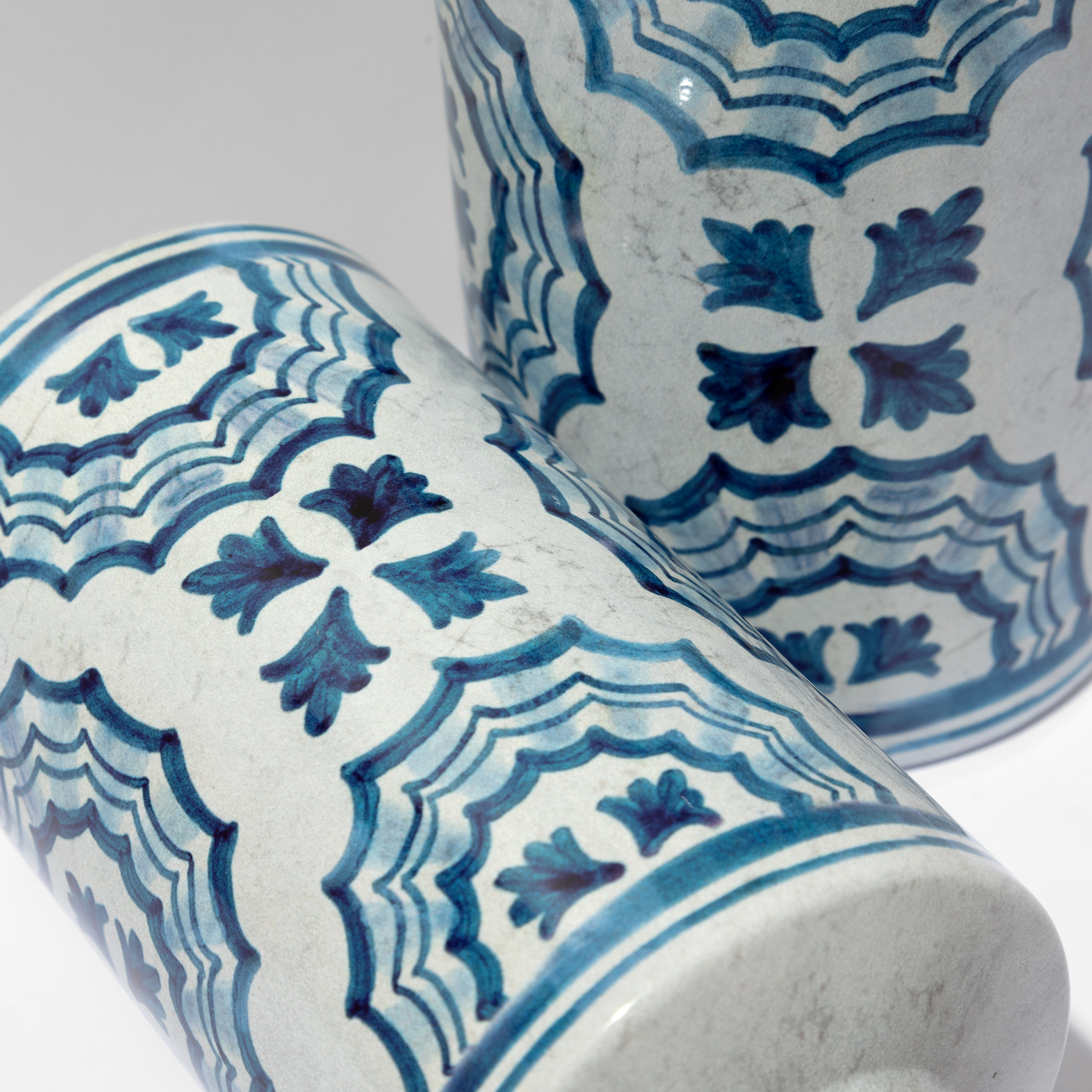
ATIU's work started at the source. One of the original majolicas at the estate was photographed — the actual ancient artwork, not a redrawn interpretation of it. That photographic artwork was then translated onto glass through ATIU's sublimation: a white gloss ceramic-effect primer, with the blue hand-painted motifs reproduced across the full form of the bottle, 360 degrees from base to neck, in a single pass with no seams and no colour breaks. At up to 1,200 dpi, the process carries every brushstroke, every irregularity of the ancient glaze, every tonal shift of the original pigment onto the glass surface. This is what separates Ice Blue from a ceramic-style decoration: the bottle is not in the style of a majolica. It is a specific, ancient, hand-painted majolica — reborn on glass. The full technical argument is laid out in our guide to ceramic aesthetics on glass bottles; Ice Blue is its proof.
One month, ten thousand bottles — then the reorder
The project moved at the speed the house itself works at. The collaboration was born directly with the estate's owner — a straightforward interlocutor who constantly looks for innovation, stays personally active in the design, and carries his bond with Sicily into every decision. The majolica iconography is the family's own, and it is instantly recognizable; the brief was to honour it, not to reinterpret it. From brief to delivered bottles, Ice Blue took roughly one month, on ATIU's standard path: artwork prepared from the photographed original, a production-line sample in five working days, colour approval against the ancient piece, then production. The first run was around ten thousand bottles — and it did what a first run is supposed to do: the reorder followed.
Compliant, recyclable, industrial-scale — and hand-painted to the eye
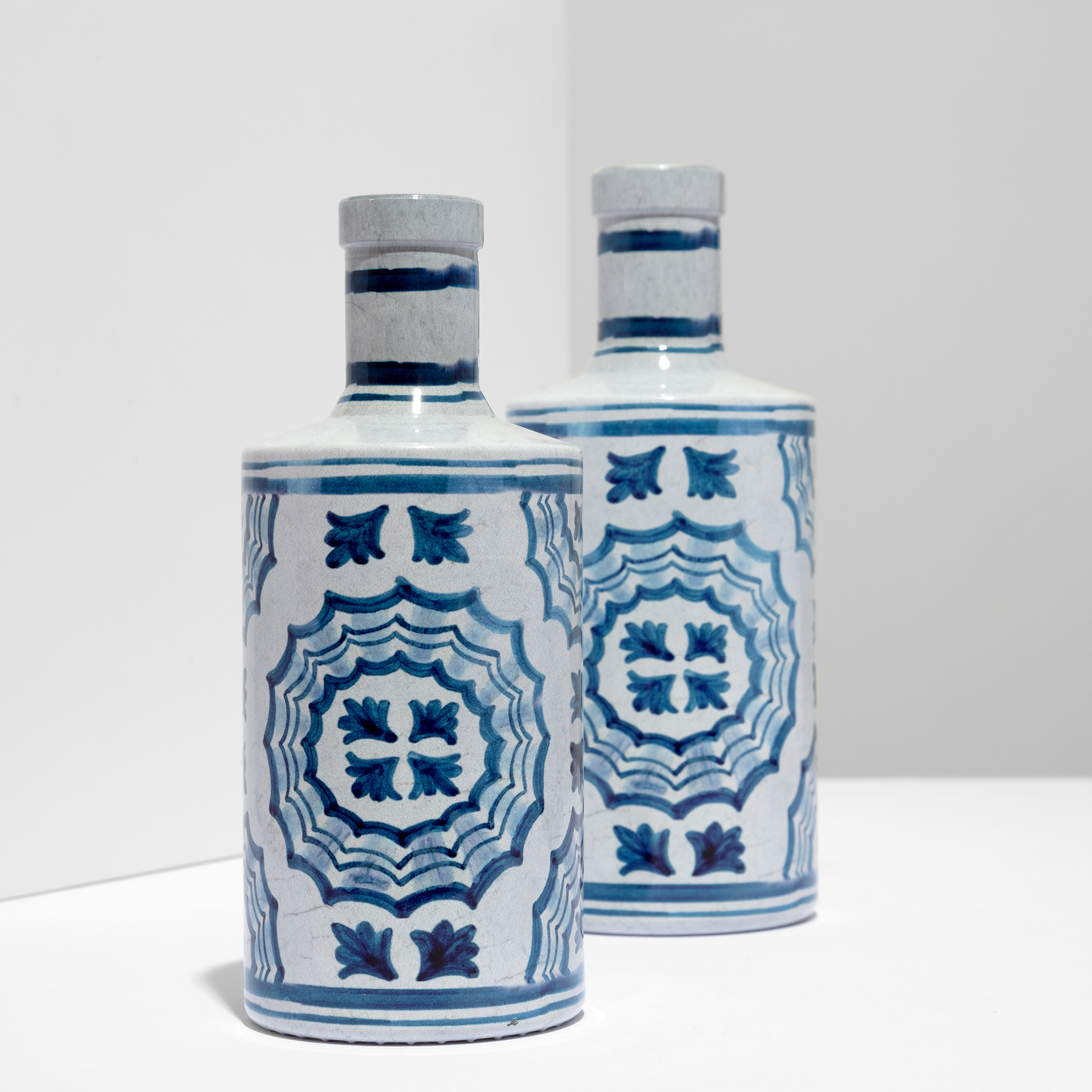
The finished bottle does everything the US market asked of it and everything the estate's identity demanded of it, at the same time. It is glass: inert, food-safe, precisely calibrated, and recyclable in standard glass streams at end of life. It is industrial: the decoration scales from 5,000 pieces to millions of units per project, at up to 4,000 bottles per hour, with a production-line sample ready in five working days. And to the eye and the hand it reads as what it honours — an ancient piece of Sicilian majolica, present on the shelf in the United States exactly as it exists among the olive trees in Sicily. The path that carried it there is the same one open to any producer, described in our guide from concept to shelf; and for the wider field of options, our overview of olive-oil bottle decoration and design maps where a project like this sits.
Gold at the Pentawards — in Sustainability
In 2025, the project won Gold at the Pentawards, the world's leading packaging design competition — and the category matters as much as the metal. Ice Blue won in Sustainability: a bottle that looks hand-painted, ships to a regulated export market, and returns to standard glass recycling at end of life, decorated by a company that has been zero-net carbon since 2023, with Scope 1, 2 and 3 emissions offset. The jury did not reward an effect; it rewarded a resolution — heritage aesthetics and environmental performance in a single object, with nothing added to the package to achieve either. That is the idea we set out in our guide to sustainable glass bottle decoration, given a gold medal and a shelf position. For every brand weighing a ceramic look against industrial and regulatory reality, Ice Blue is no longer a hypothesis. It is a precedent.
An ancient majolica, photographed at the estate. Compliant for America. Gold at the Pentawards.
Learn more about our sublimation technology or get in touch.