Ceramic Aesthetics on Glass Bottles: Why Brands Are Switching
Ceramic packaging has a tactile warmth that undecorated glass does not convey: it suggests craft, heritage and artisanal production, and premium brands have used ceramic vessels for decades to signal those qualities. That aesthetic is worth keeping — what is changing is the container underneath it. A growing number of brands are moving the ceramic look onto glass bottles decorated by sublimation, for reasons that go beyond production convenience: alongside lead times, weight and recyclability, the switch is increasingly about market access. The clearest illustration is Centonze, the Sicilian olive oil producer, and the bottle that won Pentawards Gold 2025.
The Centonze story: a majolica translated onto glass
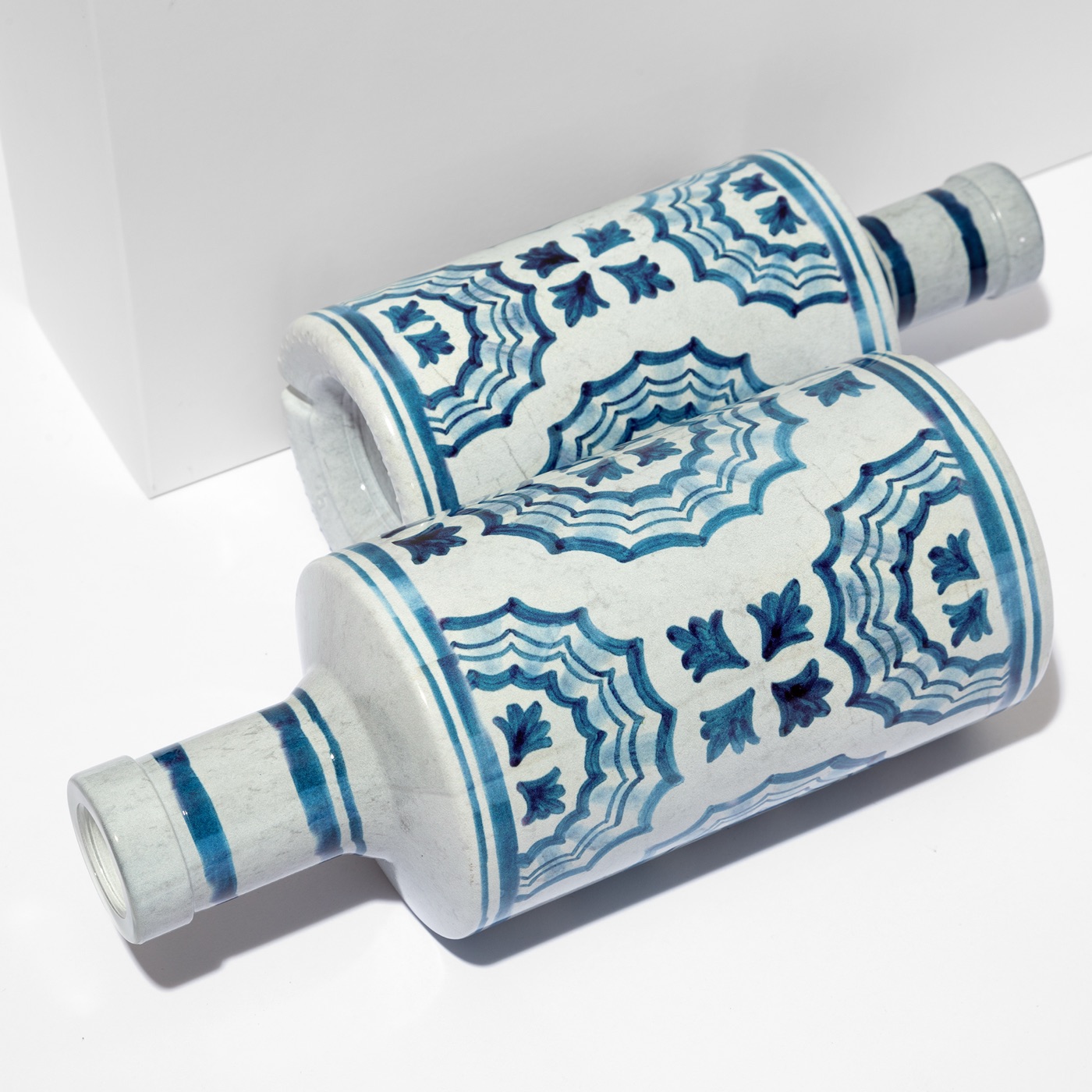
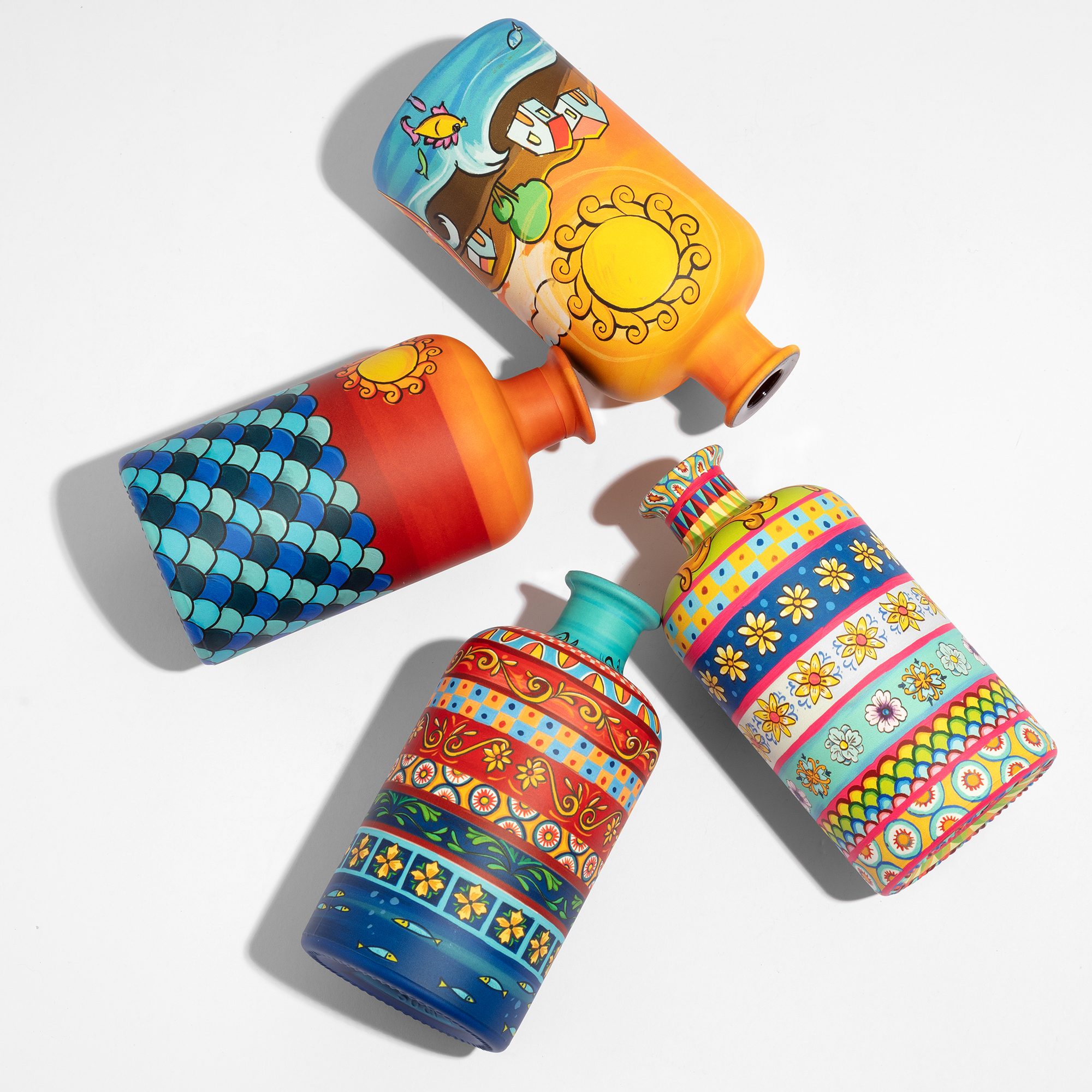
Centonze's handmade ceramic bottles are among the most distinctive objects in premium olive oil: each one is hand-painted after ancient majolica pieces held at the estate in Sicily. When the brand set out to grow in the United States, however, the container had to change. The US market imposes volumetric-content restrictions and health and safety requirements that pointed unambiguously to glass — a total barrier between product and environment, and a precisely calibrated vessel whose declared content matches what is inside. The question was whether compliance had to mean giving up the hand-painted identity that made the bottle recognisable.
It did not. ATIU photographed one of the original majolicas and translated it onto glass through sublimation — the artwork captured at up to 1200 dpi and fused around the full 360 degrees of the bottle, base to neck. The compliant glass bottle still looks hand-painted: the brushwork, the colour depth and the irregularities that signal a human hand all survive the translation. The aesthetic is preserved, the container gains the properties the market demands, and the result won Pentawards Gold 2025 in the Sustainability category. The project is documented in our guide to olive oil bottle decoration.
Market access: the regulatory reason brands switch
Scale and recyclability are the reasons most often cited for moving from ceramic to glass, but for exporting brands the decisive factor is frequently regulatory, and glass answers three container requirements directly. First, volumetric calibration: industrial glass bottles are produced to precise, verifiable capacities, so the declared volume corresponds reliably to the content — a point US volumetric-content rules make non-negotiable. Second, food-contact safety: glass is an inert material with a long-established regulatory record for direct contact with food, oil, spirits and cosmetic formulas. Third, barrier properties: glass is a total barrier, protecting the product over its full shelf life. For Centonze, these were the conditions of entry to the US market — and sublimation meant meeting them without surrendering the estate's majolica identity.
How the ceramic effect works
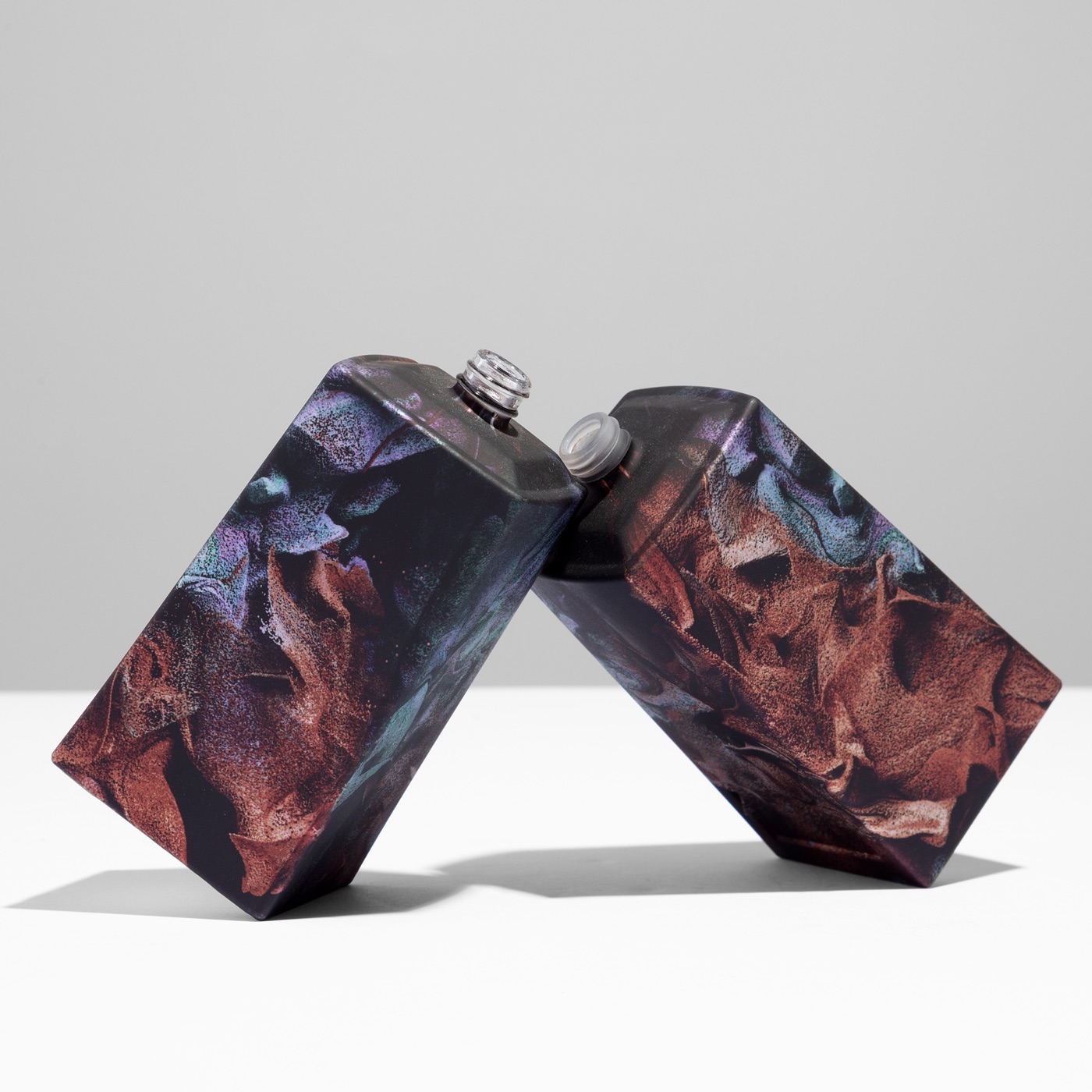
The process starts with a standard glass component — a perfume bottle, flacon, spirits bottle, olive oil bottle or candle jar — sourced from the brand's own glassmaker, and builds the ceramic identity entirely on its surface, in two layers. First, a dedicated ceramic-effect primer creates the foundation — matte for the soft, chalky character of unglazed pieces, or gloss for the lustre of glazed maiolica. ATIU works with multiple primer finishes, and the base tone can be calibrated to the brand's palette — warm white, terracotta, stone grey, matte black.
Sublimation then transfers the artwork onto the primed surface at up to 1200 dpi, around the full 360 degrees of the bottle. Patterns, illustrations, typography and HD images fuse permanently into the primer layer; because curing never exceeds 180°C, the mechanical properties of the glass are untouched. The result is indistinguishable from glazed ceramic at arm's length — the Centonze bottle carries its majolica artwork on a white gloss ceramic-effect base, on a production run.
What glass brings to a ceramic aesthetic
No container development required
With glass sublimation, brands can select from existing shapes in their glassmaker's catalogue and start decorating immediately: no dedicated form to develop, no tooling lead time, no upfront investment. Where a brand wants to preserve the silhouette of an existing ceramic vessel, its glassmaker can produce a matching glass form — a choice driven by brand continuity, not a prerequisite. The ceramic identity lives in the primer and the artwork rather than in the shape of the container, so the approach scales from market test to international rollout without re-engineering the pack.
Full recyclability
Decorated glass remains glass, and enters the standard glass recycling stream, because the decoration is only a minimal surface layer fused into the primer. There is no additional material to separate at end of life and no special disposal route for the consumer to learn: the shelf presence of an artisanal object, with the end-of-life profile of an ordinary glass bottle.
Lighter weight
Glass components weigh less than an equivalent ceramic vessel of the same capacity, and that difference travels with every unit shipped. Lower weight means lower freight cost and a smaller carbon footprint per bottle — for brands distributing globally, the saving compounds across the supply chain.
Faster lead times
When using catalogue glass shapes, components are available from stock and decoration begins as soon as artwork is approved — ATIU delivers a production-line sample in five working days, and industrial runs proceed at up to 4,000 bottles per hour. The path from first idea to shelf is mapped in our concept-to-shelf guide.
Tooling investment becomes a choice
Brands using catalogue shapes carry zero tooling cost: the creative investment goes into the artwork. Those who commission a custom glass form do incur mould investment, but the decision is driven by brand continuity rather than by production necessity — once the form exists, every new edition or market adaptation is a file change, not a new tool.
Applications
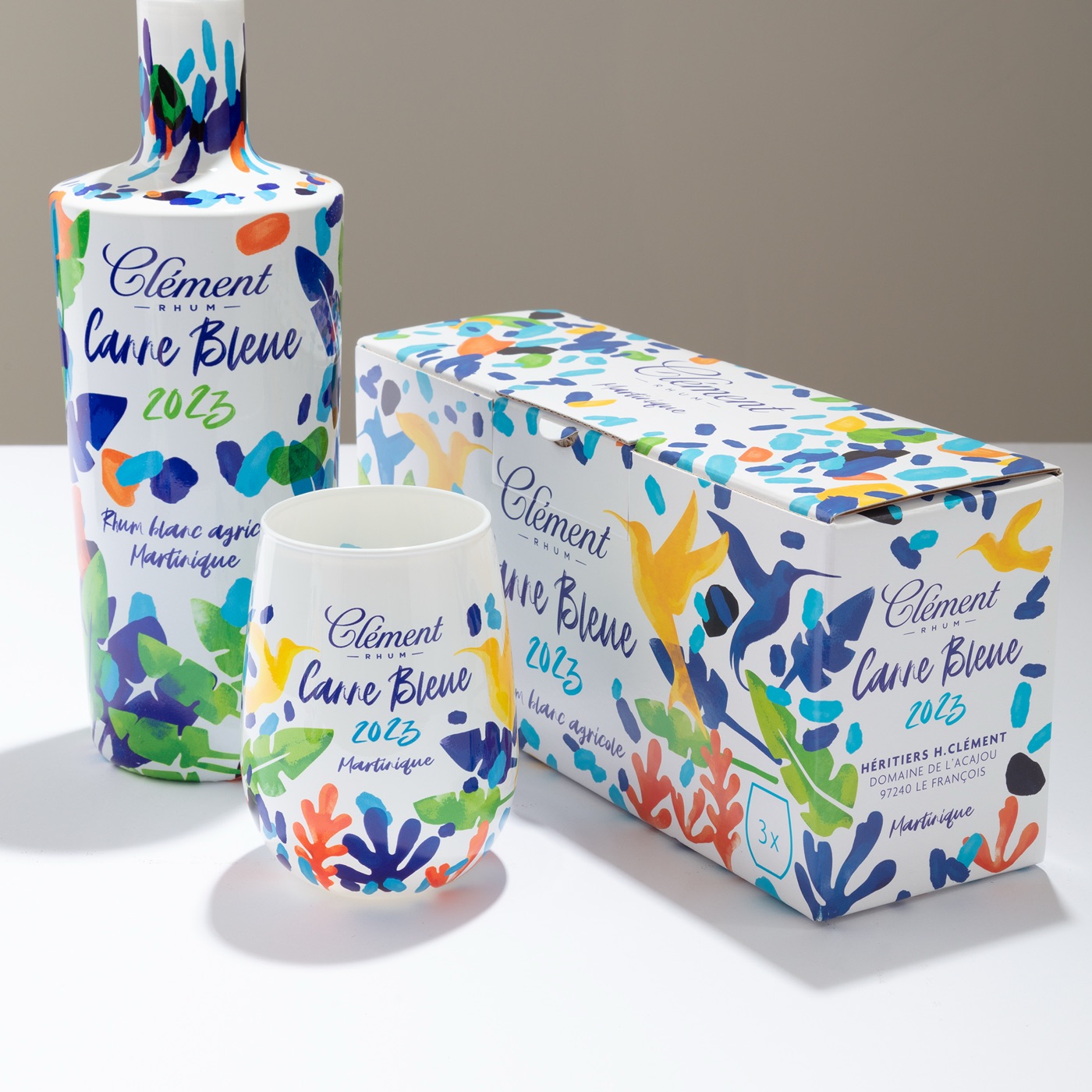
The ceramic-effect approach is gaining traction wherever a craft narrative has to coexist with industrial volumes or regulated markets. Premium perfumery brands use it for collector editions and flanker launches; spirits brands apply it to aged expressions where an artisanal surface aligns with the positioning. Olive oil producers — Centonze being the documented case — use it to carry heritage decoration into export markets on a food-compliant glass container, and home fragrance brands use it for candle jars and diffuser vessels where the tactile experience is central to the product.
ATIU produces these decorations at industrial scale from two plants in Verona, Italy, serving groups including Pernod Ricard and LVMH. ISO 9001 certified. EcoVadis Committed.
Design freedom
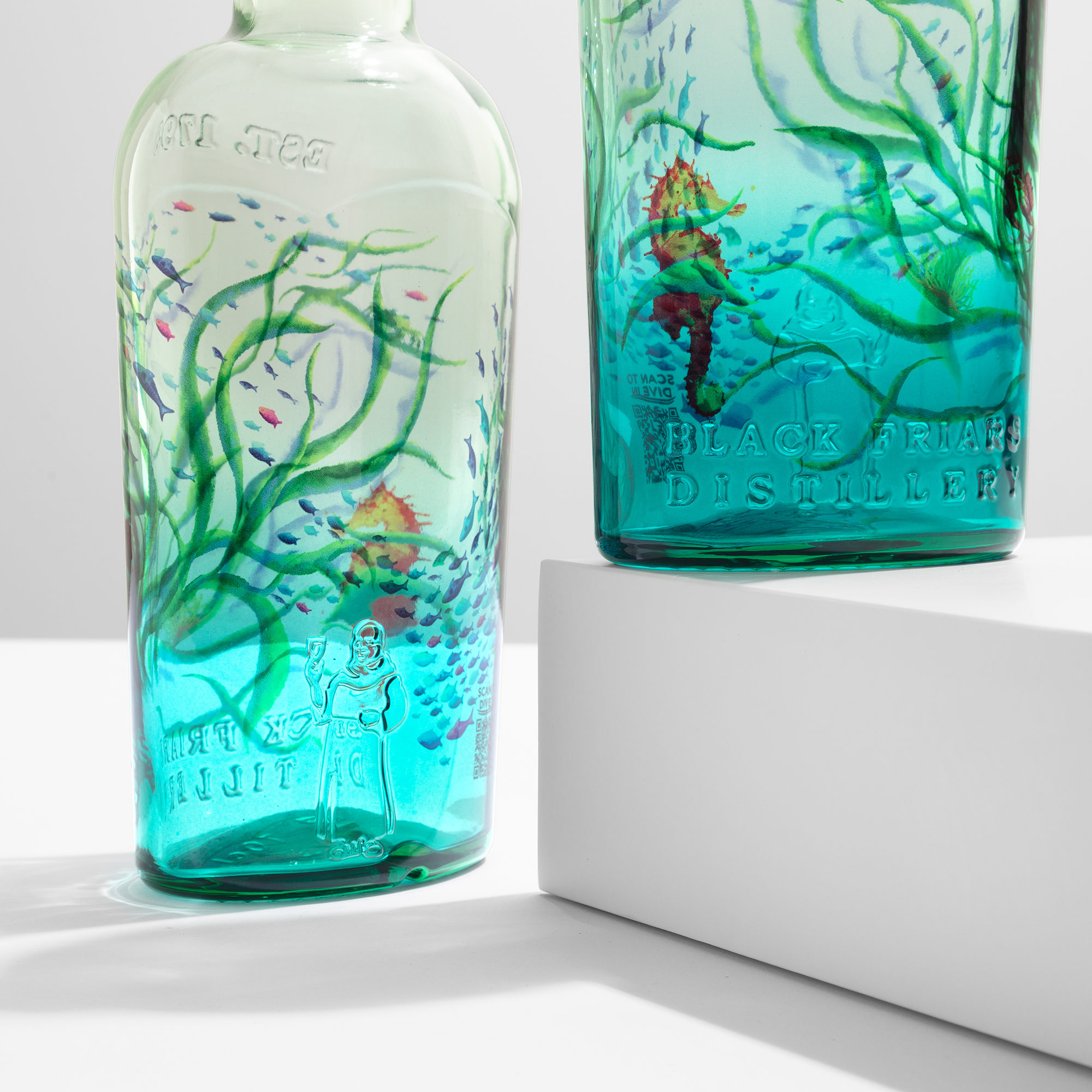
Because sublimation is a digital CMYK process, the decoration is not limited to simple patterns or single-colour prints: brands can apply full-colour artwork, HD imagery, intricate illustrations and unlimited gradients, all on a ceramic-feel surface. This is what made the Centonze translation possible — a photograph of a hand-painted majolica, with all its tonal depth and brush texture, reproduced faithfully rather than approximated as a simplified pattern. The result is a canvas that behaves like ceramic to the hand and like high-resolution print to the eye.
Learn more about our sublimation technology, read the full Centonze project story, or get in touch.