The art of ceramic. Reinvented in glass.
Frantoio Paparella: from hand-painted ceramic to recyclable glass — without losing what made the bottle recognisable.
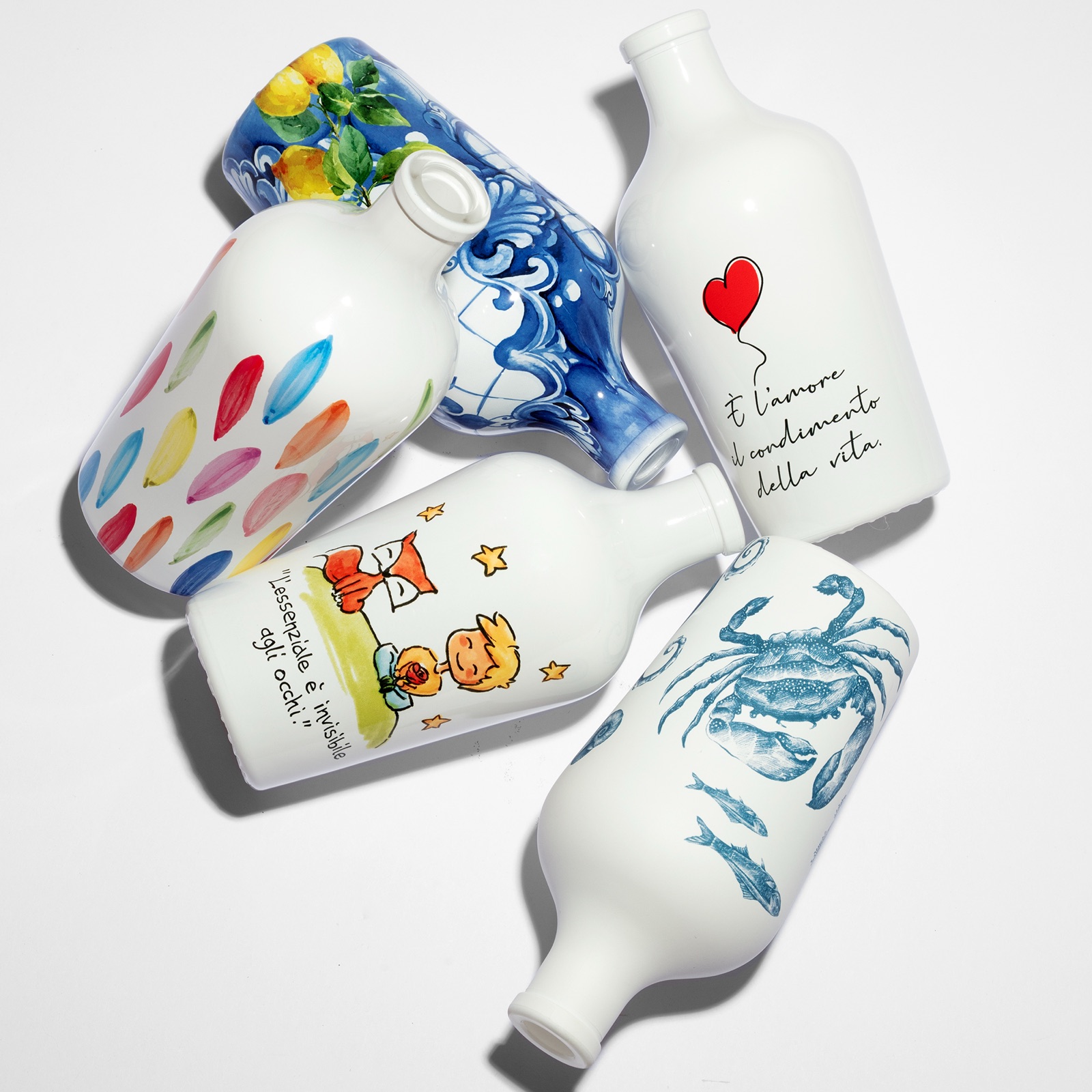
Frantoio Paparella moved its olive-oil bottles from hand-painted ceramic to recyclable glass, decorated by ATIU with its proprietary sublimation technology: HD, full-colour artwork wrapping 360° around the bottle. The ceramic bottle became glass. The handcrafted aesthetic remained. The production model became scalable.
What if you could preserve the soul of hand-painted ceramic, while moving to recyclable glass and industrial-scale production?
This was the challenge behind the transformation of Frantoio Paparella's packaging.
The brand had built a distinctive identity around highly decorative ceramic bottles: colourful, expressive objects with the richness, depth and crafted character of something painted by hand. Moving away from ceramic could easily have meant losing precisely what made the packaging recognisable.
Instead, the transition became an opportunity to reinvent what decorated glass could be.
The glass bottle itself was made by recreating exactly the shape of the ceramic original, thanks to the expertise of Vetrobari, ATIU's distributor in Puglia. Same silhouette. New material.
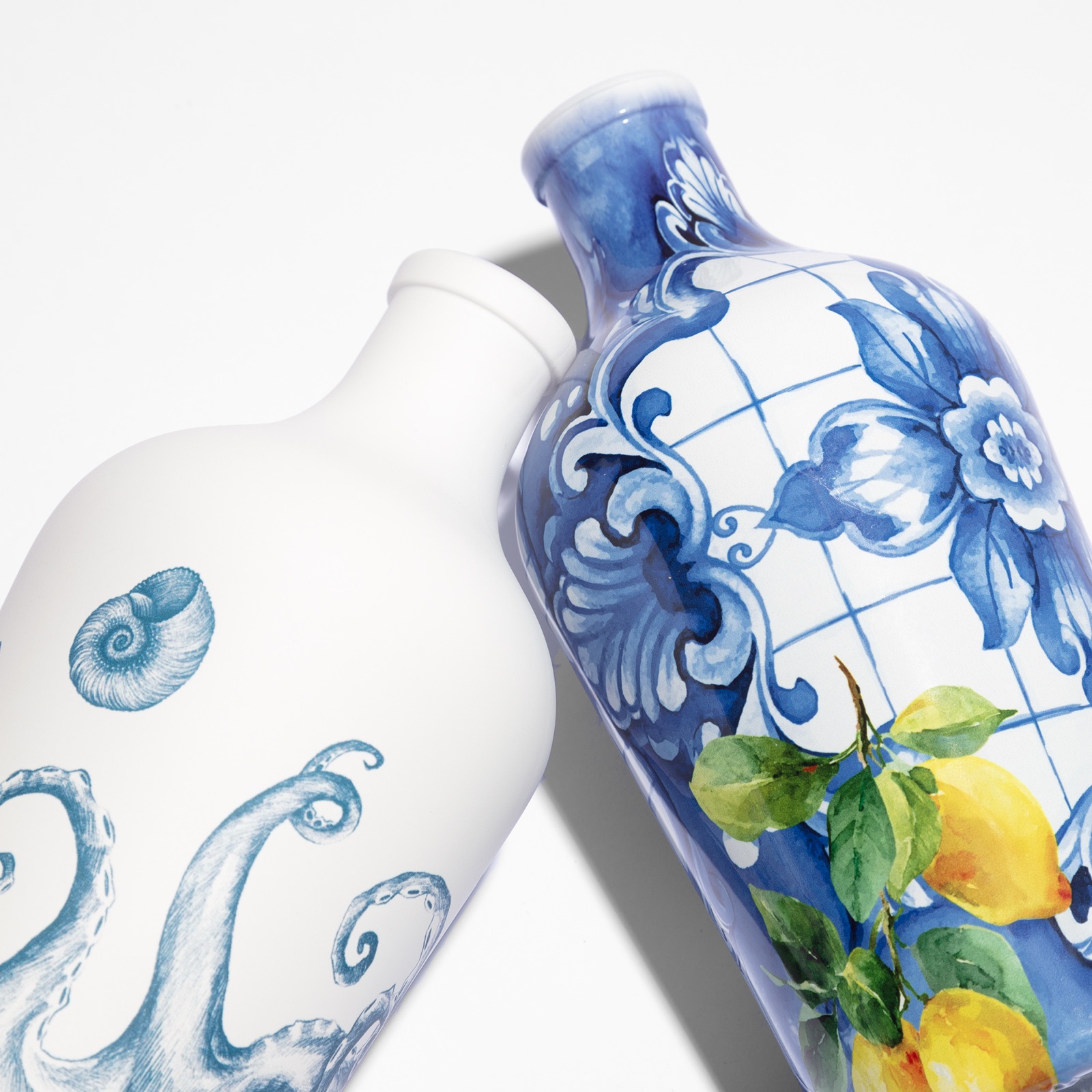
It does not look printed. It looks painted.
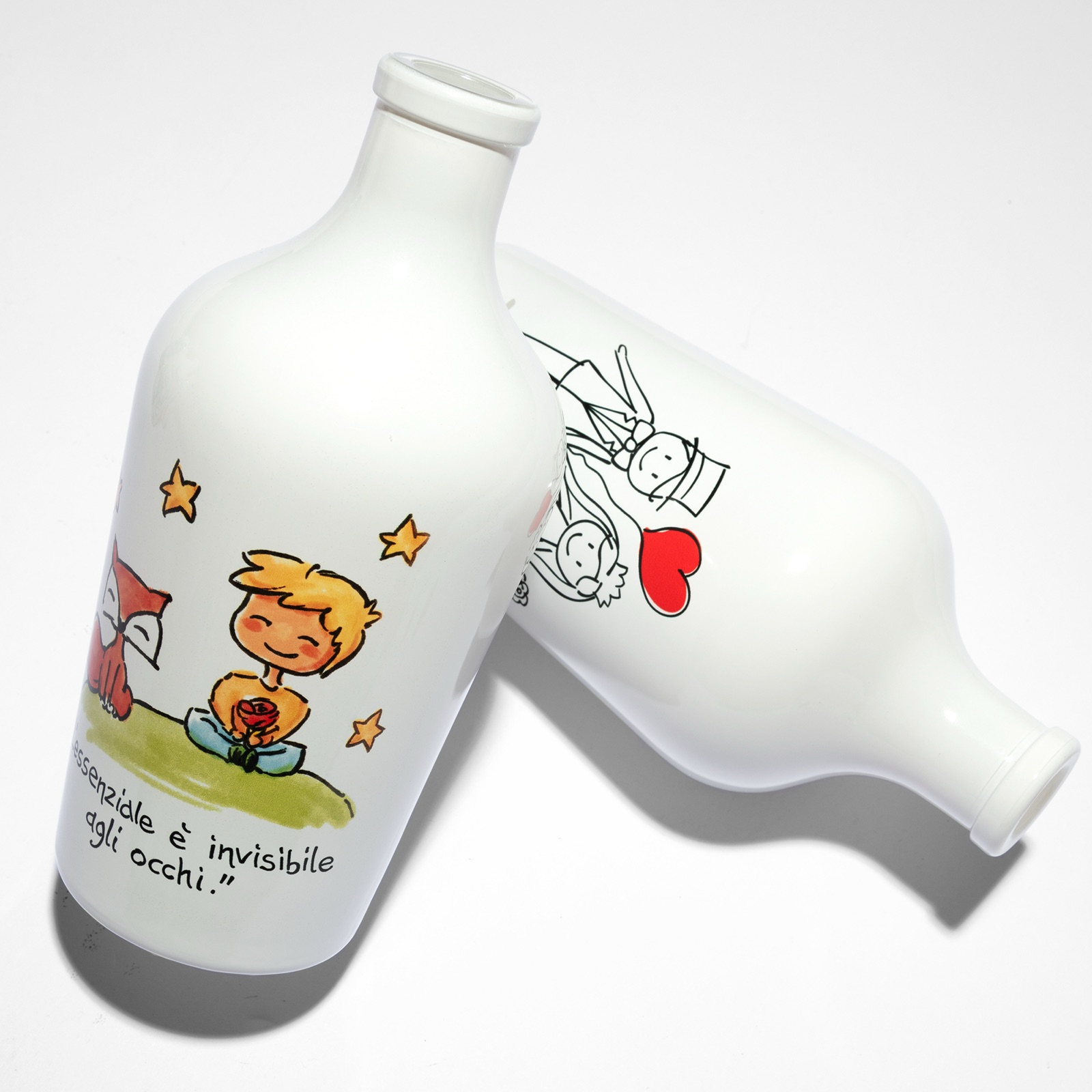
Together with Frantoio Paparella, ATIU translated the visual language of hand-painted ceramic onto glass using its proprietary industrial sublimation technology, specifically developed to decorate three-dimensional glass packaging at scale.
The result deliberately challenges perception. At first glance, it does not look printed. It looks painted.
ATIU's technology enables high-definition, full-colour decoration to wrap 360° around the bottle, following its geometry and reproducing complex illustrations, subtle details, gradients and rich colour transitions — at up to 1,200 dpi, base to neck, with no seam.
The objective was not simply to reproduce a graphic on a different substrate. It was to preserve the emotional impact of the original ceramic bottle: the sensation of craftsmanship, the intensity of the artwork and the visual richness that makes every design feel almost individually decorated.
An apparently artisanal result. An industrial process.
But behind this apparently artisanal result lies an industrial, repeatable and scalable process. This is where the project moves beyond aesthetics.
ATIU developed its proprietary sublimation technology to combine the creative freedom of high-definition artwork with the requirements of industrial glass decoration. An effect traditionally associated with craftsmanship can therefore be reproduced consistently across thousands of bottles, without sacrificing complexity or visual impact — same equipment and same settings from the production-line sample, ready in five working days, to runs from 5,000 pieces to millions.
A platform for creativity
For Frantoio Paparella, scalability was fundamental.
This is not a single bottle or a single artwork, but an extensive and evolving range of designs. The technology therefore becomes a platform for creativity: new graphics, collections and limited editions can be introduced over time while retaining the same industrial production logic — the freedom that olive-oil packaging rarely has.
ATIU's sublimation is a decorative system with infinite variables: once the bottle has been tested, there is enormous room for creativity.
Constraints as a catalyst
The transition also responds to a European packaging landscape increasingly shaped by circularity, recyclability and the Packaging and Packaging Waste Regulation (PPWR).
Rather than allowing these new constraints to simplify the pack or reduce its emotional value, the project used them as a catalyst for innovation. The decorated bottle is glass with no plastic added, waterborne inks, decorated by a company that measures its carbon footprint on Scope 1, 2 and 3 and offsets it (Up2You) — and it recycles as glass.
The challenge was not to create a more sustainable alternative that looked almost as good as the original.
The challenge was to make the material transition almost invisible — while making the decoration impossible to ignore.
The ceramic bottle became glass.
The handcrafted aesthetic remained.
The production model became scalable.
Crafted, without being handcrafted
Frantoio Paparella demonstrates that industrialisation does not have to mean visual standardisation, and that sustainability does not have to come at the expense of desirability.
A bottle can feel crafted without being handcrafted. It can preserve the expressive richness of ceramic while moving to glass. And technology developed for mass production can still create an object that feels individual, tactile and unexpected.
From ceramic craft to industrial glass, ATIU's proprietary sublimation technology turns a packaging constraint into a creative opportunity — delivering the visual emotion of something painted by hand, at industrial scale.
Read Centonze Ice Blue, another ceramic story told on glass, see how sublimation works, or get in touch on your own range.