Coating or sublimation? The wrong question — and the right one.
The short answer: glass bottle coating gives the bottle one uniform colour and finish — gloss, matte, frosted, metallic or soft-touch, matched to a brand reference. Digital sublimation fuses HD, full-colour artwork 360° into the surface. Coating sets the colour; sublimation carries the brand. At ATIU the two are applied as one process, by one supplier, in Verona, Italy.
Brief a decorated glass bottle and the vocabulary splits in two. Procurement asks for glass bottle coating — a colour, a finish, a uniform surface. Design asks for decoration — artwork, gradients, a story wrapped around the glass. They sound like competing options. They are not: they are two different layers of the same bottle, doing two different jobs.
This guide sets out what each one actually does, when a coating alone is the right specification, when digital sublimation is — and why, on ATIU's production lines in Verona, the two are applied as one process rather than bought from two suppliers.
What glass bottle coating does
Spray coating applies a uniform layer of colour or finish to the surface of the glass: tinted, opaque or gradient colour, matched to a brand reference, in gloss, satin, matte, frosted, soft-touch or metallic. Once cured, it is a permanent layer — the bottle's colour and its touch. It answers one question extremely well: what colour and finish is this bottle?
What a coating cannot do is carry an image. It is one colour (or one gradient) edge to edge. Logos, typography, illustration, photography — none of that is a coating job. For the full picture of the method itself, see our guide to glass bottle coating.
What digital sublimation does
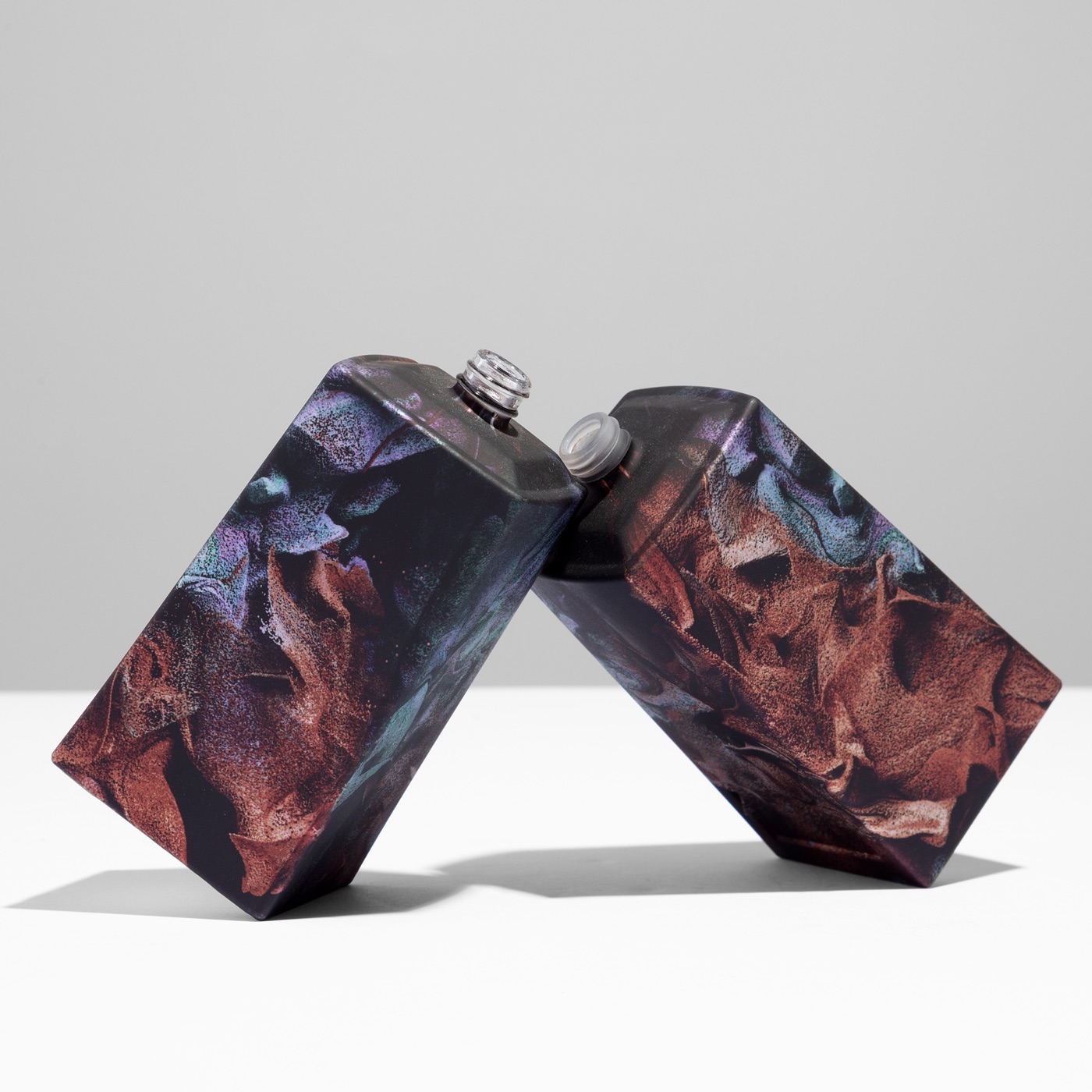
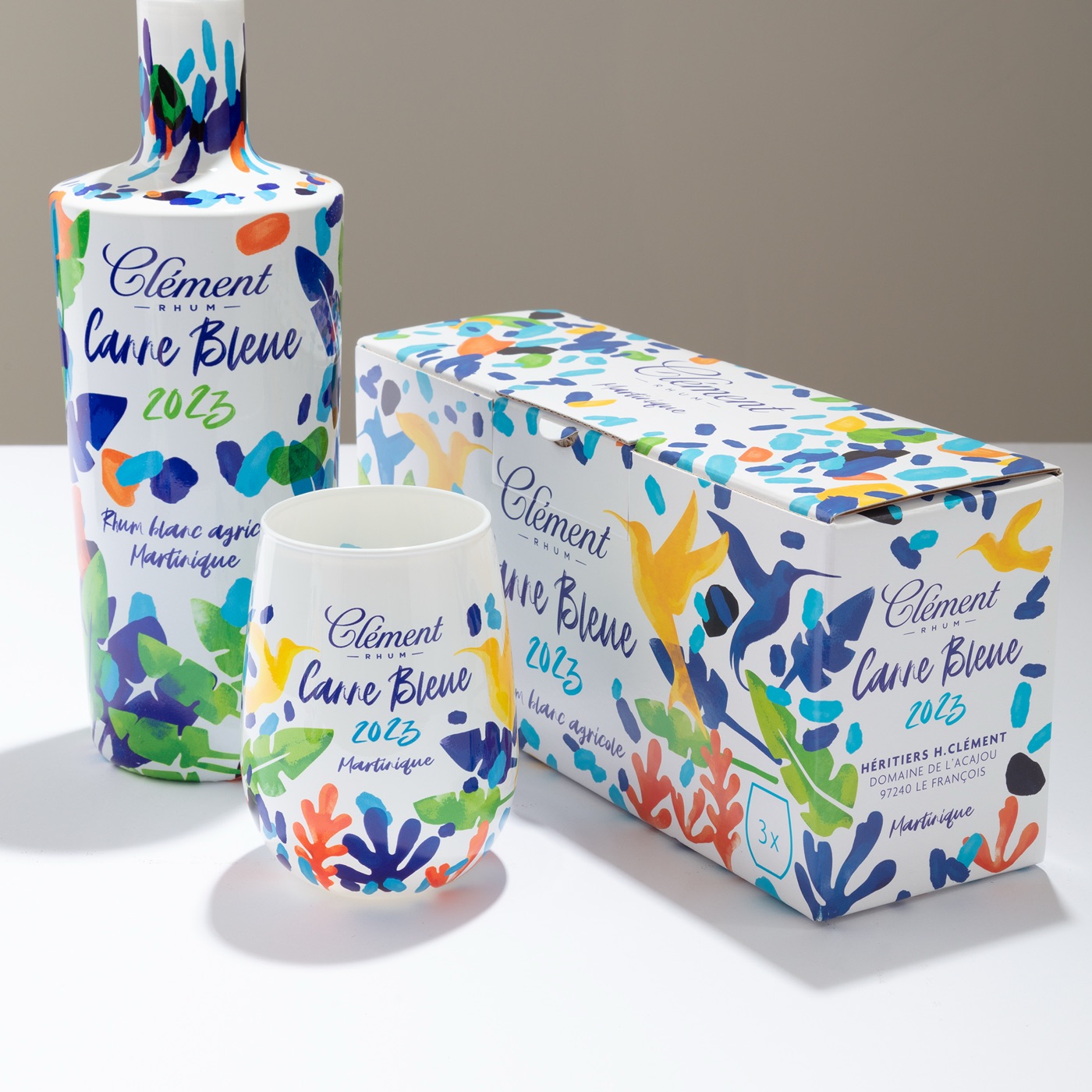
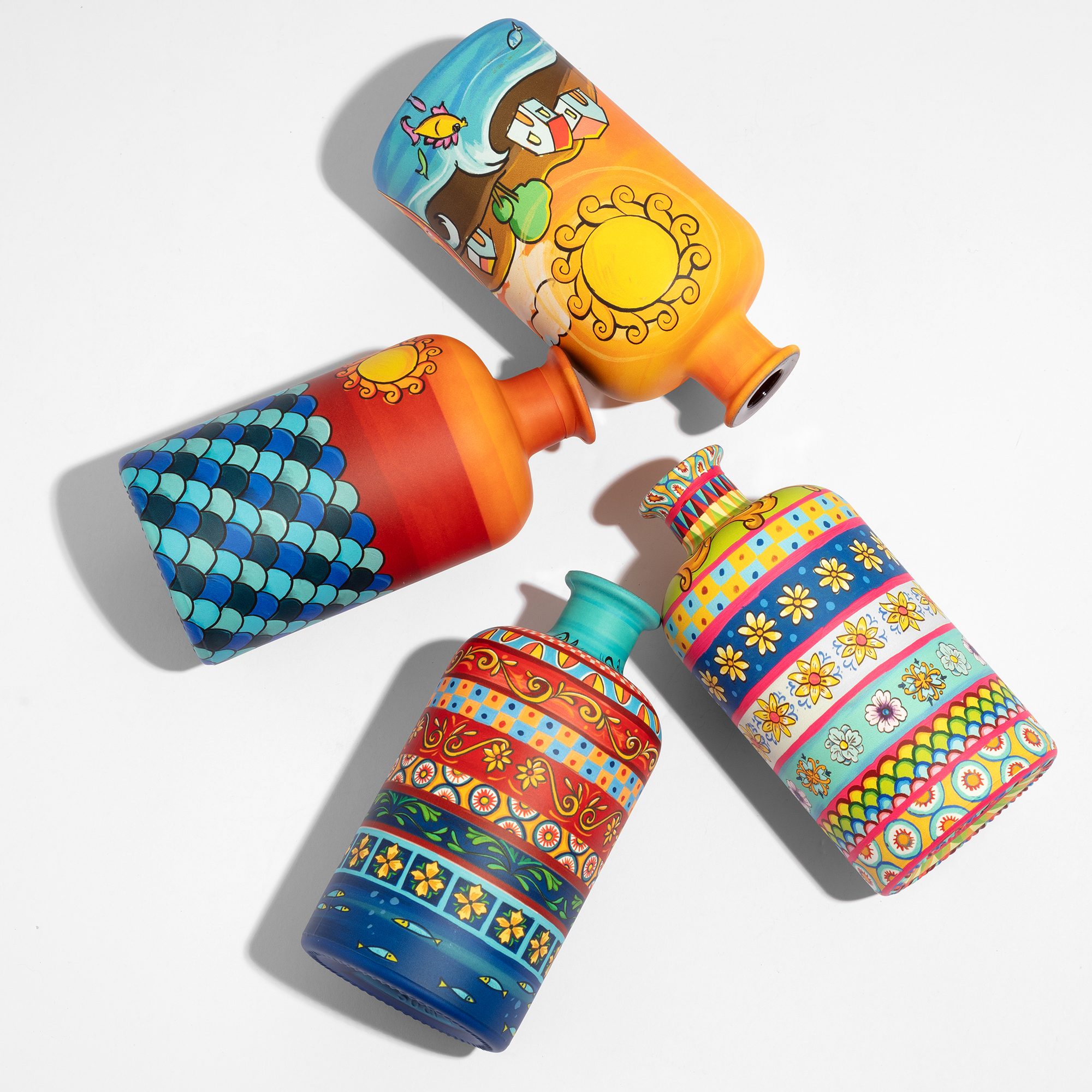
Digital sublimation answers a different question: what does this bottle say? A functional primer — chosen from ATIU's multiple primer finishes — prepares the glass, and HD, full-colour artwork is then fused into that primed surface with heat and pressure. The result is HD decoration at up to 1200 dpi, wrapped a full 360° from base to neck without a seam, with gradients, fine detail and unlimited colours at no extra cost per colour.
Because the artwork becomes part of the surface rather than sitting on it as a label or a sleeve, it follows the shape of the bottle — tapered, curved, faceted or heavy-based forms included.
The practical differences, side by side
Coverage. Coating: one uniform colour or gradient across the whole surface. Sublimation: any artwork, from a single logo accent to full-body HD imagery.
Colour logic. Coating is specified as one colour match. Sublimation is digital: every bottle in a run can carry unlimited colours, and multiple designs can run in the same batch — which is what makes multi-SKU editions and numbered series practical.
Shape. Both are applied to the real bottle, so both handle the shapes premium glass actually comes in. Sublimation's advantage shows on complex geometry: the artwork wraps 360° without the distortion or seams that labels and sleeves produce on curves.
Durability. In both cases, durability is the durability of the coating system — and it is specified per project, harder or softer depending on handling, logistics and end use. It is a briefing decision, not a property of the method.
Volumes. The same production logic applies to both: from 5,000-piece limited editions up to 30 million pieces per year per plant, with a physical sample on the real component in five working days.
When coating alone is the right call
If the brief is a colour — a house shade on flint glass, a frosted finish, a soft-touch black — coating is the specification, and it deserves to be treated as a discipline in its own right: colour matched to reference, finish chosen deliberately, durability agreed up front. Many projects start and end here, and ATIU takes on coating-only work with the same waterborne chemistry used across everything else.
When the brief needs sublimation
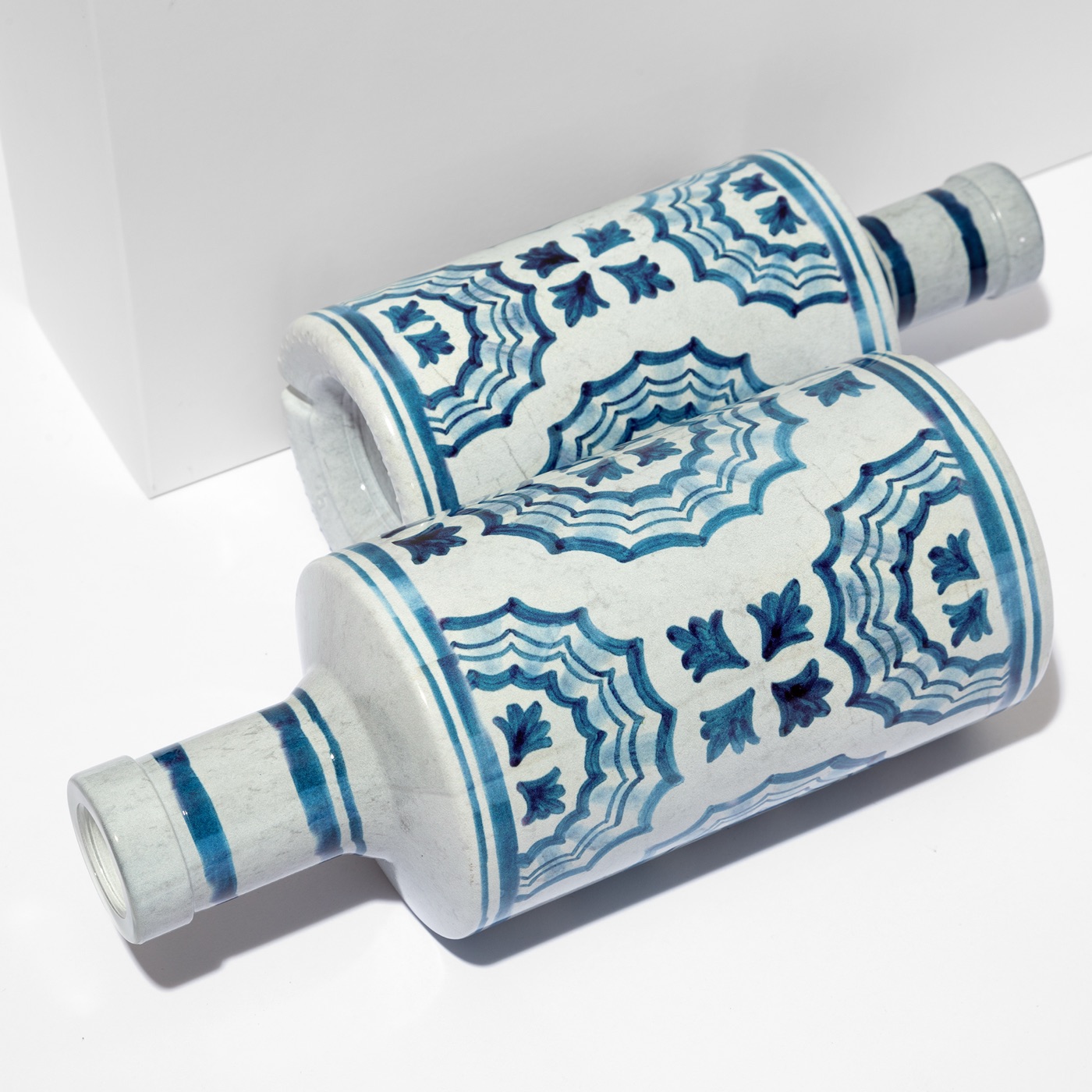
The moment the brief contains an image — artwork, texture, a ceramic effect, an artist collaboration, a limited edition that has to be recognisable across the room — a uniform colour stops being enough. That is sublimation territory. The clearest illustration is Centonze Ice Blue: a bottle that reads as glazed ceramic, built entirely on standard glass — an effect no single-colour coating could produce, awarded a Pentawards Gold in 2025.
Why the answer is usually both, on one line
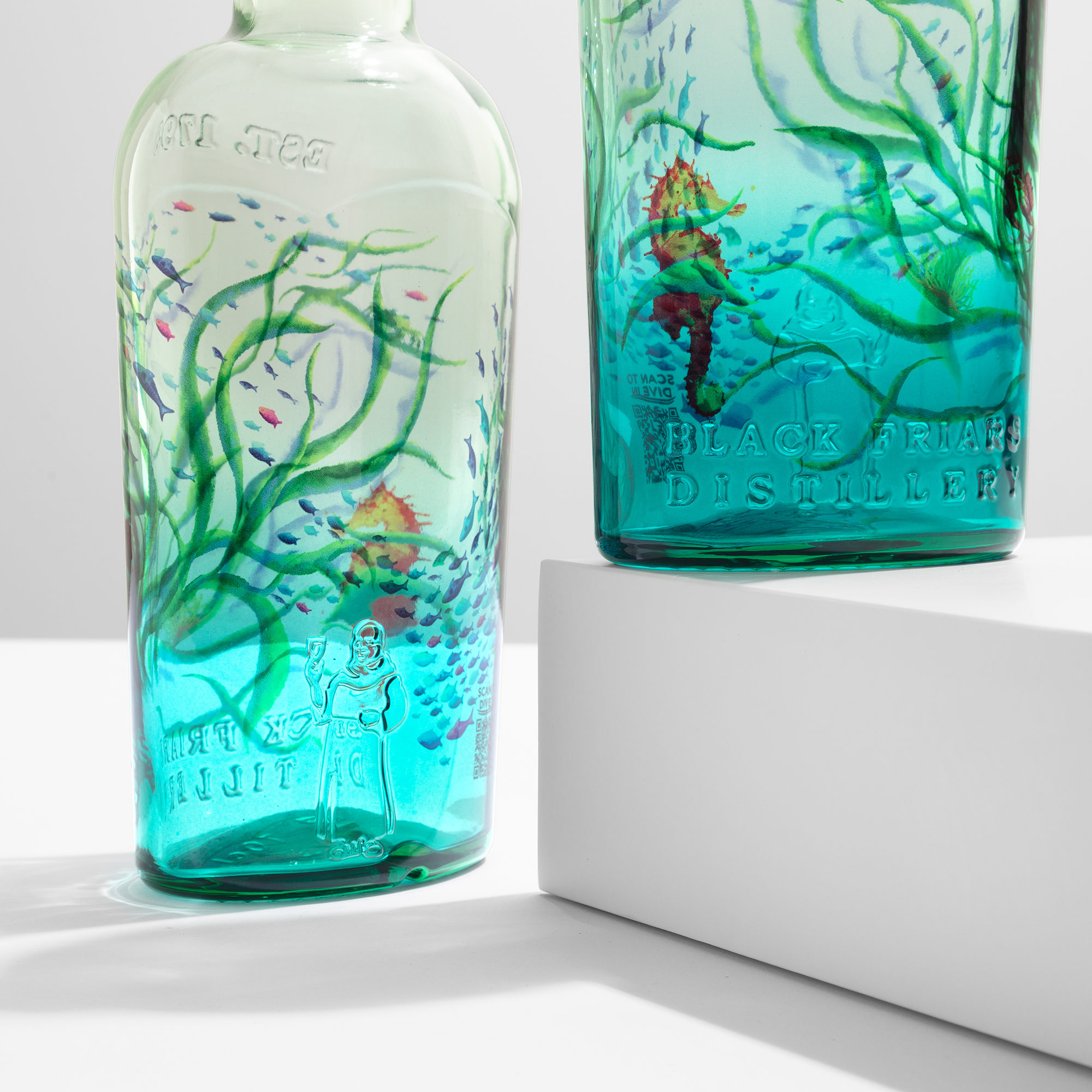
Here is the part the "versus" framing hides: every sublimated bottle is also a coated bottle. The primer that anchors the artwork is a coating — and choosing it is a creative decision. For Plymouth Gin's ocean edition it was a clear waterborne primer, keeping the glass visible under the artwork. For Bvlgari's collaboration with Refik Anadol it was a metallic soft-touch matte, giving the colours their reflective depth. Same process, different foundation.
Because ATIU applies coating and decoration under one roof, in a single pass, the choice between them is not a supply-chain decision — it is a design decision, made at the briefing stage, with one supplier, one quality system and less handling and transport than a multi-supplier chain.
Sustainability, for both layers
Coating and sublimation at ATIU share the same chemistry choices: waterborne coating and inks, curing temperatures never above 180°C, no plastic added to the glass — the bottle recycles as glass. Zero-net CO₂ operations (Scope 1, 2 and 3) since 2023.
Read the coating guide, the sublimation guide, or request a mock-up on your own bottle.