The generation that shapes trends isn't always the one that drives revenue.
For a decade, luxury marketing chased Gen Z. The buyers were somewhere else.
Picture a brand meeting from the last ten years. Any brand, any category. Someone opens a deck. The first slide says: how do we win Gen Z? The budget follows the question — TikTok, creators, limited drops, packaging designed to be posted before it is opened. All of it reasonable. All of it aimed at a generation with enormous cultural influence.
Meanwhile, in the same decade, another generation quietly entered the years when people actually spend: the Millennials. They are now roughly 30 to 45. They buy homes. They travel. They buy premium fragrance for themselves and premium spirits as gifts. And for most luxury categories, they — not Gen Z — write the cheques.
The interesting story is not "luxury is moving from Gen Z to Millennials". It is that for years, marketing has confused the generation that shapes trends with the generation that drives revenue. They are two different jobs, done by two different audiences. And packaging has to speak to both.
Influence is not revenue
Gen Z's cultural influence is real and not going anywhere. What trends, what sells out in a drop, what aesthetic dominates a season — younger consumers set much of that agenda, and every brand feels it.
But influence and purchasing power follow different curves. Influence peaks early; income peaks later. A 22-year-old can make a bottle famous. A 38-year-old buys it — again, at full price, as a gift, as a habit. Bain's luxury market research has been pointing in this direction for a while: the value in luxury is shifting back toward experiences, quality and personalisation — the things established buyers pay for, not the things that trend.
For anyone responsible for a premium product, the practical question changes. Not which generation do we choose? but which job is each generation doing for us — and does our packaging do both jobs?
Millennials have entered peak spending
The Millennial cohort is now in the life stage that luxury has always been built on: established careers, rising disposable income, homes to furnish, occasions to mark. In spirits, they are the generation buying the bottle that sits on the shelf at home and comes out when guests arrive. In perfumery, they are trading up — from mass to niche, from one signature scent to a wardrobe of them.
This buyer behaves differently from the audience most packaging was recently designed for. They are less moved by hype and more by substance: material quality, finish, the sense that an object was made with care and will still look deliberate in five years. They notice when a "premium" bottle feels generic in the hand. They are the buyer for whom the four seconds on the duty-free shelf are only the beginning — the object then has to survive years on their own shelf.
Gen Z isn't rejecting premium. It's selective.
The other half of the story is routinely misread. Gen Z is not turning away from luxury — it is redistributing it across categories.
In beverage, the pattern is well documented: younger consumers drink less alcohol, drink more moderately, and buy fewer bottles than previous generations did at the same age. But look at beauty and the picture inverts. Fragrance, skincare, discovery sets, travel sizes — Gen Z buys premium constantly, just in smaller, more frequent, more personal formats. The same consumer who skips the second bottle of spirits will happily pay for a niche perfume.
That is not a generation against premium. It is a generation that is selective about it — and ruthless about which objects deserve to exist. For perfumery brands, this is why the flacon has become a co-creation exercise rather than a container decision: the object itself is a large part of what Gen Z is buying.
Luxury is returning to permanence
There is a third shift underneath the first two. The vocabulary of luxury marketing is changing. A few years ago the operative words were virality, engagement, trend. Today the words gaining ground are heritage, craftsmanship, quality, longevity, experience.
This is not nostalgia. It is the market recalibrating around what both generations actually reward. Millennials at peak income pay for permanence — objects that justify their price over time. Gen Z, selective as it is, keeps what feels genuinely made and discards what feels manufactured for attention. Both roads lead to the same place: the product, and the object around it, have to hold up under a longer gaze than a scroll.
What this asks of packaging
For years, premium packaging had one primary job: win attention for three seconds on a shelf. That job still exists. But the brief above has quietly added four more:
- Justify a premium price. When a Millennial buyer pays more, the object in their hand has to explain why — before the liquid or the scent gets a chance to.
- Create desirability, not just visibility. Gen Z's feed-trained eye is fluent in visual quality. Flat, simplified decoration reads as a compromise; rich, continuous artwork reads as intent.
- Tell the quality story on the surface. Texture, finish, detail — the tactile signals a buyer decodes in the first second of holding the bottle.
- Stay beautiful for years. The bottle that gets kept — displayed, refilled, repurposed — keeps communicating long after the campaign has ended. Permanence is now a media plan.
This is why decoration is moving back to the centre of packaging strategy. Not as a finishing step, but as the layer where a brand answers both generations at once — the visual intensity one expects, and the material substance the other pays for. It is the same shift we described in how packaging is redefining growth in beverages: when the product category plateaus, the object becomes the growth lever.
Designing for both, not choosing one
At ATIU we see this double brief arrive on our lines every week, from spirits brands and perfumery houses alike. The projects that work do not pick a generation. They layer the two jobs.
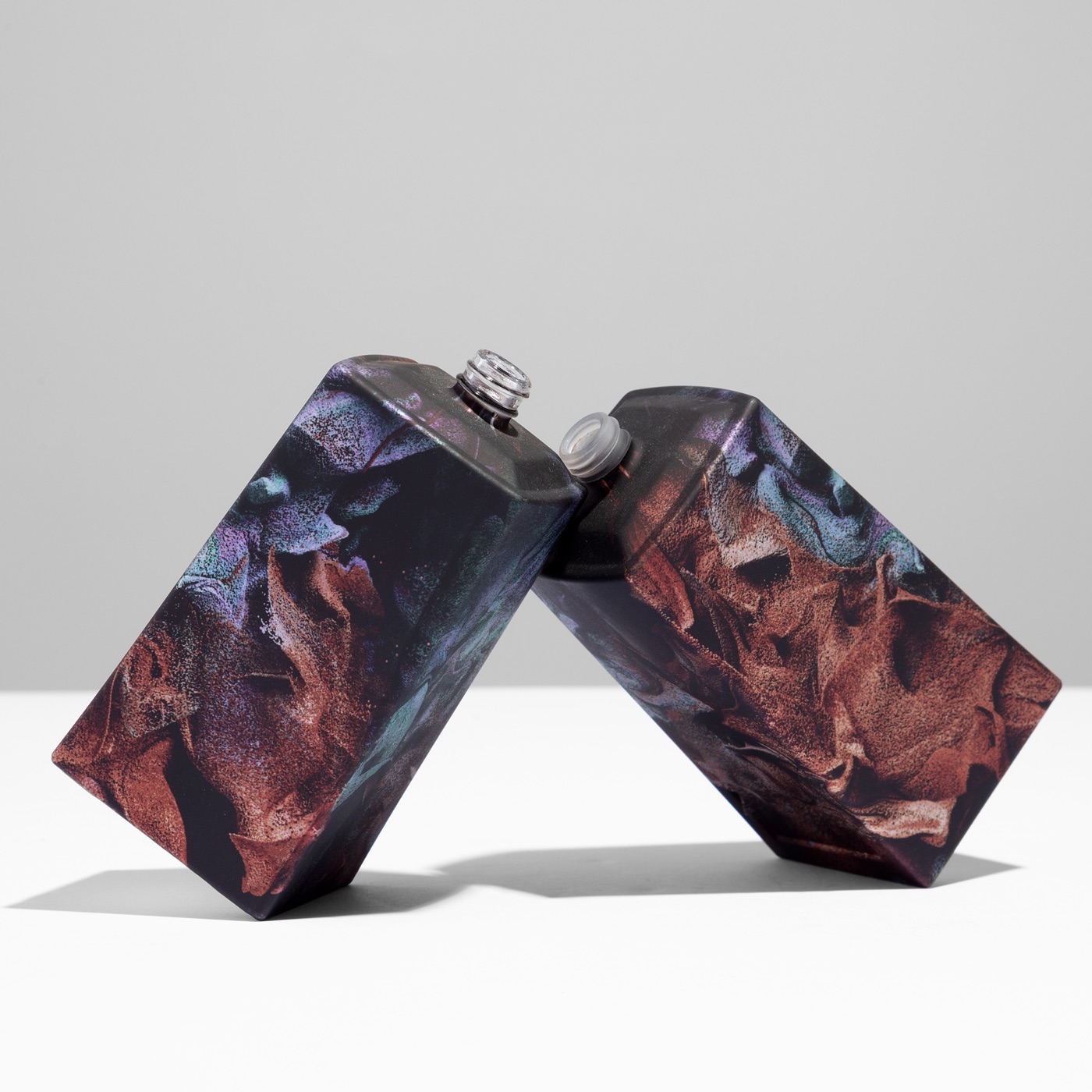
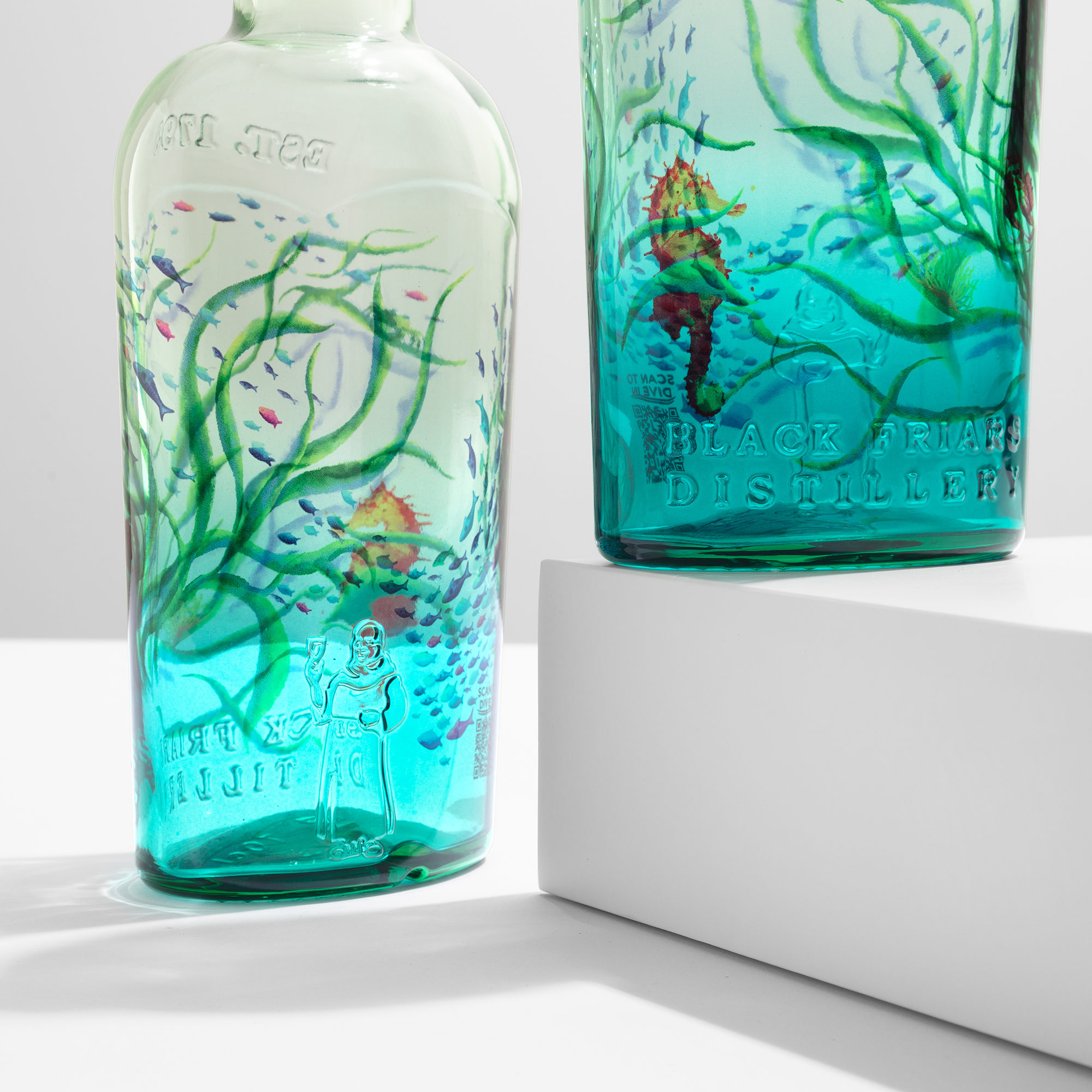
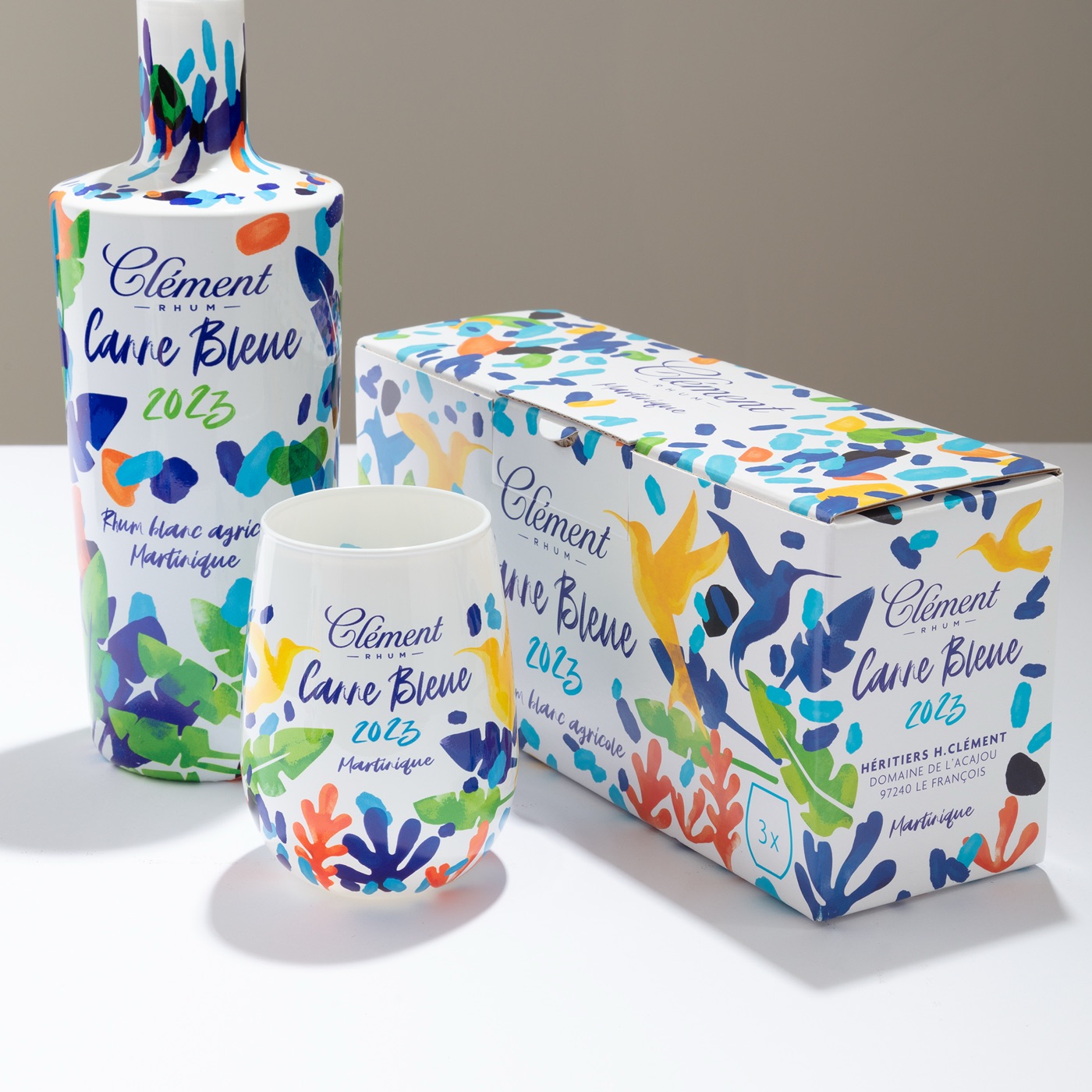
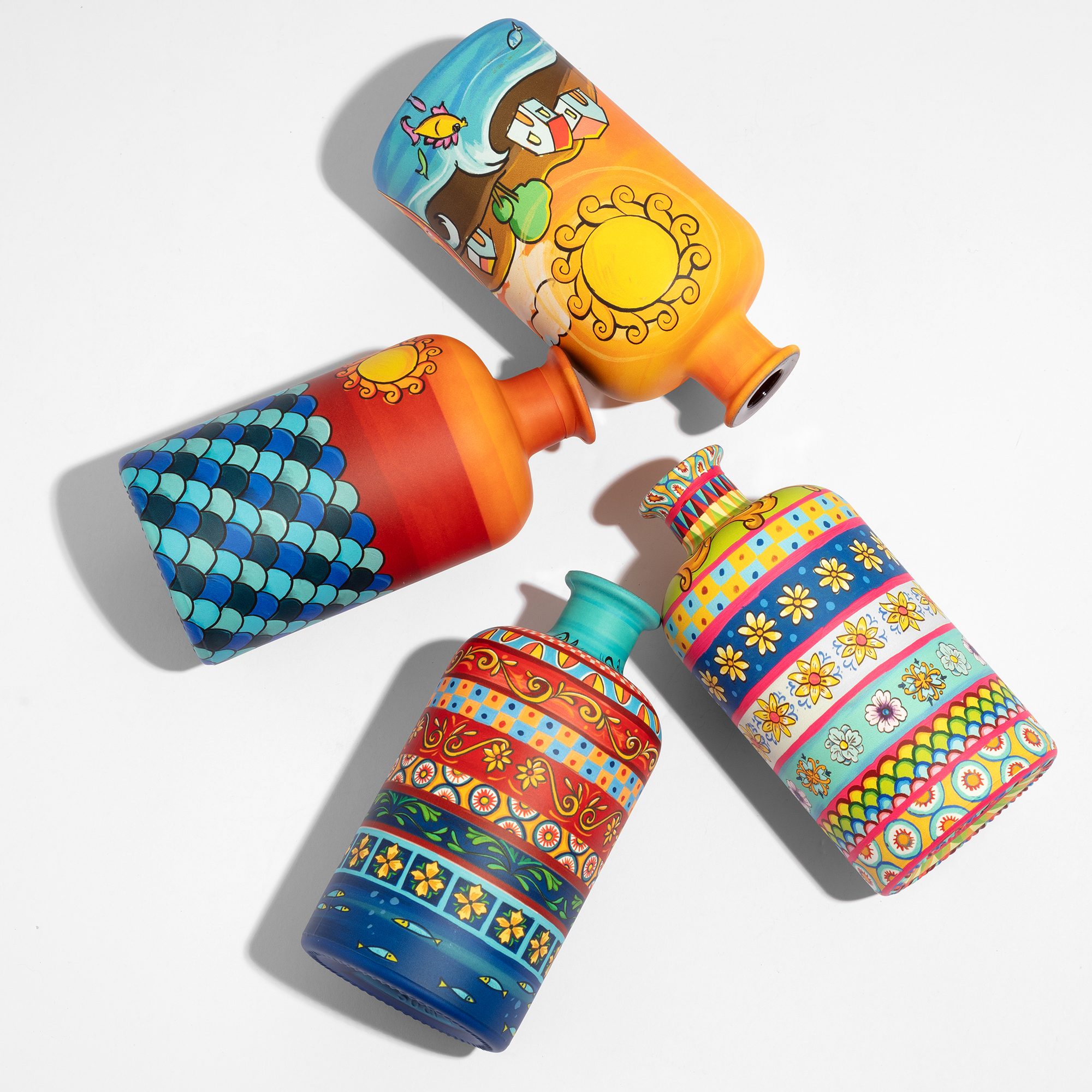
For the trend-shaping audience: full-body, 360° decoration at up to 1200 dpi gives the bottle the visual richness a digital-native eye expects — gradients, photographic imagery, dense illustration, artwork born on screen and reproduced on glass, as in the Bvlgari collaboration with Refik Anadol. And because the artwork is a digital file rather than fixed tooling, the same bottle can run limited editions, market versions and annual redesigns — the Rhum Clément Canne Bleue edition changes its full-body artwork every year — which is exactly the newness cycle younger consumers respond to.
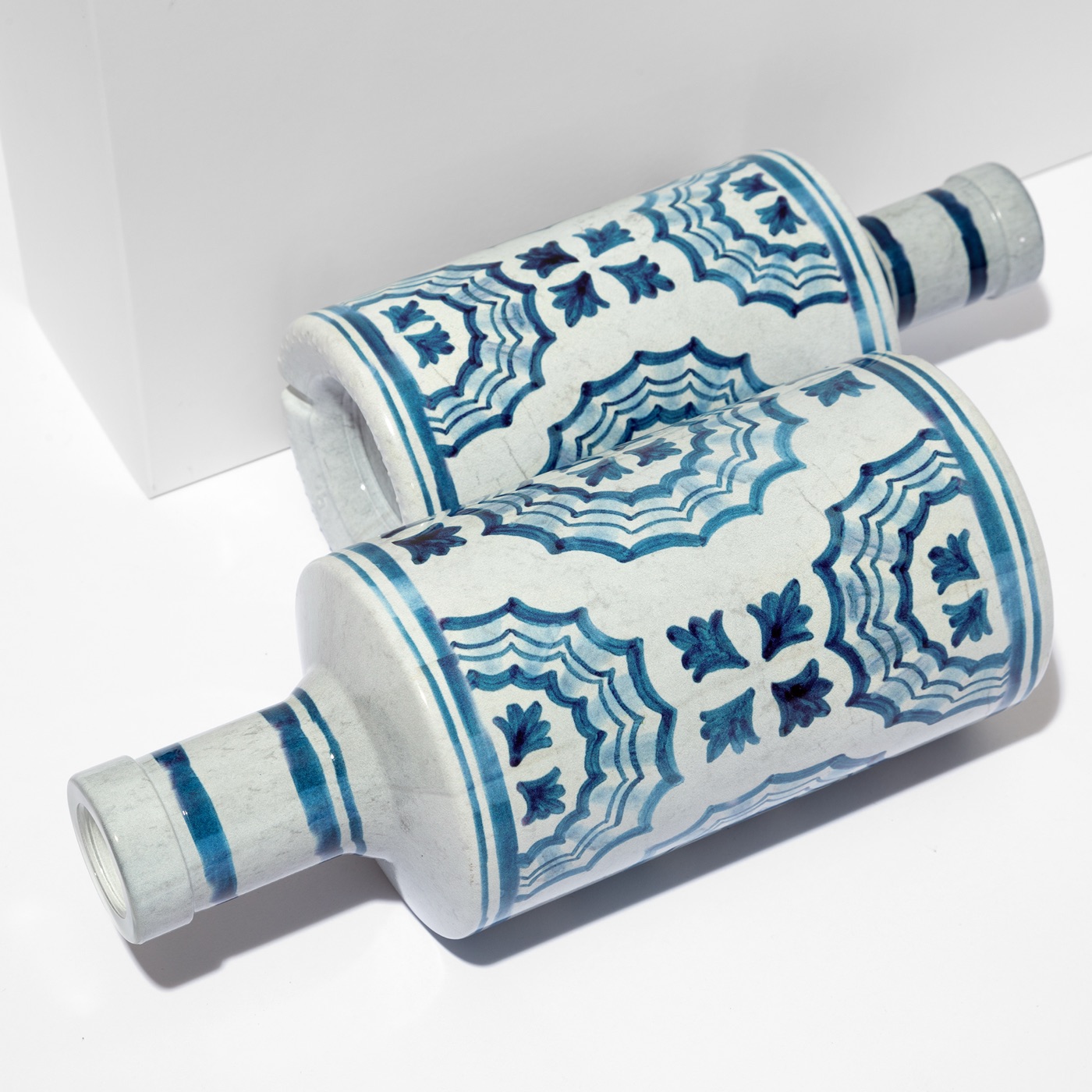
For the revenue-driving audience: decoration that becomes part of the object rather than sitting on it. Multiple primer finishes — from clear gloss to metallic soft-touch matte — give the bottle its tactile signature. No plastic added to the glass, waterborne coating and inks, carbon footprint measured since 2023: substance a considered buyer can verify, not just admire. The result is a bottle built to be kept, which is the most honest premium claim there is.
One process, one line, both generations. First physical sample in 5 working days from component arrival; minimum order 5,000 units, scaling to millions per project.
The next challenge isn't choosing a generation
Go back to that brand meeting. The deck was asking the wrong question. Not how do we win Gen Z? — and not, in a few years, how do we win Millennials? either. The question is whether one object can fascinate the generation that shapes trends and convince the generation that drives revenue.
That is a design problem. And it is solved, more than anywhere else, on the surface of the bottle.
Bring us the double brief — get in touch or see how premium bottles win the shelf.