Test, don't guess.
What if you could test your next limited edition on the market before producing a single bottle? Publish the rendering. Let the market vote. Produce the winner.
Every brand team is being asked the same three things right now: more differentiation, more editions for more markets, more moments of genuine hype — on a marketing budget that isn't growing to match. This article is about a tool that answers all three, and costs nothing to try.
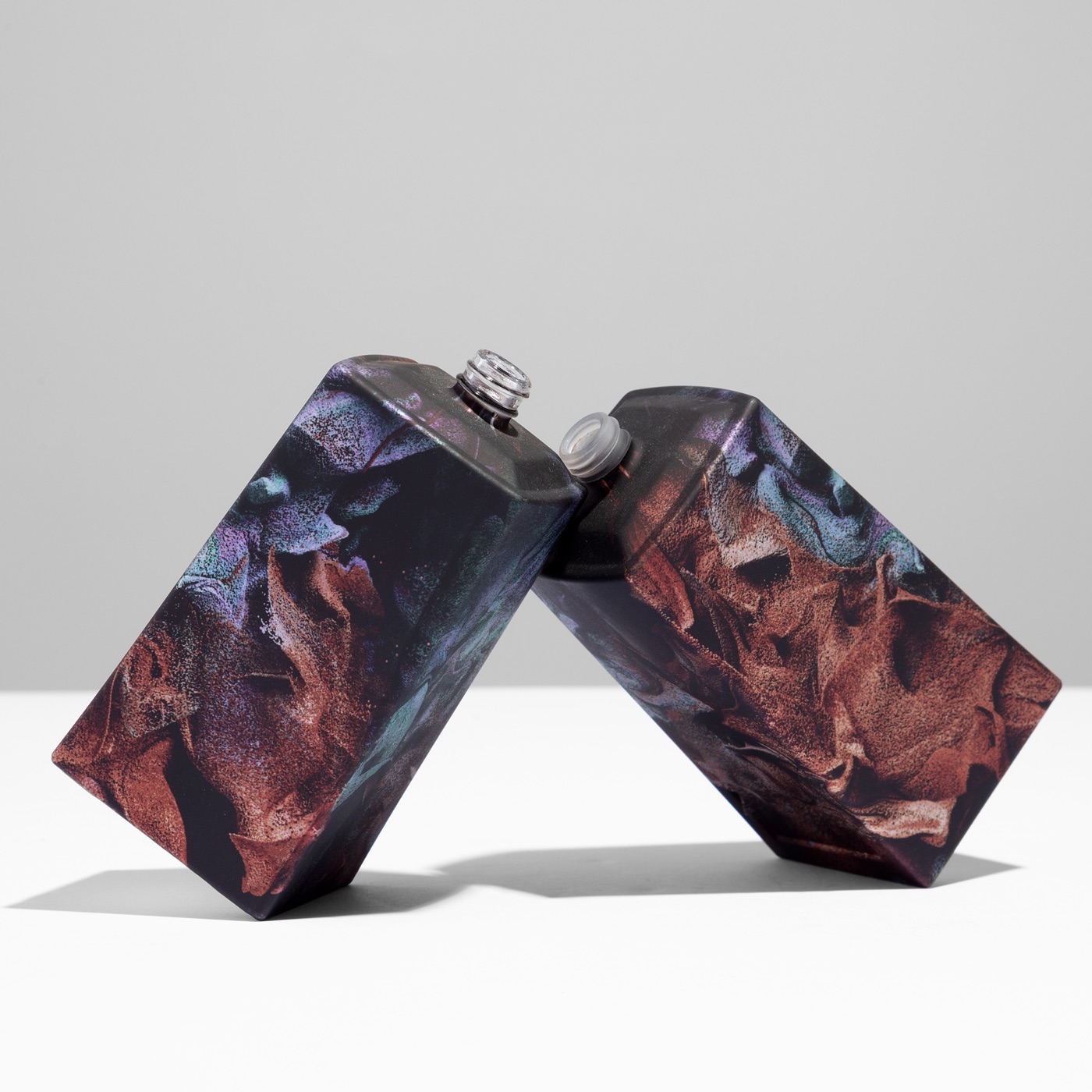
The short version: with digital sublimation, a rendering — AI-generated or agency-made — is faithful enough to become the bottle. Which means you can put it on Instagram, TikTok or in front of your customer list, let the market choose, build the launch buzz while you're still deciding, and only then produce. A free A/B test, run on the real audience, before a single euro of volume is committed.
A rendering is now enough to start
Your team, or your agency, can put together a set of decoration concepts in an afternoon. AI has made that part fast and inexpensive, while the taste, the story and the judgement of which idea deserves to exist stay firmly human. That part isn't new.
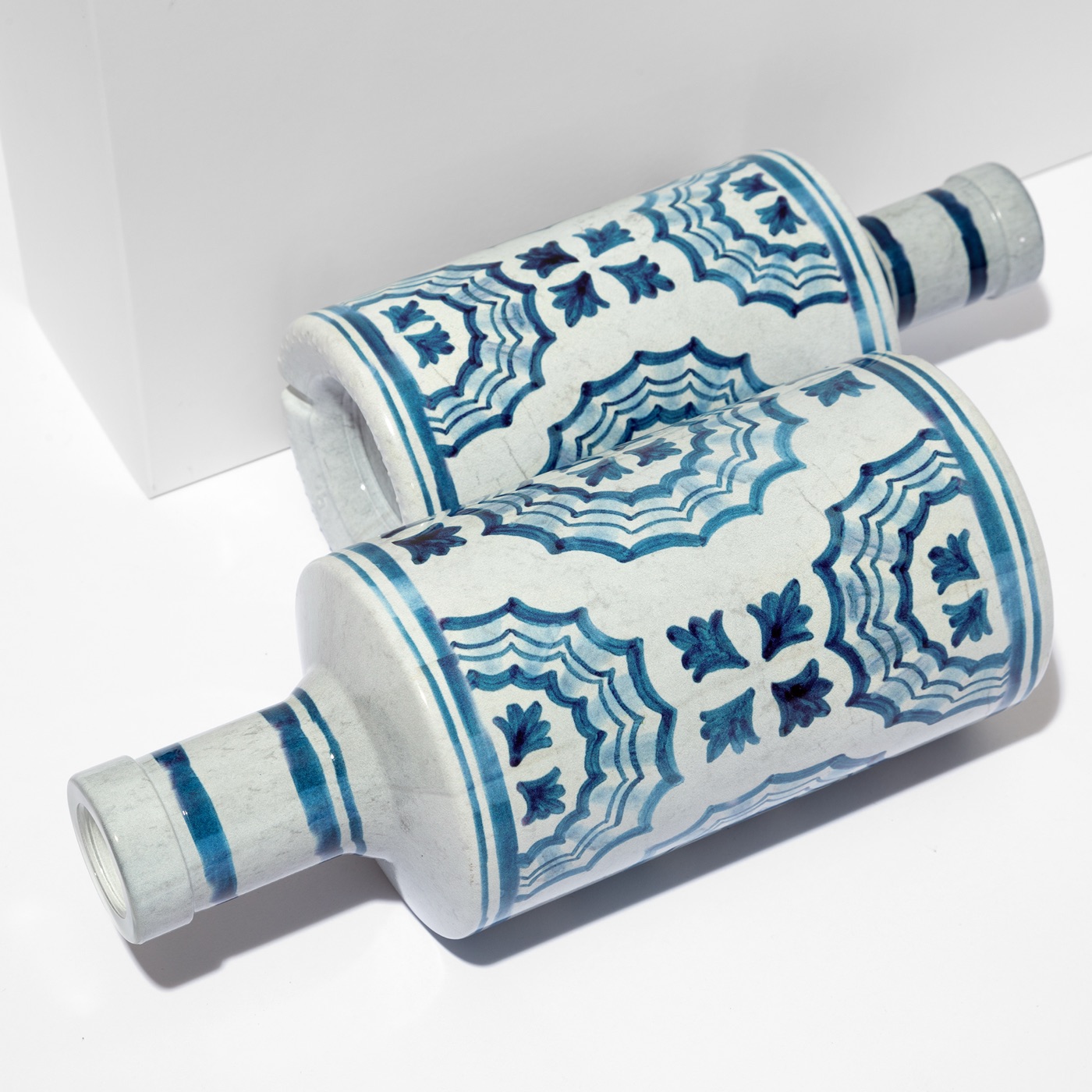
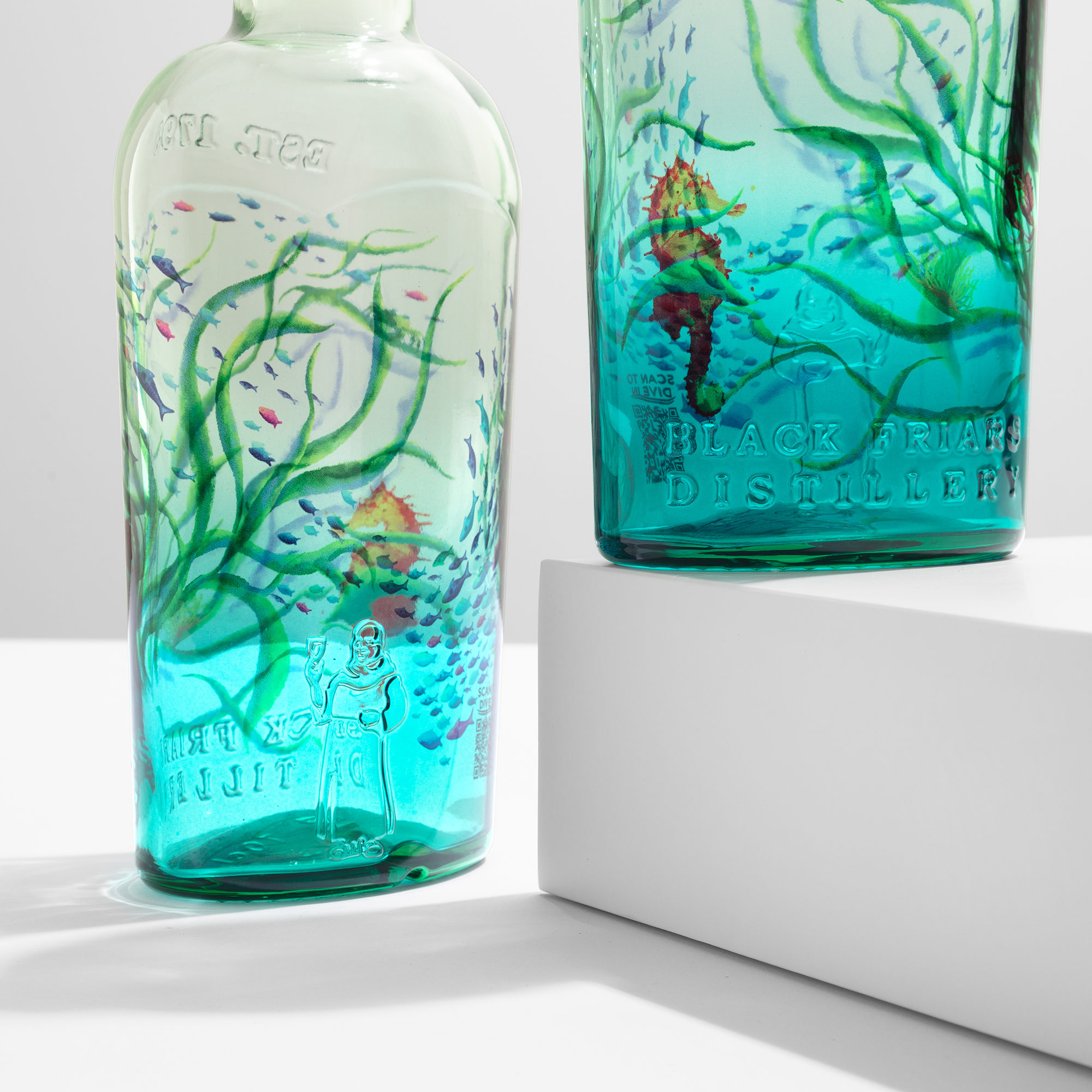
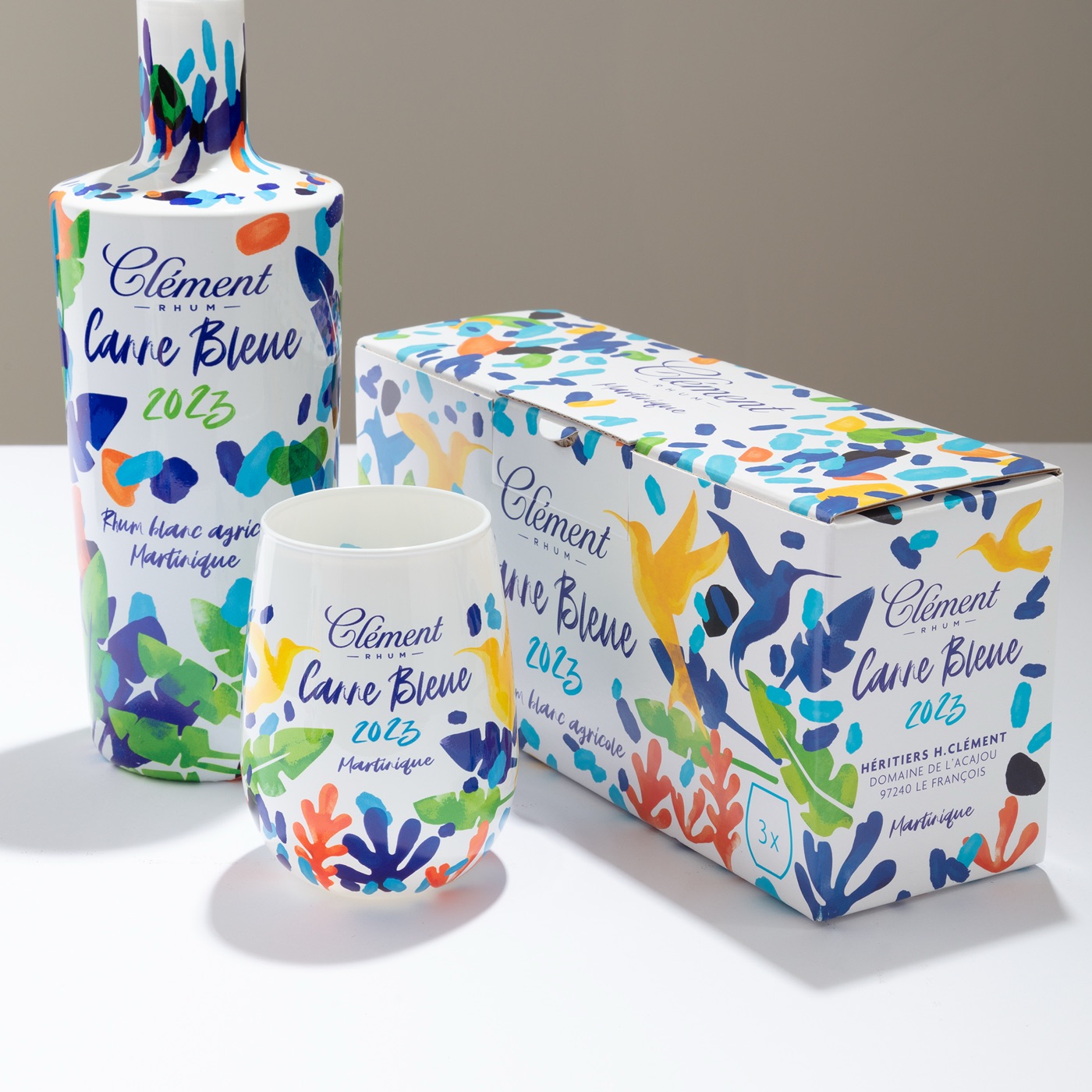
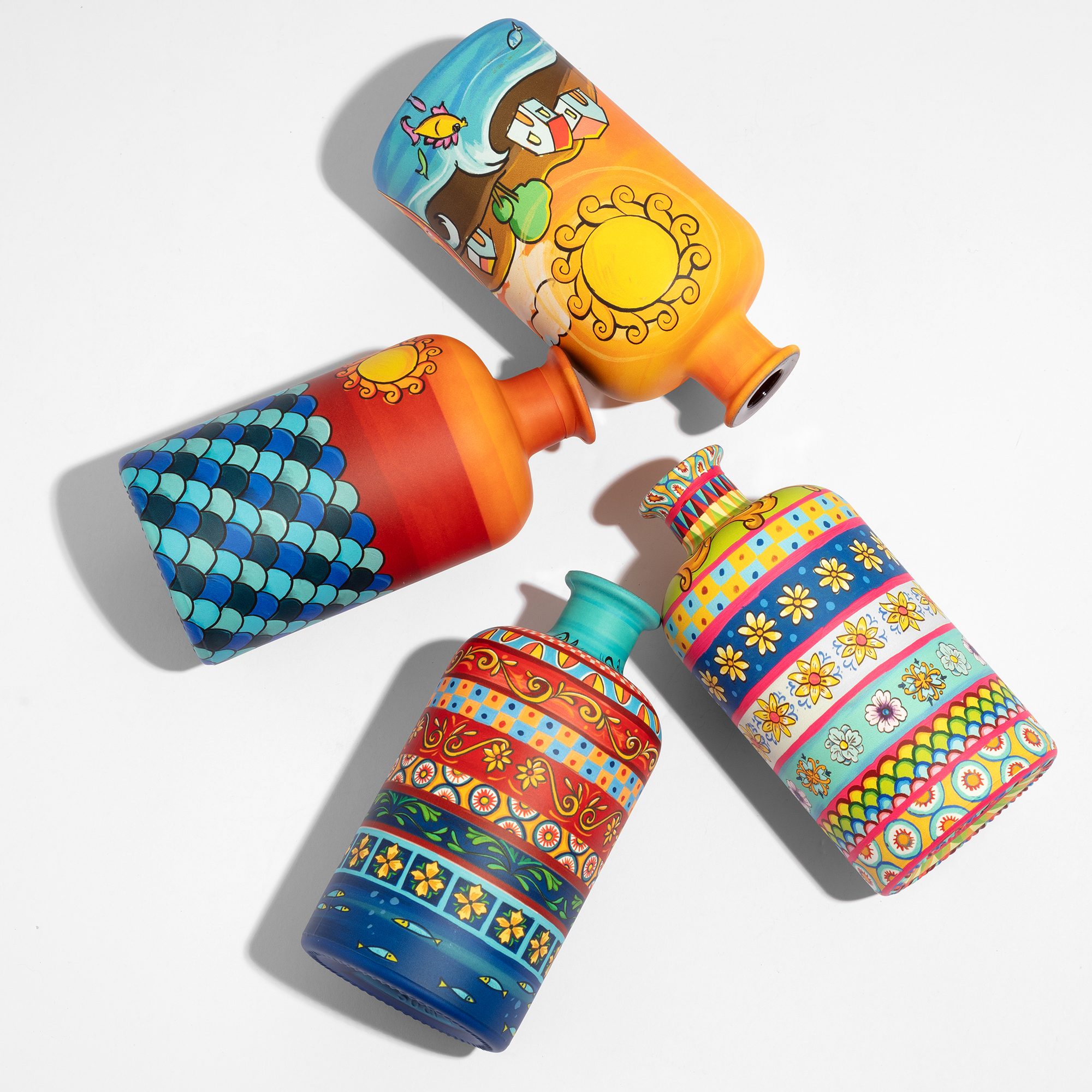
What's new is what can happen next. With digital sublimation, a rendering can be carried onto glass almost exactly as it appears on screen — around 95% of what you see in the image: the complete file, every colour, every gradient, continuous across the full 360° of the bottle, at up to 1200 dpi. The artwork isn't adapted to suit the process. It's reproduced.
That single fact changes what a rendering is for. It stops being an illustration of an idea and becomes a preview of an object. Which means you can show it to your board, your distributor, your retail partner — or your customers — knowing it is a truthful picture of what will exist.
Let your customers pick the one
Once the image can be trusted, something opens up that packaging has rarely been able to do: you can simply ask.
Put three concepts in front of the people who actually buy the category — a poll, a story, a pre-launch page, your own customer list. Let them choose the edition. You get three things from one gesture: an A/B test that costs nothing, a wave of genuine interest before the product exists, and an audience that arrives at launch already attached to the result, because they chose it.
And it really is free to find out. There's no tooling to commission, no plates, no screens, no setup or cliché charges — the artwork is a file. Send us your bottle reference and your artwork, and we'll send back sublimation renderings on your own bottle. The whole exercise can run before a single euro of production is committed.
A short conversation is what makes it work
It isn't magic, and the most useful thing we can do is be plain about how it goes. Sublimation follows a handful of rules, and a short technical debrief at the beginning is what keeps the render and the finished bottle identical at the end.
The colours are semi-transparent and sit over a primer, so a true opaque white comes from the base beneath rather than the ink above — which is also the reason the same artwork can read glossy, matte, stone-like or metallic simply by changing that base. Very intricate hollow shapes deserve a proper look before anyone promises anything. The process is happiest between roughly 200 ml and 1.5 litres, though we decorate from 10 ml to 5 litres, from 5,000 pieces upward.
None of that constrains a design team. Knowing the rules at the start is exactly what allows them to design right up to the edge with confidence — and it's why the render you show is a promise you can keep.
Then produce only the one that won
When the answer comes back, the same platform carries it through. A production-line sample follows in five working days, so you can hold the winning design before committing volume. Then the same line scales to production at up to 4,000 bottles per hour — from 5,000 pieces to several million per project. Nothing is rebuilt between the test and the run: the concept your market chose becomes shelf reality on the same line.
And because the decoration lives in a digital file — not in plates, screens or a new mould — the bottle you already own can go on doing new things. A travel-retail exclusive, a market-specific series, a seasonal drop, a collector's edition — same glass, same mould, different artwork. Segmentation becomes a decoration decision rather than a capital expense, which is precisely what a packaging budget under pressure needs it to be.
This is a point the industry's own institutions are now making. When Pentawards featured sublimation — the body behind the world's leading packaging design prize — the argument ran the same way: as tastes diversify across markets, demographics and cultures, brands will need to speak to different audiences on different occasions while preserving one identity, and decoration is what makes that possible without changing the product itself. In their framing, decoration stops being a finishing step and becomes a strategic tool — and segmentation through decoration moves from marketing choice to business necessity. Consumer testing is simply that idea taken to its natural conclusion: if decoration is how you segment, letting each segment choose its own edition is how you get it right.
This is also where a distinctive bottle finally pays twice. Complex geometry — sharp shoulders, engraving, tapered necks — usually narrows the field of decoration techniques available. Sublimation follows the geometry instead, around curves and over shoulders, base to neck, so the shape you invested in can carry the artwork you actually wanted.
Two ways this runs in practice
Out loud. A brand has a market that sells beautifully and has never had an edition of its own. The bottle exists, the mould is long since paid for. Three artworks are rendered on that exact bottle inside a week and put to that market — the brand's own list, its retail partners, a campaign in the local language. The winner goes into a run of 10,000 pieces for that market alone. If the sell-through justifies it, the edition returns next year and starts to become a franchise.
Quietly. A house has a flagship it would never put to a public vote, and it's right not to. So the same method runs privately: concepts rendered on the actual flacon, the shortlist drawn by the house's own creative director, and a panel of real category buyers ranking what the house has authored. A production-line sample confirms it in the hand. The edition launches as the house's own decision, because it is — and the market simply meets the version that was always going to work.
Same technology, two very different communication strategies. What they share is that neither one asks the brand to commit volume in order to learn something.
Every other industry already works this way
The idea isn't new. It simply never reached glass, because glass could never move fast enough to receive it.
Fashion worked it out first, and worked it out as an economic argument rather than a creative one. When Harvard Business School documented Zara's model, the striking part wasn't the speed everyone talks about — it was the sequence. Small quantities of a new item went into a handful of stores, and the factory only committed properly once shoppers had answered. That single habit took the failure rate on new products to around 1%, where the sector was living with 10%, and held goods sold at markdown to 15–20% of sales while European peers were discounting 30–40%. Testing before volume wasn't a refinement. It was the margin.
The technology industry arrived at the same place from the opposite direction, through humility. Ron Kohavi and Stefan Thomke reported in Harvard Business Review that at Google and Bing only 10% to 20% of experiments produce a positive result (HBR, September 2017). These are the most instrumented companies in commercial history, staffed by people who are exceptionally good at their jobs — and four ideas in five still don't do what everyone confidently expected. The conclusion they drew isn't that expert judgement is worthless. It's that expert judgement with evidence attached beats expert judgement on its own, reliably, for everybody.
Streaming then found something that should interest anyone who makes packaging: it is the image that does the selling. Netflix has published what it learned from years of testing title artwork — the artwork accounts for more than 82% of a member's attention while browsing, and each title gets an average of 1.8 seconds (Netflix, 2016). Read that again with a shelf in mind instead of a screen, and you have a fairly precise description of the duty-free corridor.
Then there's the part that matters most for a limited edition: people will commit to something that doesn't exist yet. Over seven days in 2016, 325,000 of them put down a refundable $1,000 deposit on a Tesla Model 3 that existed only as a prototype (Bloomberg, April 2016). The scale isn't the point — the willingness is. A few thousand bottles offered to a single market, pre-sold or simply released to see how they move, tells you the same kind of truth long before a full run is committed.
Spirits has already shown the way
None of this is imported from another category. Drinks brands have been inviting people to choose the artwork for over a decade. In 2013 Absolut opened a Chicago edition to the Threadless community: more than 170 designs submitted, over 156,000 votes cast, and the winning artwork went into production at $19.99 (PR Newswire, 2013). LABEL 5 set five street artists against a public vote and produced the winner for worldwide launch. Pabst Blue Ribbon has run its Art Can competition for years, with public voting on the finalists and winning artwork printed across hundreds of millions of cans.
The most ambitious of all is worth admiring properly. In 2012 Absolut produced nearly four million bottles of Absolut Unique — no two alike, 51 pattern types, released across 80 markets and later awarded an iF Design Award (The Spirits Business, 2012). It took a world-class team and a re-engineered production line. As Absolut's packaging development director Eric Naf put it: "We had to reprogram the machines to create variation and randomness, where they were designed to create stability and control" (BeverageDaily, 2012).
What has changed since isn't the ambition — it's who can reach it. In digital sublimation, variation is simply how the process works: the artwork is a file, so the next bottle can carry a different one with no tooling and no loss of speed. What was pioneering in 2012 is, with sublimation, now within reach of any brand.
Who to involve, and how loudly
Two findings are worth carrying into the planning meeting, because they make the difference between a test that helps and one that flatters.
The panel doesn't need to be big — it needs to be the right people. Working with real sales data, Kornish and Ulrich found that four ordinary consumers predicted commercial performance about as well as a panel of seven experts with fifteen years' experience each, and twenty consumers did better (Journal of Marketing Research, 2014). Twenty of the right people is a morning's work. Build the panel from people who buy the category at the price you actually charge, rather than from whoever is most vocal online — recent work in the Academy of Management Journal by Allen, Bremner and McDonald found that community feedback helps commercially when the community reflects the wider market, and misleads when it doesn't.
How publicly you run it should follow the product's job. Where an edition is meant to delight, say out loud that customers chose it: in two randomised field experiments, telling shoppers a product was customer-ideated raised market performance by up to 20% (Journal of Marketing Research, 2017). Where an edition carries status, keep the authorship with the house and let the audience choose among options the house has authored — research on real luxury collections shows a shortlist endorsed by the brand's own creative director protects the signal that a status product is sold on (Journal of Marketing, 2013).
Why it's worth doing now
The categories are moving in different directions and asking for the same thing. Spirits repriced through 2025, with value softening faster than volume across the leading markets (IWSR, April 2026) — so a premium position now has to be earned by the object, not just claimed by the price. Prestige fragrance grew, with US prestige fragrance up 5% in value in 2025 (Circana, February 2026), in a category where the liquid is invisible and the bottle carries the whole proposition.
Travel retail says it plainly. At Dubai Duty Free in 2025, perfumes took $438.7m against $290.6m for liquor, and exclusive products accounted for around 12% of sales in the major categories (Moodie Davitt Report, January 2026). Exclusivity sells, and the audience is there to sell it to: Gen Z drinks at roughly 74%, against 76% for the adult population as a whole (IWSR Bevtrac, July 2026). They're simply more deliberate about what earns their money.
Which is a good argument for finding out what wins before you produce it — especially when finding out is free.
Let the market choose first
Whether the starting point is a spirits launch or a perfumery line, the sequence is the same and it's available to anyone: render, share, listen, produce. The design that reaches the shelf arrives with evidence behind it, and with an audience that already feels some ownership of it. Engagement stops being something you buy after launch and becomes part of how the launch is decided. The earlier it enters the concept-to-shelf timeline, the more it gives back.
Maybe the most useful innovation isn't the decoration itself. Maybe it's being able to let the market choose it first.
Test, don't guess.
Related reading: AI can imagine any bottle — far less can build it and what digital sublimation is. Or request a mock-up.